
‘Stronger than before’: Pak defence min Khawaja Asif threatens retaliation amid India’s war games
The rhetoric from Islamabad has extended beyond India. Earlier this month, Asif accused Afghanistan’s Taliban-led government of operating under Delhi’s influence.
- Oct 31, 2025,
- Updated Oct 31, 2025 4:17 PM IST
Pakistan Defence Minister Khawaja Asif has said the country will retaliate “with full force and power" to any “Indian aggression or incursion on the border,” as India conducts its ongoing tri-services exercise Trishul 2025.
“We will not let go of any provocation. Pakistan will give a befitting response to India. This time, our response will be stronger than before. If India commits any aggression against our territory, we will not let go…and will not spare India,” Asif said.
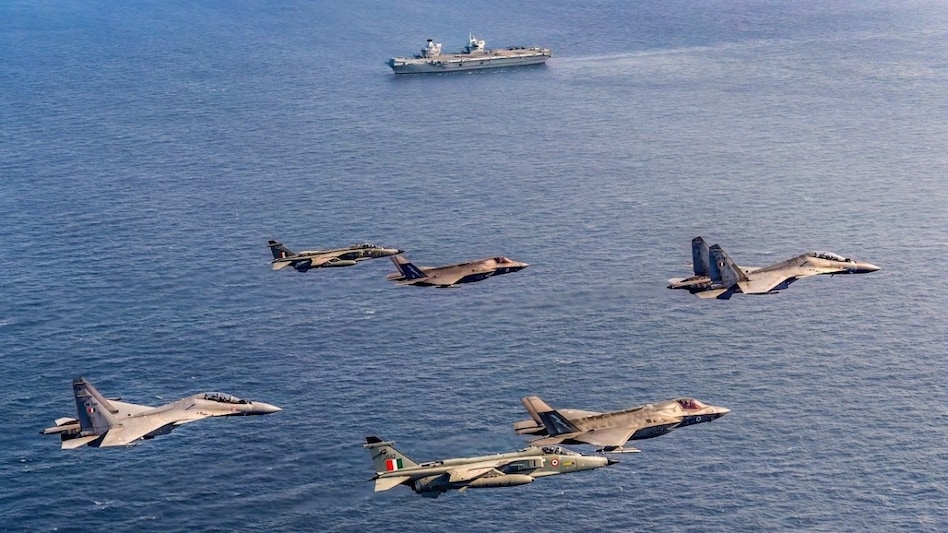
The minister's remarks come as India is conducting a high-stakes tri-services military drill, Exercise Trishul, involving the Army, Air Force, and Navy, from October 30 to November 10. The drills, covering the western sector and Arabian Sea, simulate rapid mobilisation, integrated warfare, and maritime dominance.
While routine, the scale of the exercise seems to have rattled Pakistan. Defence Minister Rajnath Singh, during a visit to Jaisalmer last week, said Operation Sindoor served as a warning to Pakistan, which “will now think twice before attempting any misadventure.”
Pakistan is also on the defensive after its provocative actions against India after expanding its military infrastructure near the Sir Creek area, including new bunkers, radars, and forward operating bases capable of launching drone or infantry strikes.
Pakistan Navy chief Admiral Naveed Ashraf had also made unannounced visits to Sir Creek posts vowing to defend “every inch of our maritime borders… from Sir Creek to Jiwani.”
The rhetoric from Islamabad has extended beyond India. Earlier this month, Asif accused Afghanistan’s Taliban-led government of operating under Delhi’s influence. “The people in Kabul pulling the strings and staging the puppet show are being controlled by Delhi,” he said in a Geo News interview, claiming India was using Kabul to compensate for its setbacks on the western front.
On October 29, Asif escalated tensions by warning that Pakistan could obliterate the Taliban without using full military force, referencing the Tora Bora battle. His comments followed the collapse of peace talks between Pakistan and the Taliban, mediated by Qatar and Turkey in Istanbul.
The failure came in the wake of deadly Kabul explosions on October 9, which killed over 70 and injured hundreds, sparking fresh clashes and deepening the regional fault lines.
Pakistan Defence Minister Khawaja Asif has said the country will retaliate “with full force and power" to any “Indian aggression or incursion on the border,” as India conducts its ongoing tri-services exercise Trishul 2025.
“We will not let go of any provocation. Pakistan will give a befitting response to India. This time, our response will be stronger than before. If India commits any aggression against our territory, we will not let go…and will not spare India,” Asif said.
The minister's remarks come as India is conducting a high-stakes tri-services military drill, Exercise Trishul, involving the Army, Air Force, and Navy, from October 30 to November 10. The drills, covering the western sector and Arabian Sea, simulate rapid mobilisation, integrated warfare, and maritime dominance.
While routine, the scale of the exercise seems to have rattled Pakistan. Defence Minister Rajnath Singh, during a visit to Jaisalmer last week, said Operation Sindoor served as a warning to Pakistan, which “will now think twice before attempting any misadventure.”
Pakistan is also on the defensive after its provocative actions against India after expanding its military infrastructure near the Sir Creek area, including new bunkers, radars, and forward operating bases capable of launching drone or infantry strikes.
Pakistan Navy chief Admiral Naveed Ashraf had also made unannounced visits to Sir Creek posts vowing to defend “every inch of our maritime borders… from Sir Creek to Jiwani.”
The rhetoric from Islamabad has extended beyond India. Earlier this month, Asif accused Afghanistan’s Taliban-led government of operating under Delhi’s influence. “The people in Kabul pulling the strings and staging the puppet show are being controlled by Delhi,” he said in a Geo News interview, claiming India was using Kabul to compensate for its setbacks on the western front.
On October 29, Asif escalated tensions by warning that Pakistan could obliterate the Taliban without using full military force, referencing the Tora Bora battle. His comments followed the collapse of peace talks between Pakistan and the Taliban, mediated by Qatar and Turkey in Istanbul.
The failure came in the wake of deadly Kabul explosions on October 9, which killed over 70 and injured hundreds, sparking fresh clashes and deepening the regional fault lines.