
Supreme Court praises stability of India's Constitution, contrasts with turmoil in Nepal, Bangladesh
The discussion turned to whether parties could rely on empirical data about how long Governors have taken to act on bills. Solicitor General Tushar Mehta supported the CJI’s observation.
- Sep 10, 2025,
- Updated Sep 10, 2025 9:14 PM IST
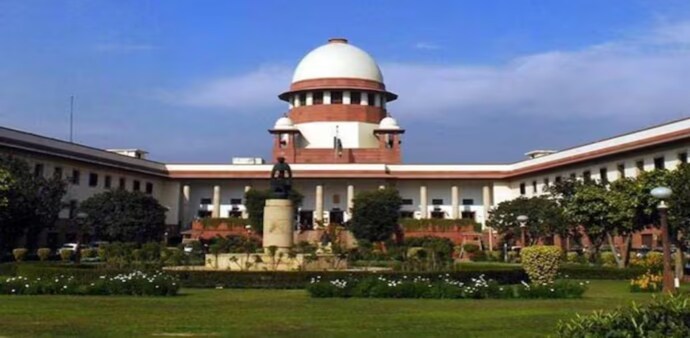
The Supreme Court on Wednesday underlined the strength and stability of India’s Constitution, noting its importance at a time when countries like Nepal and Bangladesh are facing political unrest.
“We are proud of our Constitution… when we see whatever is happening in neighbouring states, like what happened in Nepal yesterday,” Chief Justice of India B. R. Gavai said.
The remark came as a five-judge Constitution Bench — comprising Justices Surya Kant, Vikram Nath, P. S. Narasimha, and A. S. Chandurkar, led by the CJI — heard a reference made by President Droupadi Murmu. The matter relates to the time limits fixed by the court for the President and Governors to act on bills passed by state legislatures.
The discussion turned to whether parties could rely on empirical data about how long Governors have taken to act on bills. Solicitor General Tushar Mehta supported the CJI’s observation.
Earlier, Senior Advocate A M Singhvi had tried to present some data, but Mehta, appearing for the Centre, objected. On Wednesday, however, Mehta himself cited data going back to 1970. “Only 20 Bills have been withheld in the last 55 years. I have the data which shows that for 90 per cent of Bills, assent is given within one month… and more than six months is few,” he said.
Singhvi objected, pointing out that he had been stopped from presenting similar information earlier due to Mehta’s opposition. Senior Advocate Kapil Sibal, appearing for West Bengal, added that he too had not been allowed to present data.
The bench told the Solicitor General it would be unfair to let him rely on such data after opposing others from doing so. “In that case, we will have to see their data also. It can’t be one-sided… If you object to their sharing data, it should apply to you also… You having objected, you can’t now turn back and say that I want to give empirical data. Please argue on questions of law… They wanted to present the data in respect of the state which they are representing as to how many days and how many years… Bills are pending with the Governor. You objected to presenting such data. Now you can’t say that you will present the all-India data…,” the CJI said.
Mehta responded, “I am not giving the problems. I am giving the empirical data; how the Constitution has worked since 1970… for the last 55 years.” But the bench did not allow it.
Justice Vikram Nath said, “Nation is continuing with the Constitution and democracy for 75 years irrespective of whether 50 Bills have been withheld, 90 per cent Bills have been withheld, or whatever. The states are also functioning; the Centre is also functioning. Leave that aspect.”
The CJI repeated, “We are proud of our Constitution…when we see whatever is happening in neighbouring states, like what happened in Nepal yesterday.”
“We are proud of the Constitution…,” Mehta agreed. “Earlier Bangladesh,” added Justice Nath. “Nepal happened just two days ago,” the CJI said.
The Supreme Court on Wednesday underlined the strength and stability of India’s Constitution, noting its importance at a time when countries like Nepal and Bangladesh are facing political unrest.
“We are proud of our Constitution… when we see whatever is happening in neighbouring states, like what happened in Nepal yesterday,” Chief Justice of India B. R. Gavai said.
The remark came as a five-judge Constitution Bench — comprising Justices Surya Kant, Vikram Nath, P. S. Narasimha, and A. S. Chandurkar, led by the CJI — heard a reference made by President Droupadi Murmu. The matter relates to the time limits fixed by the court for the President and Governors to act on bills passed by state legislatures.
The discussion turned to whether parties could rely on empirical data about how long Governors have taken to act on bills. Solicitor General Tushar Mehta supported the CJI’s observation.
Earlier, Senior Advocate A M Singhvi had tried to present some data, but Mehta, appearing for the Centre, objected. On Wednesday, however, Mehta himself cited data going back to 1970. “Only 20 Bills have been withheld in the last 55 years. I have the data which shows that for 90 per cent of Bills, assent is given within one month… and more than six months is few,” he said.
Singhvi objected, pointing out that he had been stopped from presenting similar information earlier due to Mehta’s opposition. Senior Advocate Kapil Sibal, appearing for West Bengal, added that he too had not been allowed to present data.
The bench told the Solicitor General it would be unfair to let him rely on such data after opposing others from doing so. “In that case, we will have to see their data also. It can’t be one-sided… If you object to their sharing data, it should apply to you also… You having objected, you can’t now turn back and say that I want to give empirical data. Please argue on questions of law… They wanted to present the data in respect of the state which they are representing as to how many days and how many years… Bills are pending with the Governor. You objected to presenting such data. Now you can’t say that you will present the all-India data…,” the CJI said.
Mehta responded, “I am not giving the problems. I am giving the empirical data; how the Constitution has worked since 1970… for the last 55 years.” But the bench did not allow it.
Justice Vikram Nath said, “Nation is continuing with the Constitution and democracy for 75 years irrespective of whether 50 Bills have been withheld, 90 per cent Bills have been withheld, or whatever. The states are also functioning; the Centre is also functioning. Leave that aspect.”
The CJI repeated, “We are proud of our Constitution…when we see whatever is happening in neighbouring states, like what happened in Nepal yesterday.”
“We are proud of the Constitution…,” Mehta agreed. “Earlier Bangladesh,” added Justice Nath. “Nepal happened just two days ago,” the CJI said.