
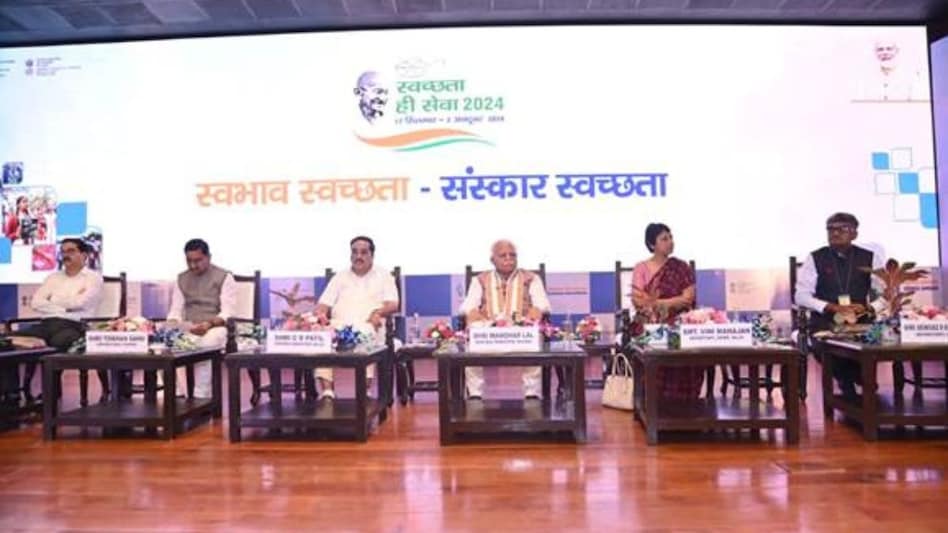
Swabhav Swachhata Sanskaar Swachhata (4S) 2024 Campaign unveiled at New Delhi event
The campaign will concentrate on Cleanliness Target Units (CTUs), which include difficult and dirty spots like tourist locations, public buildings, commercial areas, and community toilets.
- Sep 13, 2024,
- Updated Sep 13, 2024 8:27 PM IST
In a significant move for the Swachh Bharat Mission (SBM), the government has announced a focused campaign for 2024, aiming to tackle around 200,000 of the most challenging and dirty spots across India. This new initiative, dubbed the ‘Swabhav Swachhata Sanskaar Swachhata (4S)’ campaign, will run from September 17 to October 2, 2024, and marks the mission's 10th anniversary.
Union Minister for Housing and Urban Affairs, Manohar Lal, and Union Minister for Jal Shakti, C R Patil, introduced the campaign at a launch event held at Sushma Swaraj Bhawan in New Delhi. The ministers emphasized that this year’s campaign is a major step forward, moving from the previous focus on 'Cleanliness is Service' to 'Cleanliness as Swabhav & Sanskaar,' highlighting the personal responsibility of each individual.
The campaign will concentrate on Cleanliness Target Units (CTUs), which include difficult and dirty spots like tourist locations, public buildings, commercial areas, and community toilets. Central Public Sector Units (PSUs), industry partners, and non-governmental organizations (NGOs) are being encouraged to adopt and clean these CTUs. The aim is to enhance public spaces through collaborative cleanliness drives and community involvement.
During the announcement, Shri Manohar Lal noted that there are approximately 2,300 dumpsites in urban areas, holding around 22 crore metric tons of waste. So far, 427 dumpsites with 9 crore metric tons of waste have been remediated, reclaiming 4,500 acres of land. The mission is now focusing on improving waste collection and processing methods.
Shri C R Patil highlighted the mission’s success in improving sanitation across the country. He noted that over 93% of women now have access to toilets, and the mission has contributed to a reduction in infant mortality by about three lakh in the past five years. The Swachh Bharat Mission, launched in 2014 by Prime Minister Narendra Modi, has become a key initiative for behavior change and is recognized globally for its impact on public health and sanitation.
The 2024 campaign is built around three main pillars:
- Swachhata Ki Bhaagidari: Encouraging public participation and raising awareness about cleanliness.
- Sampoorna Swachhata: Conducting large-scale cleanliness drives targeting the most challenging and dirty areas.
- SafaiMitra Suraksha Shivir: Providing safety and welfare services for sanitation workers, including health camps and recognition programs.
The campaign embraces a ‘Whole of Society’ approach, involving citizens, businesses, NGOs, and local bodies. It also adopts a ‘Whole of Government’ approach, with participation from all States, Union Territories, and Central Ministries.
The campaign will culminate on October 2, the birth anniversary of Mahatma Gandhi, marking a decade of transformative efforts under the Swachh Bharat Mission.
In a significant move for the Swachh Bharat Mission (SBM), the government has announced a focused campaign for 2024, aiming to tackle around 200,000 of the most challenging and dirty spots across India. This new initiative, dubbed the ‘Swabhav Swachhata Sanskaar Swachhata (4S)’ campaign, will run from September 17 to October 2, 2024, and marks the mission's 10th anniversary.
Union Minister for Housing and Urban Affairs, Manohar Lal, and Union Minister for Jal Shakti, C R Patil, introduced the campaign at a launch event held at Sushma Swaraj Bhawan in New Delhi. The ministers emphasized that this year’s campaign is a major step forward, moving from the previous focus on 'Cleanliness is Service' to 'Cleanliness as Swabhav & Sanskaar,' highlighting the personal responsibility of each individual.
The campaign will concentrate on Cleanliness Target Units (CTUs), which include difficult and dirty spots like tourist locations, public buildings, commercial areas, and community toilets. Central Public Sector Units (PSUs), industry partners, and non-governmental organizations (NGOs) are being encouraged to adopt and clean these CTUs. The aim is to enhance public spaces through collaborative cleanliness drives and community involvement.
During the announcement, Shri Manohar Lal noted that there are approximately 2,300 dumpsites in urban areas, holding around 22 crore metric tons of waste. So far, 427 dumpsites with 9 crore metric tons of waste have been remediated, reclaiming 4,500 acres of land. The mission is now focusing on improving waste collection and processing methods.
Shri C R Patil highlighted the mission’s success in improving sanitation across the country. He noted that over 93% of women now have access to toilets, and the mission has contributed to a reduction in infant mortality by about three lakh in the past five years. The Swachh Bharat Mission, launched in 2014 by Prime Minister Narendra Modi, has become a key initiative for behavior change and is recognized globally for its impact on public health and sanitation.
The 2024 campaign is built around three main pillars:
- Swachhata Ki Bhaagidari: Encouraging public participation and raising awareness about cleanliness.
- Sampoorna Swachhata: Conducting large-scale cleanliness drives targeting the most challenging and dirty areas.
- SafaiMitra Suraksha Shivir: Providing safety and welfare services for sanitation workers, including health camps and recognition programs.
The campaign embraces a ‘Whole of Society’ approach, involving citizens, businesses, NGOs, and local bodies. It also adopts a ‘Whole of Government’ approach, with participation from all States, Union Territories, and Central Ministries.
The campaign will culminate on October 2, the birth anniversary of Mahatma Gandhi, marking a decade of transformative efforts under the Swachh Bharat Mission.