
'Tariff policy will be less insane': Gita Gopinath after Democrats stun Trump in US midterms
Gopinath shared three predictions about the US economy, including the future of Federal Reserve Chair Jerome Powell and the country's fiscal deficit
- Nov 4, 2026,
- Updated Nov 4, 2026 9:06 PM IST
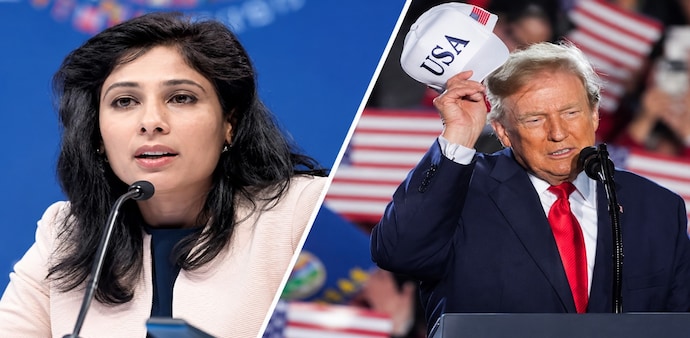
After a stunning upset in the US midterm elections that saw Democrats wrest control of both chambers of Congress from Republicans, former IMF First Deputy Managing Director Gita Gopinath has predicted a shift in President Donald Trump's tariff policy and greater independence for the Federal Reserve.
However, she warned that America's fiscal deficit would remain a problem despite the political shake-up.
Read More | US midterm elections: What can’t Trump do anymore now that the Democrats have seized Congress?
"With democrats taking control of Congress I expect (with varying levels of confidence) that: Jay Powell will step out of the Fed as central bank independence will be more secure. Tariff policy will be less insane. Fiscal deficits will remain a problem," she said.
The Democrats secured majorities in both the House of Representatives and the Senate in the midterm elections, dealing a major setback to President Donald Trump.
Don't Miss: Trump's midterm defeat raises hopes of tariff relief, but India still faces trade risks - experts explain
The party flipped at least seven Senate seats and more than two dozen House districts, according to election results reported by Reuters and the Associated Press.
The outcome will give Democrats greater power to block Trump's legislative agenda, scrutinise his administration and challenge his policies during the remaining two years of his presidency.
However, Trump will retain his presidential veto power, limiting Congress's ability to reverse his policies without sufficient bipartisan support.
Trump imposed sweeping tariffs on several trading partners, including India, during his second term.
In 2025, the Trump administration raised tariffs on Indian goods to as much as 50%, including an additional 25% levy linked to India's purchases of Russian oil.
In February 2026, Washington announced a reduction in tariffs on Indian goods to 18% as part of a trade arrangement. The US Supreme Court subsequently struck down Trump's use of emergency powers to impose several tariffs, prompting the administration to pursue alternative measures.
Democratic control of Congress could increase scrutiny of future trade restrictions, although it does not automatically reverse existing tariffs.