
‘The food never comes, but the dopamine does’: Meet the new internet trend letting you shop without spending, but there’s a catch
FoodNeverComes is part of a growing category of “dopamine sites” that recreate the rituals of consumption without the actual purchase.
- Sep 24, 2026,
- Updated Sep 24, 2026 4:22 PM IST
A website that lets users browse food menus, place imaginary orders and track deliveries that never arrive has attracted more than 2.7 million visitors since launching in June, BBC reported on Thursday.
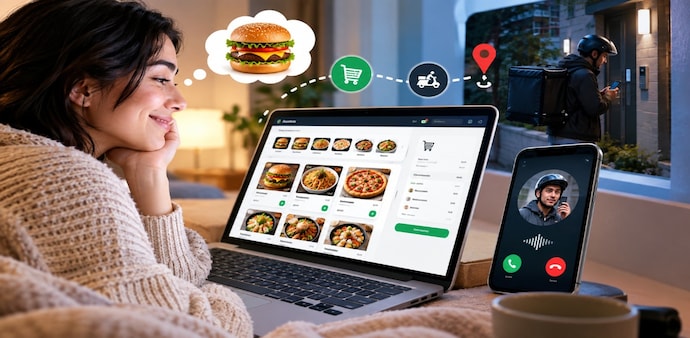
FoodNeverComes offers a simulated food-delivery experience, complete with fake prices, checkout and an AI-generated call from a fictional delivery rider.
FoodNeverComes offers 22 fake kitchens, 327 dishes and 319 real recipes. Users can browse the menus, add dishes to their cart and watch the total rise before going through a simulated checkout.
The website can then create a fictional delivery experience, including a call from a rider claiming to be outside the user's building but unable to find the street or door.
Its slogan is: “The food never comes - but the dopamine does.”
FoodNeverComes is part of a growing category of “dopamine sites” that recreate the rituals of consumption without the actual purchase. Similar websites now mimic shopping, food delivery and travel.
Don't Miss: Amazon to invest $3 billion to expand quick commerce in India by 2030
Why the founders created it
The website was built by 26-year-old software developers Purvansh Parmar and Anshul Sharma from Udaipur, Rajasthan.
The idea came from their own shopping habits. Sharma noticed that he would browse electronics, fill his online basket and then abandon it. Parmar says his mother did something similar.
Parmar also noticed the pattern in his own food-ordering habits. During a two-month project in Mumbai, he says he spent ₹5,000-10,000 a week on food, sometimes ordering treats he did not really need.
He began to wonder if the craving was sometimes for the act of ordering itself.
“Sometimes you're not hungry at all. You're bored or busy, and then you realise that ordering food makes you feel good,” Parmar says.
The psychology behind the habit
Ravi Dhar, director of the Yale Center for Customer Insights, calls this “anticipatory utility” - the pleasure of looking forward to consuming something.
Kent Berridge, a University of Michigan neuroscientist, says “wanting” and “liking” are separate processes. Wanting is the motivation to get something, while liking is the pleasure of having it. Dopamine, in his account, is linked to wanting rather than simply pleasure.
Stanford addiction psychiatrist Anna Lembke makes a similar distinction. She says dopamine is not simply a pleasure chemical and that anticipation of a reward can itself become reinforcing.
Must Read: Auto driver earns ₹75,000/month but struggles with ₹1.4 lakh school fees, video goes viral
Can fake orders satisfy the urge?
There is no clear answer yet.
Berridge says imaginary ordering could produce strong “wanting”, but expects the novelty to wear off.
Dhar says simulated consumption could potentially satisfy a consumer urge, although more research is needed.
Lembke says the effect could also go the other way, with repeated use potentially reinforcing the same behaviours the sites are meant to simulate.
The founders have since expanded the idea with TripNeverLeaves, a website where users can plan a holiday and take a virtual flight that never leaves the runway. They say it has attracted more than 100,000 visitors.
A website that lets users browse food menus, place imaginary orders and track deliveries that never arrive has attracted more than 2.7 million visitors since launching in June, BBC reported on Thursday.
FoodNeverComes offers a simulated food-delivery experience, complete with fake prices, checkout and an AI-generated call from a fictional delivery rider.
FoodNeverComes offers 22 fake kitchens, 327 dishes and 319 real recipes. Users can browse the menus, add dishes to their cart and watch the total rise before going through a simulated checkout.
The website can then create a fictional delivery experience, including a call from a rider claiming to be outside the user's building but unable to find the street or door.
Its slogan is: “The food never comes - but the dopamine does.”
FoodNeverComes is part of a growing category of “dopamine sites” that recreate the rituals of consumption without the actual purchase. Similar websites now mimic shopping, food delivery and travel.
Don't Miss: Amazon to invest $3 billion to expand quick commerce in India by 2030
Why the founders created it
The website was built by 26-year-old software developers Purvansh Parmar and Anshul Sharma from Udaipur, Rajasthan.
The idea came from their own shopping habits. Sharma noticed that he would browse electronics, fill his online basket and then abandon it. Parmar says his mother did something similar.
Parmar also noticed the pattern in his own food-ordering habits. During a two-month project in Mumbai, he says he spent ₹5,000-10,000 a week on food, sometimes ordering treats he did not really need.
He began to wonder if the craving was sometimes for the act of ordering itself.
“Sometimes you're not hungry at all. You're bored or busy, and then you realise that ordering food makes you feel good,” Parmar says.
The psychology behind the habit
Ravi Dhar, director of the Yale Center for Customer Insights, calls this “anticipatory utility” - the pleasure of looking forward to consuming something.
Kent Berridge, a University of Michigan neuroscientist, says “wanting” and “liking” are separate processes. Wanting is the motivation to get something, while liking is the pleasure of having it. Dopamine, in his account, is linked to wanting rather than simply pleasure.
Stanford addiction psychiatrist Anna Lembke makes a similar distinction. She says dopamine is not simply a pleasure chemical and that anticipation of a reward can itself become reinforcing.
Must Read: Auto driver earns ₹75,000/month but struggles with ₹1.4 lakh school fees, video goes viral
Can fake orders satisfy the urge?
There is no clear answer yet.
Berridge says imaginary ordering could produce strong “wanting”, but expects the novelty to wear off.
Dhar says simulated consumption could potentially satisfy a consumer urge, although more research is needed.
Lembke says the effect could also go the other way, with repeated use potentially reinforcing the same behaviours the sites are meant to simulate.
The founders have since expanded the idea with TripNeverLeaves, a website where users can plan a holiday and take a virtual flight that never leaves the runway. They say it has attracted more than 100,000 visitors.