
‘The Pearl of Malacca’: Why the Great Nicobar project is important for India
Great Nicobar infrastructure project: While giving its nod, the NGT said that adequate safeguards had been provided in the environmental clearance (EC) conditions.
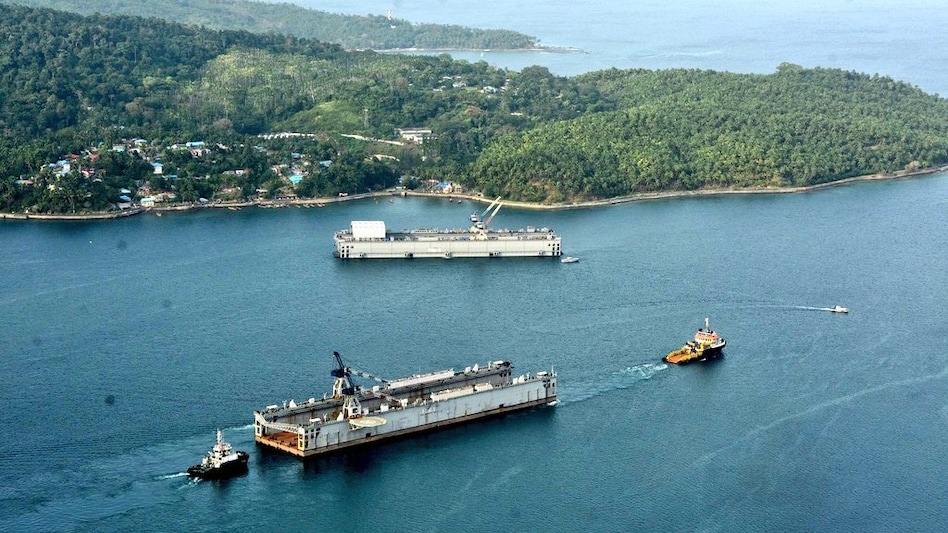
- Feb 17, 2026,
- Updated Feb 17, 2026 3:59 PM IST
India has its eyes set on the ‘Pearl of Malacca’ – the multibillion-dollar Great Nicobar project – which is now one step closer to fruition. The National Green Tribunal (NGT) has cleared the proposed International Container Transhipment Terminal in Great Nicobar Island.
‘STRATEGIC IMPERATIVE’
Geostrategist Brahma Chellaney, recognising the strategic placement of the transhipment terminal, has said that environmental challenges are formidable. He said the project is likely to take years to take shape.
Nevertheless, the project is important for India.
“Because most Indian ports are not deep enough to handle the world’s largest container ships, roughly 75% of India’s transshipment cargo — goods transferred from one vessel to another en route to their final destination — is currently handled at foreign ports, principally Colombo (Sri Lanka), Singapore, Port Klang (Malaysia) and Dubai, in that order. This is a costly drain on the Indian economy, with India estimated to lose hundreds of millions of dollars in potential revenue each year to these external hubs,” he said.
Galathea Bay offers the 20-meter depth that’s required for modern ultra-large container vessels without expensive dredging. “The more consequential port at Galathea Bay — located only 40 nautical miles from the East-West International Shipping Lane — would go further, helping India reduce its dependence on foreign ports,” he said.
“There is also a strategic imperative. The project aims to turn Great Nicobar into the “Pearl of the Malacca” through dual-use facilities, allowing India to project power further into the Indo-Pacific and serve as a crucial watchdog against the growing hostile naval presence,” he added, recognising the environmental sensitivity of the region.
Great Nicobar is a UNESCO Biosphere Reserve and a global biodiversity hotspot. The project does take into account environmental safeguards but concerns about its ecological impact remain.
NGT GIVES THE GREEN SIGNAL
While giving its nod, the NGT said that adequate safeguards had been provided in the environmental clearance (EC) conditions.
"We find that adequate safeguards have been provided in the EC conditions and in the first round of litigation the tribunal had refused to interfere in the EC and remaining issues noted by the tribunal in the first round of litigation have been dealt with by the HPC (high-powered committee) and considering the strategic importance of the project and taking into account the other relevant considerations, we do not find any good ground to interfere," the tribunal said.
The zonal bench of NGT in Kolkata, headed by Chairperson Justice Prakash Shrivastava, passed the order on Monday. It had heard multiple objections to the proposed terminal, the township, area development and the 450 MVA gas and solar-based power plant. The petitions challenged the earlier clearances granted for the project claiming violations of the Island Coastal Regulation Zone (ICRZ) notification.
The tribunal adopted a balanced approach, as the strategic importance of the project or the conditions of the ICRZ notification could not be ignored. The NGT said specific conditions for the protection of leatherback sea turtle, Nicobar megapode, saltwater crocodiles, inter-tidal flora and fauna, Nicobar Macaque, Robber Crab and other endemic bird species of Great Nicobar Island, mangrove, coral as well as the welfare of local tribal population of Shompen and Nicobaris are included in the EC.
India has its eyes set on the ‘Pearl of Malacca’ – the multibillion-dollar Great Nicobar project – which is now one step closer to fruition. The National Green Tribunal (NGT) has cleared the proposed International Container Transhipment Terminal in Great Nicobar Island.
‘STRATEGIC IMPERATIVE’
Geostrategist Brahma Chellaney, recognising the strategic placement of the transhipment terminal, has said that environmental challenges are formidable. He said the project is likely to take years to take shape.
Nevertheless, the project is important for India.
“Because most Indian ports are not deep enough to handle the world’s largest container ships, roughly 75% of India’s transshipment cargo — goods transferred from one vessel to another en route to their final destination — is currently handled at foreign ports, principally Colombo (Sri Lanka), Singapore, Port Klang (Malaysia) and Dubai, in that order. This is a costly drain on the Indian economy, with India estimated to lose hundreds of millions of dollars in potential revenue each year to these external hubs,” he said.
Galathea Bay offers the 20-meter depth that’s required for modern ultra-large container vessels without expensive dredging. “The more consequential port at Galathea Bay — located only 40 nautical miles from the East-West International Shipping Lane — would go further, helping India reduce its dependence on foreign ports,” he said.
“There is also a strategic imperative. The project aims to turn Great Nicobar into the “Pearl of the Malacca” through dual-use facilities, allowing India to project power further into the Indo-Pacific and serve as a crucial watchdog against the growing hostile naval presence,” he added, recognising the environmental sensitivity of the region.
Great Nicobar is a UNESCO Biosphere Reserve and a global biodiversity hotspot. The project does take into account environmental safeguards but concerns about its ecological impact remain.
NGT GIVES THE GREEN SIGNAL
While giving its nod, the NGT said that adequate safeguards had been provided in the environmental clearance (EC) conditions.
"We find that adequate safeguards have been provided in the EC conditions and in the first round of litigation the tribunal had refused to interfere in the EC and remaining issues noted by the tribunal in the first round of litigation have been dealt with by the HPC (high-powered committee) and considering the strategic importance of the project and taking into account the other relevant considerations, we do not find any good ground to interfere," the tribunal said.
The zonal bench of NGT in Kolkata, headed by Chairperson Justice Prakash Shrivastava, passed the order on Monday. It had heard multiple objections to the proposed terminal, the township, area development and the 450 MVA gas and solar-based power plant. The petitions challenged the earlier clearances granted for the project claiming violations of the Island Coastal Regulation Zone (ICRZ) notification.
The tribunal adopted a balanced approach, as the strategic importance of the project or the conditions of the ICRZ notification could not be ignored. The NGT said specific conditions for the protection of leatherback sea turtle, Nicobar megapode, saltwater crocodiles, inter-tidal flora and fauna, Nicobar Macaque, Robber Crab and other endemic bird species of Great Nicobar Island, mangrove, coral as well as the welfare of local tribal population of Shompen and Nicobaris are included in the EC.