
There has been no pressure to stop purchasing Russian oil: Hardeep Singh Puri
Referring to restrictions imposed on Russian entities Rosneft and Lukoil, the minister said buyers could source oil from other suppliers, including the United Arab Emirates, said Puri.
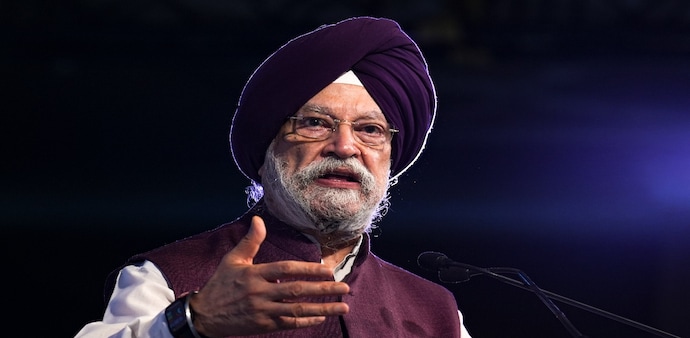
- Oct 28, 2026,
- Updated Oct 28, 2026 8:35 AM IST
Union Petroleum Minister Hardeep Singh Puri said India was under no pressure to stop buying Russian crude, reiterating that the country's oil procurement decisions were guided by commercial considerations and energy security.
“I have never felt any pressure,” Puri said during an interaction at the 29th Energy Technology and Innovation Meet in south Goa. India was not particularly buying Russian oil at present, he said, adding that refiners would source crude from suppliers offering the most competitive prices.
“At the point of negotiation, whoever is supplying a particular grade, we will buy from them. Prices come down sometimes,” he said.
MUST READ | Government is absorbing the oil shock: Who ultimately pays the bill?
Puri’s remarks come amid international scrutiny of India’s Russian oil purchases and Western efforts to curb Moscow’s oil revenues following its invasion of Ukraine.
Referring to restrictions imposed on Russian entities Rosneft and Lukoil, the minister said buyers could source oil from other suppliers, including the United Arab Emirates. India had also diversified its energy investments and sourcing, including investments in Saudi Arabia and other locations.
As a major energy-consuming nation, India could not compromise on energy security amid geopolitical developments and volatility in international markets, Puri said. Procurement decisions involved several commercial and supply considerations, with the government seeking to ensure reliable supplies while managing costs for consumers and the broader economy.
DON'T MISS | Crude oil shipping costs surge nearly 7-fold: Will Indian consumers pay more for fuel?
Puri also said India was poised to strengthen its position as a global refining hub, with capacity expected to rise to 300 million tonnes per annum by 2030 from around 290 million tonnes currently.
Speaking at a news conference on the sidelines of the meet, he said the expansion would enable India to meet domestic requirements while supplying more petroleum products to international markets.
“With refining capacity increasing in a big way, we will be in the happy situation of not only refining for ourselves, but for the world,” he said.
Puri contrasted India's expanding refining infrastructure with capacity declines in Europe and other Western markets, estimating that Europe was losing at least 2,50,000 barrels per day of refining capacity annually.
MUST READ | How the Iran war reshaped OPEC+ oil output: Saudi Arabia, Iraq and gulf supply in focus
He said existing facilities were scaling up, with some refineries expanding from 3 million tonnes per annum to 6 million tonnes, and others from 6 million tonnes to 9 million tonnes.
The increased capacity would allow India to supply more products, including diesel, to both domestic and overseas markets.
“We are in a position to supply more to domestic and more to outside,” Puri said, adding that initiatives such as Samudra Manthan and GOBARdhan would complement the country's expanding energy infrastructure.