
'There is nothing new': Pakistan scholar says Saudi defence pact targeted at Iran, not Israel
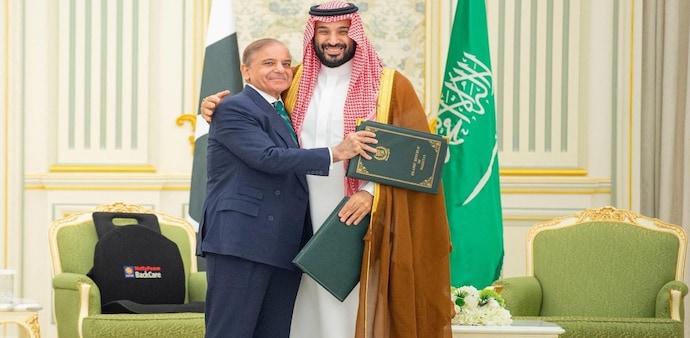
Pakistan and Saudi Arabia signed a "Strategic Mutual Defence Agreement" in Riyadh, under which an attack on one country will be considered an attack on both.
- Sep 21, 2025,
- Updated Sep 21, 2025 10:10 AM IST
Ayesha Siddiqa, senior fellow at King's College's Department of War Studies, said on Saturday that there was nothing new in Pakistan's defence pact with Saudi Arabia and that it primarily addresses Riyadh's concerns about Iran, rather than Israel.
On Wednesday, Pakistan and Saudi Arabia signed a "Strategic Mutual Defence Agreement" in Riyadh, under which an attack on one country will be considered an attack on both. The agreement followed the 9 September Israeli airstrike on Qatar, which targeted visiting Hamas leaders.
Siddiqa said that the timing of the agreement has created two broad impressions in Pakistan. "One is that Riyadh, fearful of Israeli aggression and no longer trusting the United States to protect its allies, has started to look toward Pakistan for protection. And two, that this agreement could lead to a broader security pact in which Pakistan may become a guarantor of Middle Eastern peace," she wrote in an opinion piece for ThePrint.
She noted, however, that such assumptions "rest on Rawalpindi's projections of confidence after its recent near-war with India, especially with US President Donald Trump making statements about ‘five jets’ being shot down."
Siddiqa highlighted that Pakistan's relationship with Saudi Arabia is longstanding. "There is nothing new about the agreement, as Pakistan has been providing division-strength military security to Riyadh since the 1980s. What is new, however, is the term 'strategic', which is supposedly linked to nuclear security—something Riyadh has long desired from Islamabad."
According to Siddiqa, Pakistan has helped the Saudi monarchy for decades, dating back to the 1960s. She also pointed to historical moments, including the 1979 Siege of Mecca, which increased the need for Pakistani military presence in Saudi Arabia. The agreement reportedly touches upon nuclear security, though details remain undisclosed.
She emphasised that the pact is primarily aimed at addressing Iran's threat. "...the defence agreement has little to do with a broader Middle East order or Israel. Rather, it is aimed at building Saudi capacity vis-à-vis Iran. The agreement should be evaluated in the context of a series of recent attacks, starting with the Israeli-American strikes on Iran that sought to destroy its nuclear capability."
Siddiqa cautioned that the exact details of nuclear provisions remain unclear, including whether Pakistan might station parts of its strategic force in Saudi Arabia or provide nuclear-capable cruise missiles.
On the broader strategic implications, she wrote, "This agreement is not about Pakistan and Saudi Arabia looking Trump in the eye or Riyadh turning away from Washington. If anything, it can be surmised that the agreement was made with a fair amount of consultation with the Americans, who would have allowed Pakistan this level of proliferation. This could be termed as kosher proliferation."
Siddiqa concluded that the pact represents an evolving security story: "The least that can be said is that the strategic mutual defence agreement is a major milestone for both the region and Pakistan. It is now an evolving story in which all sides will gradually learn how deterrence may function in the Middle East with subcontracted strategic security."
Ayesha Siddiqa, senior fellow at King's College's Department of War Studies, said on Saturday that there was nothing new in Pakistan's defence pact with Saudi Arabia and that it primarily addresses Riyadh's concerns about Iran, rather than Israel.
On Wednesday, Pakistan and Saudi Arabia signed a "Strategic Mutual Defence Agreement" in Riyadh, under which an attack on one country will be considered an attack on both. The agreement followed the 9 September Israeli airstrike on Qatar, which targeted visiting Hamas leaders.
Siddiqa said that the timing of the agreement has created two broad impressions in Pakistan. "One is that Riyadh, fearful of Israeli aggression and no longer trusting the United States to protect its allies, has started to look toward Pakistan for protection. And two, that this agreement could lead to a broader security pact in which Pakistan may become a guarantor of Middle Eastern peace," she wrote in an opinion piece for ThePrint.
She noted, however, that such assumptions "rest on Rawalpindi's projections of confidence after its recent near-war with India, especially with US President Donald Trump making statements about ‘five jets’ being shot down."
Siddiqa highlighted that Pakistan's relationship with Saudi Arabia is longstanding. "There is nothing new about the agreement, as Pakistan has been providing division-strength military security to Riyadh since the 1980s. What is new, however, is the term 'strategic', which is supposedly linked to nuclear security—something Riyadh has long desired from Islamabad."
According to Siddiqa, Pakistan has helped the Saudi monarchy for decades, dating back to the 1960s. She also pointed to historical moments, including the 1979 Siege of Mecca, which increased the need for Pakistani military presence in Saudi Arabia. The agreement reportedly touches upon nuclear security, though details remain undisclosed.
She emphasised that the pact is primarily aimed at addressing Iran's threat. "...the defence agreement has little to do with a broader Middle East order or Israel. Rather, it is aimed at building Saudi capacity vis-à-vis Iran. The agreement should be evaluated in the context of a series of recent attacks, starting with the Israeli-American strikes on Iran that sought to destroy its nuclear capability."
Siddiqa cautioned that the exact details of nuclear provisions remain unclear, including whether Pakistan might station parts of its strategic force in Saudi Arabia or provide nuclear-capable cruise missiles.
On the broader strategic implications, she wrote, "This agreement is not about Pakistan and Saudi Arabia looking Trump in the eye or Riyadh turning away from Washington. If anything, it can be surmised that the agreement was made with a fair amount of consultation with the Americans, who would have allowed Pakistan this level of proliferation. This could be termed as kosher proliferation."
Siddiqa concluded that the pact represents an evolving security story: "The least that can be said is that the strategic mutual defence agreement is a major milestone for both the region and Pakistan. It is now an evolving story in which all sides will gradually learn how deterrence may function in the Middle East with subcontracted strategic security."