
'They'll be the first to scream if...': Sanjeev Sanyal on demolition of Satyajit Ray's ancestral home in Bangladesh
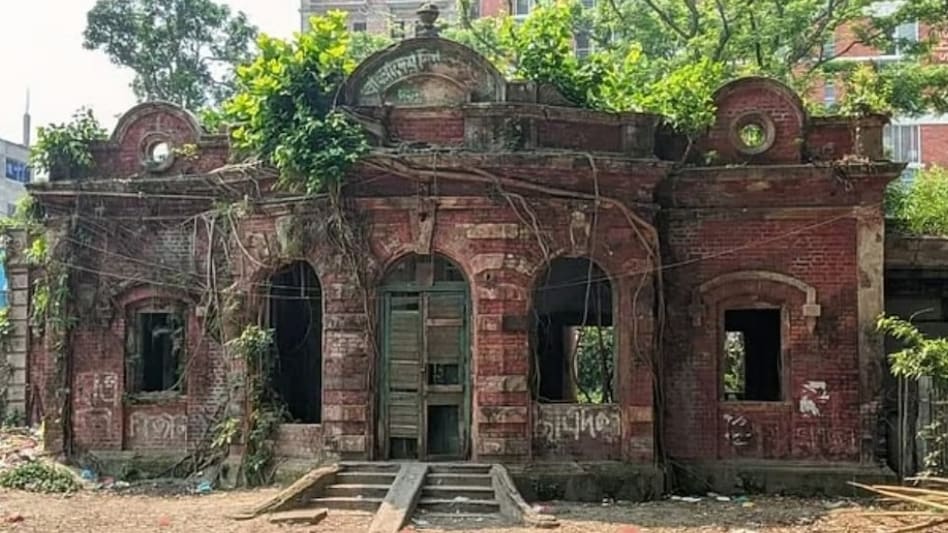
The century-old ancestral house of Satyajit Ray's family in Mymensingh, Bangladesh, is being demolished to make way for a new semi-concrete structure.
- Jul 16, 2025,
- Updated Jul 16, 2025 11:32 AM IST
Economist and historian Sanjeev Sanyal recently took to social media to share his take on the demolition of filmmaker Satyajit Ray's ancestral home in Bangladesh. The century-old ancestral house of Satyajit Ray's family in Mymensingh, Bangladesh, is being demolished to make way for a new semi-concrete structure.
Commenting on the incident, Sanyal said that the very people who were silent when Rabindranath Tagore's house was demolished haven't said anything now as well.
"They were silent when Tagore's house was vandalised. They are silent when Satyajit Ray's ancestral home is demolished. Indeed, they are complicit to the systematic erasure of Bengali Hindu identity is Bangladesh. Yet, they will be first to scream if someone sings a Tagore song by one note off," Sanyal said in a post on X (formerly Twitter).
The building, which has been abandoned for about 10 years, has posed safety risks to children gathering at the compound. India has expressed regret over the demolition and offered to assist in the repair and reconstruction of the property.
“Given the building’s landmark status, symbolising Bangla cultural renaissance, it would be preferable to reconsider the demolition and examine options for its repair and reconstruction as a museum of literature and a symbol of the shared culture of India and Bangladesh,” the MEA said.
“The Government of India would be willing to extend cooperation for this purpose,” it said. After India's partition in 1947, the government took over the ownership of the property, which was turned into the Mumensingh Shishu Axademy in 1989.
This, however, is not the first such instance. On June 8 this year, a mob vandalized Nobel Laureate Rabindranath Tagore's ancestral home in Bangladesh, Rabindra Kachharibari. The incident occurred after a visitor was assaulted and confined in an office room.
The mob, including members of the Jamaatt-e-Islami and Hefazat-e-Islam, allegedly attacked the auditorium and a director.
Economist and historian Sanjeev Sanyal recently took to social media to share his take on the demolition of filmmaker Satyajit Ray's ancestral home in Bangladesh. The century-old ancestral house of Satyajit Ray's family in Mymensingh, Bangladesh, is being demolished to make way for a new semi-concrete structure.
Commenting on the incident, Sanyal said that the very people who were silent when Rabindranath Tagore's house was demolished haven't said anything now as well.
"They were silent when Tagore's house was vandalised. They are silent when Satyajit Ray's ancestral home is demolished. Indeed, they are complicit to the systematic erasure of Bengali Hindu identity is Bangladesh. Yet, they will be first to scream if someone sings a Tagore song by one note off," Sanyal said in a post on X (formerly Twitter).
The building, which has been abandoned for about 10 years, has posed safety risks to children gathering at the compound. India has expressed regret over the demolition and offered to assist in the repair and reconstruction of the property.
“Given the building’s landmark status, symbolising Bangla cultural renaissance, it would be preferable to reconsider the demolition and examine options for its repair and reconstruction as a museum of literature and a symbol of the shared culture of India and Bangladesh,” the MEA said.
“The Government of India would be willing to extend cooperation for this purpose,” it said. After India's partition in 1947, the government took over the ownership of the property, which was turned into the Mumensingh Shishu Axademy in 1989.
This, however, is not the first such instance. On June 8 this year, a mob vandalized Nobel Laureate Rabindranath Tagore's ancestral home in Bangladesh, Rabindra Kachharibari. The incident occurred after a visitor was assaulted and confined in an office room.
The mob, including members of the Jamaatt-e-Islami and Hefazat-e-Islam, allegedly attacked the auditorium and a director.