
'Three culprits of Partition': New NCERT module says Partition not inevitable, but result of 'wrong ideas'
According to the text, Mountbatten advanced the transfer of power from June 1948 to August 1947, leaving preparations incomplete.
- Aug 17, 2025,
- Updated Aug 17, 2025 11:08 AM IST
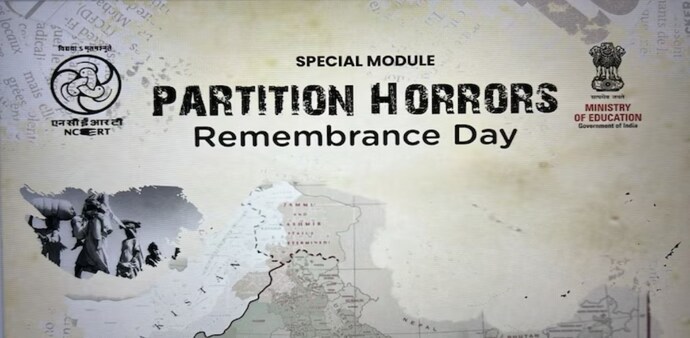
NCERT has released a special module for Partition Horrors Remembrance Day, holding Muhammad Ali Jinnah, the Congress and then Viceroy Lord Mountbatten responsible for India’s Partition, as reported by PTI.
The module says that Partition was not inevitable but the result of “wrong ideas.” It also highlights that Kashmir emerged as a fresh challenge after 1947, creating a problem in India’s foreign policy, with some countries continuing to use the issue to pressurise India and extend aid to Pakistan.
“India's Partition happened due to wrong ideas. The party of Indian Muslims, the Muslim League, held a conference in Lahore in 1940. Its leader, Muhammad Ali Jinnah, said that Hindus and Muslims belong to two different religious philosophies, social customs, and literatures,” the text states.
In a section titled Culprits of Partition, the module says: “Ultimately, on August 15, 1947, India was divided. But this was not the doing of any one person. There were three elements responsible for the Partition of India: Jinnah, who demanded it; second, the Congress, which accepted it; and third, Mountbatten, who implemented it. But Mountbatten proved to be guilty of a major blunder.”
According to the text, Mountbatten advanced the transfer of power from June 1948 to August 1947, leaving preparations incomplete. “The demarcation of the Partition boundaries was also done hastily. For that, Sir Cyril Radcliffe was given only five weeks. In Punjab, even two days after 15 August 1947, millions of people did not know whether they were in India or in Pakistan. Such haste was a great act of carelessness,” it says.
The module also cites Jinnah’s later admission: “I never thought it would happen. I never expected to see Pakistan in my lifetime.”
Quoting Sardar Vallabhbhai Patel, it notes: “India had become a battlefield, and it was better to partition the country than to have a civil war.” Mahatma Gandhi’s stance is also included: “He said that he could not be a party to the Partition, but he would not stop Congress from accepting it with violence.”
NCERT has issued two modules for Classes 6 to 8 and 9 to 12 as supplementary material, not regular textbooks. Both begin with Prime Minister Narendra Modi’s 2021 message announcing August 14 as Partition Horrors Remembrance Day: “Partition's pains can never be forgotten. Millions of our sisters and brothers were displaced, and many lost their lives due to mindless hate and violence.”
NCERT has released a special module for Partition Horrors Remembrance Day, holding Muhammad Ali Jinnah, the Congress and then Viceroy Lord Mountbatten responsible for India’s Partition, as reported by PTI.
The module says that Partition was not inevitable but the result of “wrong ideas.” It also highlights that Kashmir emerged as a fresh challenge after 1947, creating a problem in India’s foreign policy, with some countries continuing to use the issue to pressurise India and extend aid to Pakistan.
“India's Partition happened due to wrong ideas. The party of Indian Muslims, the Muslim League, held a conference in Lahore in 1940. Its leader, Muhammad Ali Jinnah, said that Hindus and Muslims belong to two different religious philosophies, social customs, and literatures,” the text states.
In a section titled Culprits of Partition, the module says: “Ultimately, on August 15, 1947, India was divided. But this was not the doing of any one person. There were three elements responsible for the Partition of India: Jinnah, who demanded it; second, the Congress, which accepted it; and third, Mountbatten, who implemented it. But Mountbatten proved to be guilty of a major blunder.”
According to the text, Mountbatten advanced the transfer of power from June 1948 to August 1947, leaving preparations incomplete. “The demarcation of the Partition boundaries was also done hastily. For that, Sir Cyril Radcliffe was given only five weeks. In Punjab, even two days after 15 August 1947, millions of people did not know whether they were in India or in Pakistan. Such haste was a great act of carelessness,” it says.
The module also cites Jinnah’s later admission: “I never thought it would happen. I never expected to see Pakistan in my lifetime.”
Quoting Sardar Vallabhbhai Patel, it notes: “India had become a battlefield, and it was better to partition the country than to have a civil war.” Mahatma Gandhi’s stance is also included: “He said that he could not be a party to the Partition, but he would not stop Congress from accepting it with violence.”
NCERT has issued two modules for Classes 6 to 8 and 9 to 12 as supplementary material, not regular textbooks. Both begin with Prime Minister Narendra Modi’s 2021 message announcing August 14 as Partition Horrors Remembrance Day: “Partition's pains can never be forgotten. Millions of our sisters and brothers were displaced, and many lost their lives due to mindless hate and violence.”