
'Too many rules, too much discretion': CEA Nageswaran outlines roadmap to tackle corruption
On tackling corruption, Nageswaran said the solution lay in reducing the scope for discretion
- Nov 3, 2025,
- Updated Nov 3, 2025 1:52 PM IST
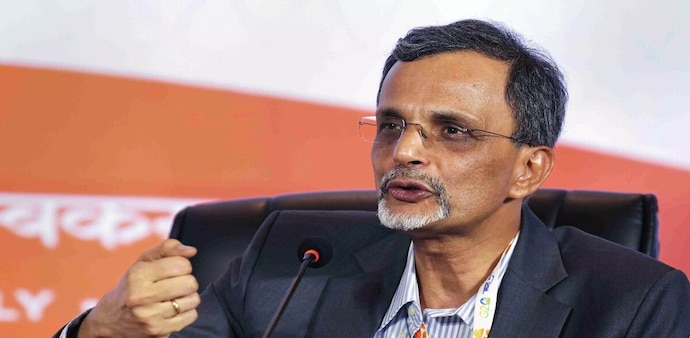
Chief Economic Advisor Dr V Anantha Nageswaran said India's regulatory burden has made "honesty a commodity at a premium," warning that excessive compliance and discretionary inspections continue to fuel corruption across levels of governance. Nageswaran said the corruption problem was not limited to taxes or bribes but lay deeper in India's compliance culture.
"There are problems which we have inherited as stock of problems, and when we say the government should remember we have government at all levels—union, state, and local," he said in a podcast conversation with Monika Halan for Groww.
"Where I was coming from is in terms of the regulatory burden because when you have so much of compliance, inspection, and licensing etc., the easier tendency is to take shortcuts, and the moment you take shortcuts then you are of course forever hostage to the discretion of the officials concerned. That is what I meant by saying we have raised the cost of being honest which means raised the cost of being compliant."
The CEA in the recent past has said that the government has to reduce the cost of being honest. When asked about his remarks, he said that excessive regulation not only distorts behavior but also stifles economic scale. "It also has it, naturally, rubs off into peer-to-peer transactions in private sector transactions also. Then honesty becomes a commodity at a premium and but it is honesty that leads to trust and then to scalability. So, I was coming from this angle because as a country with 1.45 billion people, you need scale in everything we do. And this compliance burden - indirectly or directly or both - inhibits formation of economies of scale."
On tackling corruption, Nageswaran said the solution lay in reducing the scope for discretion. "The answer is in many cases to let go of some of these regulations, which is what I wrote in the Economic Survey in January this year. That will naturally address rent-seeking. And by the way, in many areas we have done that. Some of the things that we used to bribe our way through are no longer necessary. They come automatically," he said.
He pointed out that while progress had been made, "the areas that need to be addressed still remain formidably large." The government, he said, was working on multiple fronts — through deregulation, reliance on self-certification, and management by exception.
"The government is very clearly focusing on even in tax administration the focus on faceless assessment or giving taxpayers the ability to go back up to four financial years and redo their numbers if necessary in a bonafide manner," he said, adding that multiple high-level committees were examining both central and state-level rules to minimize rent-seeking.
According to him, technology will play a decisive role in this shift. "Ultimately, the objective is to let economic activity proceed not at the discretion of the bureaucracy or the government machinery but mostly on its own. And today we have the technology to be able to target the evaders and the wrongdoers rather than making these rules and regulations and processes omnipresent and omnibus," he said.
He added that the priority should be "to deploy technology, reduce the compliance burden on most people, use technology to isolate and target those who are not obeying the laws, and also make them reasonable first before we use technology to go after the serial evaders."
Nageswaran said the awareness of this linkage was well established at the top. "This kind of realization I see it very clearly at the senior levels of bureaucracy and the political executive. But as we come down to different levels, naturally, there is a dilution of intent and execution, and we have to keep plugging away as we have been doing."
He concluded that India's progress must be acknowledged even as reforms continue. "Many of us in the public space, when we comment on these things, we always look at where we want to be and where we are. But it's equally important to recognize where we were and where we are, and that progress also has to be acknowledged, and that is an important motivator even for those who want to do good in their public roles," he said.
Chief Economic Advisor Dr V Anantha Nageswaran said India's regulatory burden has made "honesty a commodity at a premium," warning that excessive compliance and discretionary inspections continue to fuel corruption across levels of governance. Nageswaran said the corruption problem was not limited to taxes or bribes but lay deeper in India's compliance culture.
"There are problems which we have inherited as stock of problems, and when we say the government should remember we have government at all levels—union, state, and local," he said in a podcast conversation with Monika Halan for Groww.
"Where I was coming from is in terms of the regulatory burden because when you have so much of compliance, inspection, and licensing etc., the easier tendency is to take shortcuts, and the moment you take shortcuts then you are of course forever hostage to the discretion of the officials concerned. That is what I meant by saying we have raised the cost of being honest which means raised the cost of being compliant."
The CEA in the recent past has said that the government has to reduce the cost of being honest. When asked about his remarks, he said that excessive regulation not only distorts behavior but also stifles economic scale. "It also has it, naturally, rubs off into peer-to-peer transactions in private sector transactions also. Then honesty becomes a commodity at a premium and but it is honesty that leads to trust and then to scalability. So, I was coming from this angle because as a country with 1.45 billion people, you need scale in everything we do. And this compliance burden - indirectly or directly or both - inhibits formation of economies of scale."
On tackling corruption, Nageswaran said the solution lay in reducing the scope for discretion. "The answer is in many cases to let go of some of these regulations, which is what I wrote in the Economic Survey in January this year. That will naturally address rent-seeking. And by the way, in many areas we have done that. Some of the things that we used to bribe our way through are no longer necessary. They come automatically," he said.
He pointed out that while progress had been made, "the areas that need to be addressed still remain formidably large." The government, he said, was working on multiple fronts — through deregulation, reliance on self-certification, and management by exception.
"The government is very clearly focusing on even in tax administration the focus on faceless assessment or giving taxpayers the ability to go back up to four financial years and redo their numbers if necessary in a bonafide manner," he said, adding that multiple high-level committees were examining both central and state-level rules to minimize rent-seeking.
According to him, technology will play a decisive role in this shift. "Ultimately, the objective is to let economic activity proceed not at the discretion of the bureaucracy or the government machinery but mostly on its own. And today we have the technology to be able to target the evaders and the wrongdoers rather than making these rules and regulations and processes omnipresent and omnibus," he said.
He added that the priority should be "to deploy technology, reduce the compliance burden on most people, use technology to isolate and target those who are not obeying the laws, and also make them reasonable first before we use technology to go after the serial evaders."
Nageswaran said the awareness of this linkage was well established at the top. "This kind of realization I see it very clearly at the senior levels of bureaucracy and the political executive. But as we come down to different levels, naturally, there is a dilution of intent and execution, and we have to keep plugging away as we have been doing."
He concluded that India's progress must be acknowledged even as reforms continue. "Many of us in the public space, when we comment on these things, we always look at where we want to be and where we are. But it's equally important to recognize where we were and where we are, and that progress also has to be acknowledged, and that is an important motivator even for those who want to do good in their public roles," he said.