
Trump’s tariff hike caught India off guard, says Jaishankar in rare public remark
“We've not had a US President who's conducted foreign policy as publicly as the current one. That itself is a departure that's not limited to India,” he said at the Economic Times World Leaders Forum 2025.
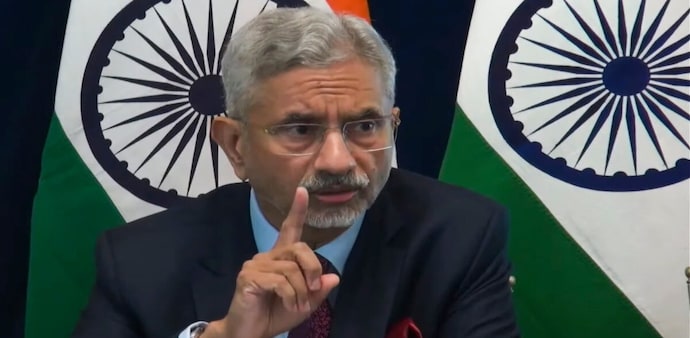
- Aug 23, 2025,
- Updated Aug 23, 2025 2:50 PM IST
External affairs minister S Jaishankar on Saturday said US President Donald Trump’s conduct of foreign policy — particularly on trade — has been unusually public, including in matters relating to India. He suggested that Trump’s sudden announcement of a 50% tariff hike on Indian goods came without prior discussion on India’s purchase of Russian oil.
Speaking at the Economic Times World Leaders Forum 2025, Jaishankar remarked that Trump’s approach to global affairs has been unlike any of his predecessors.
“We've not had a US President who's conducted foreign policy as publicly as the current one. That itself is a departure that's not limited to India,” he said. He added that this public approach extends beyond foreign policy.
“President Trump's way of dealing with the world, even dealing with his own country, is a very major departure from the traditional orthodox manner of doing so,” he said.
On Trump’s use of tariffs, Jaishankar said the tactic has been employed for both trade and non-trade objectives. “The fact that a lot of this is said in public. Often, the first pronouncement in public is even more unusual. This is a situation which the entire world is facing,” he said.
The minister was emphatic on energy security. “"It's funny to have people who work for a pro-business American administration accusing other people of doing business. If you have a problem buying oil or refined products from India, don't buy it. Nobody forces you to buy it. Europe buys, America buys, so you don't like it, don't buy it,” he said, responding to criticism of India’s purchases of Russian crude.
Jaishankar outlined three key issues defining the current phase of India-US ties under Trump:
Trade negotiations: “Negotiations are still going on. But the bottom line is we have some red lines... It's not like there's a 'kutti' there,” he said. He clarified that protecting the interests of Indian farmers and small producers remains non-negotiable.
Oil trade and double standards: The EAM said India is being selectively targeted over its oil imports from Russia. “The same arguments which are being used to target India have not been applied to the largest oil importer - China and the largest energy importer, which is the European Union,” he said.
Referencing a claim made by US Treasury Secretary Scott Bessent, he added: “If the argument is percentage of increase — yes, some countries have not increased their percentage because they have gone and bought oil from Iran, to which the Americans also have an objection.”
He noted that the Biden administration had prior knowledge of India's Russian oil purchases through “explicit conversations,” leading to the current price cap arrangement.
Mediation on Pakistan: Jaishankar firmly reiterated India’s long-standing position. “The Indian government does not accept any external mediation, especially when it comes to its relationship with Pakistan,” he said.
External affairs minister S Jaishankar on Saturday said US President Donald Trump’s conduct of foreign policy — particularly on trade — has been unusually public, including in matters relating to India. He suggested that Trump’s sudden announcement of a 50% tariff hike on Indian goods came without prior discussion on India’s purchase of Russian oil.
Speaking at the Economic Times World Leaders Forum 2025, Jaishankar remarked that Trump’s approach to global affairs has been unlike any of his predecessors.
“We've not had a US President who's conducted foreign policy as publicly as the current one. That itself is a departure that's not limited to India,” he said. He added that this public approach extends beyond foreign policy.
“President Trump's way of dealing with the world, even dealing with his own country, is a very major departure from the traditional orthodox manner of doing so,” he said.
On Trump’s use of tariffs, Jaishankar said the tactic has been employed for both trade and non-trade objectives. “The fact that a lot of this is said in public. Often, the first pronouncement in public is even more unusual. This is a situation which the entire world is facing,” he said.
The minister was emphatic on energy security. “"It's funny to have people who work for a pro-business American administration accusing other people of doing business. If you have a problem buying oil or refined products from India, don't buy it. Nobody forces you to buy it. Europe buys, America buys, so you don't like it, don't buy it,” he said, responding to criticism of India’s purchases of Russian crude.
Jaishankar outlined three key issues defining the current phase of India-US ties under Trump:
Trade negotiations: “Negotiations are still going on. But the bottom line is we have some red lines... It's not like there's a 'kutti' there,” he said. He clarified that protecting the interests of Indian farmers and small producers remains non-negotiable.
Oil trade and double standards: The EAM said India is being selectively targeted over its oil imports from Russia. “The same arguments which are being used to target India have not been applied to the largest oil importer - China and the largest energy importer, which is the European Union,” he said.
Referencing a claim made by US Treasury Secretary Scott Bessent, he added: “If the argument is percentage of increase — yes, some countries have not increased their percentage because they have gone and bought oil from Iran, to which the Americans also have an objection.”
He noted that the Biden administration had prior knowledge of India's Russian oil purchases through “explicit conversations,” leading to the current price cap arrangement.
Mediation on Pakistan: Jaishankar firmly reiterated India’s long-standing position. “The Indian government does not accept any external mediation, especially when it comes to its relationship with Pakistan,” he said.