
'Typical Trump': Ex-US trade secretary says chaos tactic may open door for India
Ray Vickery, a long-time observer of US-India relations, said Trump’s move risks strategic ground.
- Jul 31, 2025,
- Updated Jul 31, 2025 1:06 PM IST
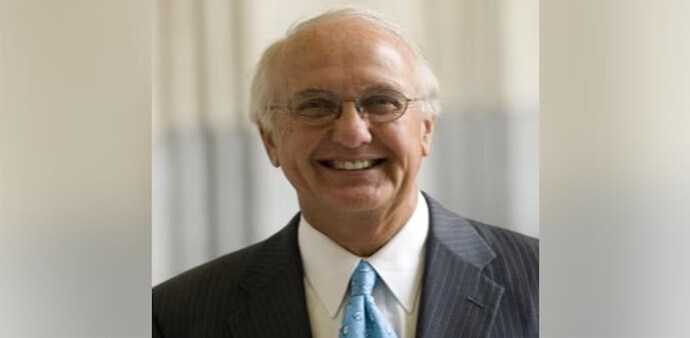
Former United States Assistant Secretary of Commerce for Trade Development, Ray Vickery, has described President Donald Trump's decision to impose a 25% tariff and an additional penalty on India as part of a familiar pattern of disruption.
"This is typical Trump trying to create as much pressure and chaos on a bilateral basis as possible, so that he can in the end claim victory by solving or at least ameliorating the problem which he's created,” Vickery said, responding to the announcement that takes effect August 1.
Vickery urged calm in both capitals. "There is no need to panic and there should be saner heads on both the US and Indian side that can come to an agreement," he said.
Trump's move came just after India confirmed that a US trade delegation was due to visit New Delhi in late August to discuss a trade deal. But Trump instead moved to impose steep tariffs and punish India for its trade with Russia — particularly its imports of crude oil and military hardware.
"India has the most strenuous and obnoxious non-monetary trade barriers of any country,” Trump said, calling India’s tariffs "among the highest in the world". Trump further lashed out at New Delhi and Moscow over their close ties: “I don’t care what India does with Russia. They can take their dead economies down together, for all I care,” he said. “We have done very little business with India... All things not good!”
Vickery, a long-time observer of US-India relations, said Trump’s move risks strategic ground. "He has, for the first time, introduced the Russian aspect of the equation. India is going to need to think about what its interests are in regard to Russia and the question of oil imports,” he said. “India will need to consider its interests more carefully when deciding whether to further open its economy to international competition.”
India's Russian crude imports have surged from 0.2% before the Ukraine war to about 35-40% of its current oil basket, making it the second-largest buyer after China.
Vickery added that Trump’s approach undermines broader diplomatic goals. "It is very unfortunate that President Trump is taking this completely transactional bilateral approach," he said. "There’s an opportunity here for India... India is a past master in many ways of being able to work with others and it should step forward as one of the world's leading democracies to fill the void that has been created by President Trump."
Meanwhile, tensions have deepened further with Washington sanctioning six Indian firms for engaging in petrochemical trade with Iran. The US State Department said the firms knowingly purchased Iranian-origin products in violation of US sanctions policy.
The Indian firms named include Kanchan Polymers, Alchemical Solutions, Ramniklal S Gosalia & Co, Jupiter Dye Chem Pvt Ltd, Global Industrial Chemicals Ltd, and Persistent Petrochem Pvt Ltd. The trade transactions involve materials such as polyethylene, methanol, and toluene, collectively valued at over $220 million. The sanctions freeze any US-linked assets of the designated companies and block them from doing business with American firms.
The US Treasury also blacklisted over 50 individuals and entities involved in shipping Iranian petroleum, including Indian nationals linked to UAE-based and Marshall Islands-based companies operating in the network of Mohammad Hossein Shamkhani, the son of a top Iranian political advisor.
Washington said these actions were part of its campaign to cut off Tehran’s revenue streams used to “support terrorism abroad, as well as to oppress its own people.”
Former United States Assistant Secretary of Commerce for Trade Development, Ray Vickery, has described President Donald Trump's decision to impose a 25% tariff and an additional penalty on India as part of a familiar pattern of disruption.
"This is typical Trump trying to create as much pressure and chaos on a bilateral basis as possible, so that he can in the end claim victory by solving or at least ameliorating the problem which he's created,” Vickery said, responding to the announcement that takes effect August 1.
Vickery urged calm in both capitals. "There is no need to panic and there should be saner heads on both the US and Indian side that can come to an agreement," he said.
Trump's move came just after India confirmed that a US trade delegation was due to visit New Delhi in late August to discuss a trade deal. But Trump instead moved to impose steep tariffs and punish India for its trade with Russia — particularly its imports of crude oil and military hardware.
"India has the most strenuous and obnoxious non-monetary trade barriers of any country,” Trump said, calling India’s tariffs "among the highest in the world". Trump further lashed out at New Delhi and Moscow over their close ties: “I don’t care what India does with Russia. They can take their dead economies down together, for all I care,” he said. “We have done very little business with India... All things not good!”
Vickery, a long-time observer of US-India relations, said Trump’s move risks strategic ground. "He has, for the first time, introduced the Russian aspect of the equation. India is going to need to think about what its interests are in regard to Russia and the question of oil imports,” he said. “India will need to consider its interests more carefully when deciding whether to further open its economy to international competition.”
India's Russian crude imports have surged from 0.2% before the Ukraine war to about 35-40% of its current oil basket, making it the second-largest buyer after China.
Vickery added that Trump’s approach undermines broader diplomatic goals. "It is very unfortunate that President Trump is taking this completely transactional bilateral approach," he said. "There’s an opportunity here for India... India is a past master in many ways of being able to work with others and it should step forward as one of the world's leading democracies to fill the void that has been created by President Trump."
Meanwhile, tensions have deepened further with Washington sanctioning six Indian firms for engaging in petrochemical trade with Iran. The US State Department said the firms knowingly purchased Iranian-origin products in violation of US sanctions policy.
The Indian firms named include Kanchan Polymers, Alchemical Solutions, Ramniklal S Gosalia & Co, Jupiter Dye Chem Pvt Ltd, Global Industrial Chemicals Ltd, and Persistent Petrochem Pvt Ltd. The trade transactions involve materials such as polyethylene, methanol, and toluene, collectively valued at over $220 million. The sanctions freeze any US-linked assets of the designated companies and block them from doing business with American firms.
The US Treasury also blacklisted over 50 individuals and entities involved in shipping Iranian petroleum, including Indian nationals linked to UAE-based and Marshall Islands-based companies operating in the network of Mohammad Hossein Shamkhani, the son of a top Iranian political advisor.
Washington said these actions were part of its campaign to cut off Tehran’s revenue streams used to “support terrorism abroad, as well as to oppress its own people.”