
'Unless we attack the entire network, we will not be...': Amit Shah promises for 'drug-free India'
The minister stated that drugs harm the youth and also threaten national security. He urged everyone to support the zero-tolerance policy against drugs and help achieve PM Modi's goal of a drug-free India.
- Aug 25, 2024,
- Updated Aug 25, 2024 8:56 PM IST
Union Home Minister Amit Shah called for a "drugs-free India" on Sunday, describing drugs as a global threat.
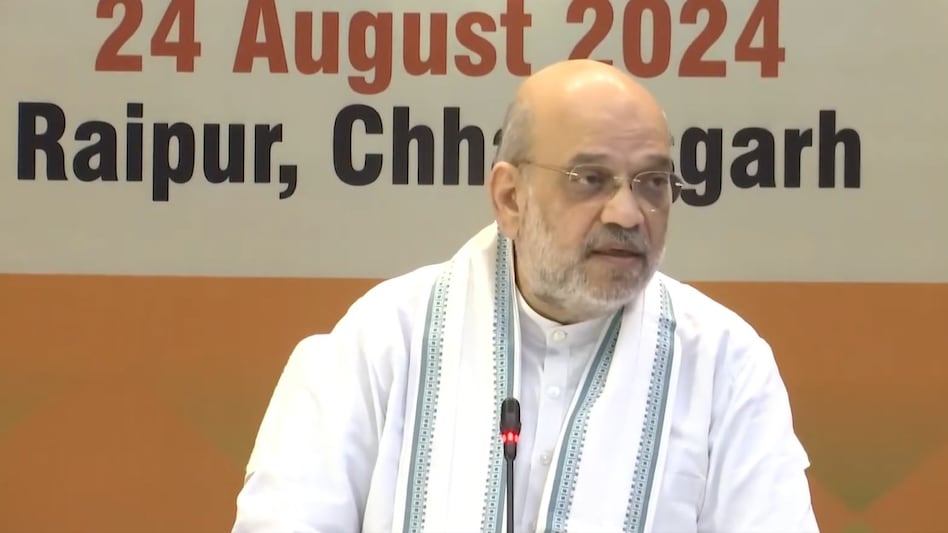
The minister virtually launched a new Narcotics Control Bureau (NCB) office in Raipur, Chhattisgarh, and led a review meeting on drug issues in the state.
“If we fight the battle against drugs in India with intensity, seriousness and a comprehensive strategy, we can win this battle. Illicit trafficking of narcotics in India severely impairs national security. The money earned from illicit drug trade promotes terrorism and left-wing extremism and weakens the country's economy,” Shah was quoted as saying.
The meeting included Chhattisgarh Chief Minister Vishnu Deo Sai, Deputy CM Vijay Sharma, Union Minister of State for Home Nityanand Rai, Union Home Secretary Govind Mohan, Intelligence Bureau Director Tapan Deka, NCB's Director General, and other top officials.
The minister stated that drugs harm the youth and also threaten national security. He urged everyone to support the zero-tolerance policy against drugs and help achieve PM Modi's goal of a drug-free India. He mentioned that the Centre plans to end drug trade by setting up NCB offices in every state with state governments' help.
“Everyone should move forward together on the zero-tolerance policy against narcotics and fulfill PM Modi's resolve of a drug-free India,” he added.
Shah emphasized the need for using scientific methods in drug investigations. He called for a comprehensive approach to dismantle the entire drug network effectively.
“Unless we attack the entire network, we will not be able to achieve the goal of a drug-free India,” he added.
Shah outlined four key principles: detecting drugs, destroying networks, detaining culprits, and rehabilitating addicts. He noted that drug cases have increased from 1,250 between 2004 and 2014 to 4,150 from 2014 to 2024, a 230% rise. Arrests have also gone up from 1,360 to 6,300 in the same period.
Union Home Minister Amit Shah called for a "drugs-free India" on Sunday, describing drugs as a global threat.
The minister virtually launched a new Narcotics Control Bureau (NCB) office in Raipur, Chhattisgarh, and led a review meeting on drug issues in the state.
“If we fight the battle against drugs in India with intensity, seriousness and a comprehensive strategy, we can win this battle. Illicit trafficking of narcotics in India severely impairs national security. The money earned from illicit drug trade promotes terrorism and left-wing extremism and weakens the country's economy,” Shah was quoted as saying.
The meeting included Chhattisgarh Chief Minister Vishnu Deo Sai, Deputy CM Vijay Sharma, Union Minister of State for Home Nityanand Rai, Union Home Secretary Govind Mohan, Intelligence Bureau Director Tapan Deka, NCB's Director General, and other top officials.
The minister stated that drugs harm the youth and also threaten national security. He urged everyone to support the zero-tolerance policy against drugs and help achieve PM Modi's goal of a drug-free India. He mentioned that the Centre plans to end drug trade by setting up NCB offices in every state with state governments' help.
“Everyone should move forward together on the zero-tolerance policy against narcotics and fulfill PM Modi's resolve of a drug-free India,” he added.
Shah emphasized the need for using scientific methods in drug investigations. He called for a comprehensive approach to dismantle the entire drug network effectively.
“Unless we attack the entire network, we will not be able to achieve the goal of a drug-free India,” he added.
Shah outlined four key principles: detecting drugs, destroying networks, detaining culprits, and rehabilitating addicts. He noted that drug cases have increased from 1,250 between 2004 and 2014 to 4,150 from 2014 to 2024, a 230% rise. Arrests have also gone up from 1,360 to 6,300 in the same period.