
US to monitor Russian oil: When UPA allowed inspection of India's civil nuclear programme
Gregory Schulte, then US Ambassador to the International Atomic Energy Agency, stated in a July 2008 statement that New Delhi had committed to 'submit its entire civil program to international inspection'
- Feb 11, 2026,
- Updated Feb 11, 2026 3:50 PM IST
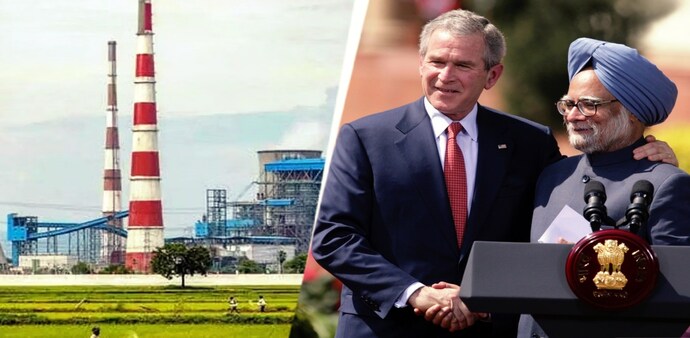
As the Congress accuses the Centre of compromising India's sovereignty by allowing the United States to monitor New Delhi's trade with Russia, a key episode from the UPA era has surfaced when India 'committed' to allow international inspection of its civil nuclear programme as part of the India-US nuclear deal.
Gregory Schulte, the then US Ambassador to the International Atomic Energy Agency, stated in a July 2008 statement that New Delhi had committed to "submit its entire civil program to international inspection."
In his remarks, available on the US Department of Justice website, Schulte said that within eight days, the IAEA Board of Governors was scheduled to meet in Vienna to consider a draft Safeguards Agreement for India. The agreement, he said, was a critical step in implementing the US-India Civil Nuclear Cooperation Initiative.
Schulte outlined that implementing the US-India Civil Nuclear Cooperation Initiative and allowing civil nuclear cooperation between India and interested countries in Europe and elsewhere has three main benefits: "bringing India into the nuclear nonproliferation mainstream; helping India meet its growing energy needs while protecting the environment; and deepening the strategic partnership between our many countries and India."
The former ambassador then listed India's operating nuclear power reactors. He said that New Delhi had committed to separate its military and civil activities and submit its entire civil program to international inspection. "India has four operating nuclear power reactors under IAEA safeguards today," Schulte stated. "Under the U.S.-India Civil Nuclear Cooperation Initiative, India has committed to separate its military and civil activities and submit its entire civil program to international inspection."
"Under this plan, India will place under voluntary safeguards a majority of its existing and planned nuclear power reactors (14 of 22) and all its future civil reactors," he added.
The India–US Civil Nuclear Agreement was signed in October 2008.
The document has resurfaced amid a political row triggered by a recent executive order issued by US President Donald Trump. In his order released last Friday, Trump removed a 25% tariff that had been linked to India's purchase of Russian oil, but warned that Washington will monitor India's trade with Russia and reimpose tariffs if New Delhi restarts buying from Moscow.
"The Secretary of Commerce, in coordination with the Secretary of State, the Secretary of the Treasury, and any other senior official the Secretary of Commerce deems appropriate, shall monitor whether India resumes directly or indirectly importing Russian Federation oil," the order states.
"If the Secretary of Commerce finds that India has resumed directly or indirectly importing Russian Federation oil, the Secretary of State...shall recommend whether and to what extent I should take additional action as to India, including whether I should reimpose the additional ad valorem rate of duty of 25 percent on imports of articles of India," Trump's order added.
The Congress criticised the move, accusing the government of surrendering strategic autonomy. "You have allowed Americans to weaponise our finance and our energy against us. What does it mean when America says you cannot buy oil from somebody? It means our energy weaponised," Leader of Opposition Rahul Gandhi said in the Lok Sabha on Wednesday.
The government, however, has not said that India will stop buying oil from Russia.
Foreign Secretary Vikram Misri stressed that India's energy policy is driven by diversification and national interest. "Our approach is to maintain multiple sources of supply and diversify them as appropriate to ensure stability. Therefore, I would say that the more diversified we are in this area, the more secure we are," Misri said earlier this week.
"What I can firmly and confidently say is that, whether it is the government or indeed our businesses, at the end of the day, national interest will be the guiding factor for us in our choices," he added.
As the Congress accuses the Centre of compromising India's sovereignty by allowing the United States to monitor New Delhi's trade with Russia, a key episode from the UPA era has surfaced when India 'committed' to allow international inspection of its civil nuclear programme as part of the India-US nuclear deal.
Gregory Schulte, the then US Ambassador to the International Atomic Energy Agency, stated in a July 2008 statement that New Delhi had committed to "submit its entire civil program to international inspection."
In his remarks, available on the US Department of Justice website, Schulte said that within eight days, the IAEA Board of Governors was scheduled to meet in Vienna to consider a draft Safeguards Agreement for India. The agreement, he said, was a critical step in implementing the US-India Civil Nuclear Cooperation Initiative.
Schulte outlined that implementing the US-India Civil Nuclear Cooperation Initiative and allowing civil nuclear cooperation between India and interested countries in Europe and elsewhere has three main benefits: "bringing India into the nuclear nonproliferation mainstream; helping India meet its growing energy needs while protecting the environment; and deepening the strategic partnership between our many countries and India."
The former ambassador then listed India's operating nuclear power reactors. He said that New Delhi had committed to separate its military and civil activities and submit its entire civil program to international inspection. "India has four operating nuclear power reactors under IAEA safeguards today," Schulte stated. "Under the U.S.-India Civil Nuclear Cooperation Initiative, India has committed to separate its military and civil activities and submit its entire civil program to international inspection."
"Under this plan, India will place under voluntary safeguards a majority of its existing and planned nuclear power reactors (14 of 22) and all its future civil reactors," he added.
The India–US Civil Nuclear Agreement was signed in October 2008.
The document has resurfaced amid a political row triggered by a recent executive order issued by US President Donald Trump. In his order released last Friday, Trump removed a 25% tariff that had been linked to India's purchase of Russian oil, but warned that Washington will monitor India's trade with Russia and reimpose tariffs if New Delhi restarts buying from Moscow.
"The Secretary of Commerce, in coordination with the Secretary of State, the Secretary of the Treasury, and any other senior official the Secretary of Commerce deems appropriate, shall monitor whether India resumes directly or indirectly importing Russian Federation oil," the order states.
"If the Secretary of Commerce finds that India has resumed directly or indirectly importing Russian Federation oil, the Secretary of State...shall recommend whether and to what extent I should take additional action as to India, including whether I should reimpose the additional ad valorem rate of duty of 25 percent on imports of articles of India," Trump's order added.
The Congress criticised the move, accusing the government of surrendering strategic autonomy. "You have allowed Americans to weaponise our finance and our energy against us. What does it mean when America says you cannot buy oil from somebody? It means our energy weaponised," Leader of Opposition Rahul Gandhi said in the Lok Sabha on Wednesday.
The government, however, has not said that India will stop buying oil from Russia.
Foreign Secretary Vikram Misri stressed that India's energy policy is driven by diversification and national interest. "Our approach is to maintain multiple sources of supply and diversify them as appropriate to ensure stability. Therefore, I would say that the more diversified we are in this area, the more secure we are," Misri said earlier this week.
"What I can firmly and confidently say is that, whether it is the government or indeed our businesses, at the end of the day, national interest will be the guiding factor for us in our choices," he added.