
US Treasury confirms: 'It's not just about Russian oil, at the end India-US will come together'
US Treasury Secretary stressed that the trade tensions were not limited to New Delhi’s purchase of Russian oil.
- Aug 27, 2025,
- Updated Aug 27, 2025 6:42 PM IST
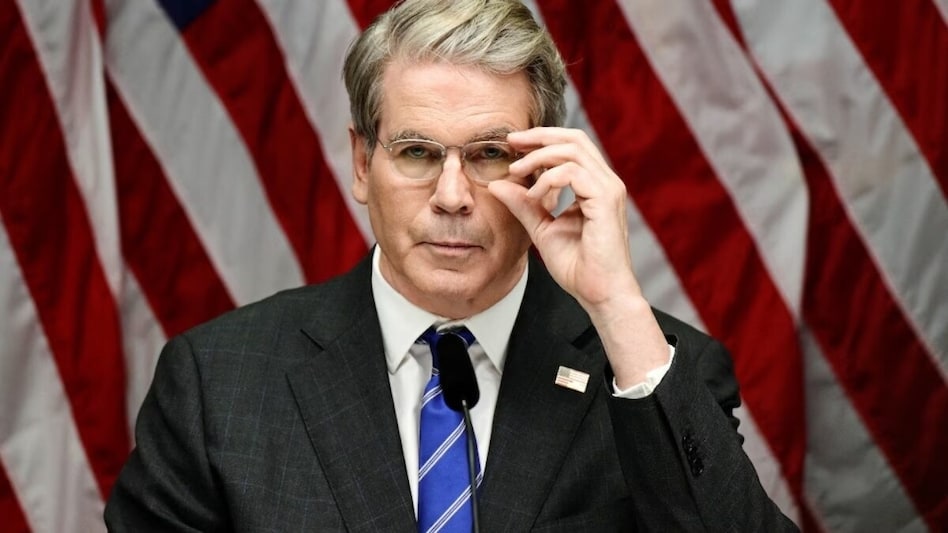
US Treasury Secretary Scott Bessent on Wednesday said the United States and India would eventually find common ground despite President Donald Trump's decision to impose a 50 per cent tariff on Indian goods. Speaking to Fox News, he stressed that the trade tensions were not limited to New Delhi’s purchase of Russian oil.
"This is a complicated relationship. President Trump and Prime Minister Modi have a very good relationship at that level. It's not just over the Russian oil," Bessent said. "The Indians came in early after Liberation Day to start negotiating on tariffs and we still don't have a deal. I thought we would have a deal in May or June. I thought India could be one of the earlier deals and they kind of tapped us along in terms of the negotiations and then there is also the aspect of the Russian crude purchases, which they've been profiteering on. There's many levels going on here."
The new tariff, which took effect August 27, doubles the penalty on Indian products to 50 per cent after an earlier 25 per cent duty was imposed on August 7. The US justified the move as retaliation for India’s imports of Russian crude oil and military hardware.
Bessent argued that the trade imbalance ultimately gives Washington leverage. "I've said it all along during the tariff negotiations. The US is the deficit country. When there is a schism in trade relations, the deficit country's at an advantage. It's the surplus country that should worry. So the indians are selling to us. They have very high tariffs and we have a very large deficit with them," he said.
India has hinted at settling some trade in rupees within the BRICS bloc, but Bessent dismissed the prospect of the Indian currency gaining wider global traction. "A lot of things I worry about. The rupee becoming the reserve currency isn't one of them. On the trade problem with us, I think the rupee is near an all-time low versus the U.S. dollar," he said.
Despite the sharp tariff escalation, Bessent insisted that both sides have too much at stake to allow trade ties to rupture. "I do think India’s the world’s largest democracy, the U.S. is the world’s largest economy. I think at the end of the day we will come together," he said.
US Treasury Secretary Scott Bessent on Wednesday said the United States and India would eventually find common ground despite President Donald Trump's decision to impose a 50 per cent tariff on Indian goods. Speaking to Fox News, he stressed that the trade tensions were not limited to New Delhi’s purchase of Russian oil.
"This is a complicated relationship. President Trump and Prime Minister Modi have a very good relationship at that level. It's not just over the Russian oil," Bessent said. "The Indians came in early after Liberation Day to start negotiating on tariffs and we still don't have a deal. I thought we would have a deal in May or June. I thought India could be one of the earlier deals and they kind of tapped us along in terms of the negotiations and then there is also the aspect of the Russian crude purchases, which they've been profiteering on. There's many levels going on here."
The new tariff, which took effect August 27, doubles the penalty on Indian products to 50 per cent after an earlier 25 per cent duty was imposed on August 7. The US justified the move as retaliation for India’s imports of Russian crude oil and military hardware.
Bessent argued that the trade imbalance ultimately gives Washington leverage. "I've said it all along during the tariff negotiations. The US is the deficit country. When there is a schism in trade relations, the deficit country's at an advantage. It's the surplus country that should worry. So the indians are selling to us. They have very high tariffs and we have a very large deficit with them," he said.
India has hinted at settling some trade in rupees within the BRICS bloc, but Bessent dismissed the prospect of the Indian currency gaining wider global traction. "A lot of things I worry about. The rupee becoming the reserve currency isn't one of them. On the trade problem with us, I think the rupee is near an all-time low versus the U.S. dollar," he said.
Despite the sharp tariff escalation, Bessent insisted that both sides have too much at stake to allow trade ties to rupture. "I do think India’s the world’s largest democracy, the U.S. is the world’s largest economy. I think at the end of the day we will come together," he said.