
'US wants to weaponise food': American economist slams Trump's trade approach with India
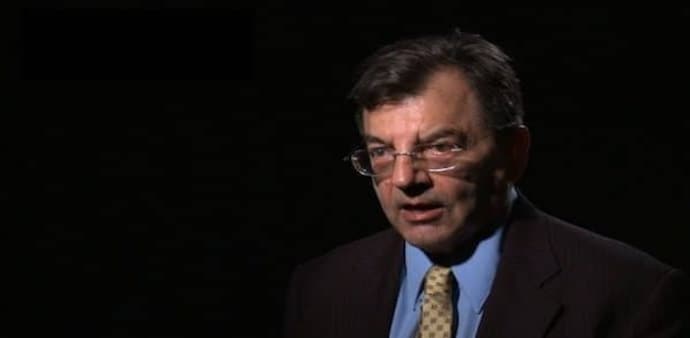
Michael Hudson, a political economist, said the US strategy under President Donald Trump was aimed at forcing India to open up sensitive agricultural markets while imposing steep tariffs on Indian goods.
- Sep 1, 2025,
- Updated Sep 1, 2025 4:30 PM IST
An American economist has accused Washington of seeking to "weaponise food" in its trade negotiations with India, warning that the US is attempting to make the country dependent on its farm exports.
Michael Hudson, a political economist, said the US strategy under President Donald Trump was aimed at forcing India to open up sensitive agricultural markets while imposing steep tariffs on Indian goods. He pointed to New Delhi's stand that it was acting within its sovereign rights in resisting American pressure, describing Washington's 50 per cent import tariffs as "an attack on India's sovereignty, which is its right to trade with whomever it wants."
"The single leading guiding light of American foreign policy since 1945 is to make other countries dependent on its grain exports, dependent on its food to weaponize food. That is the core of World Bank loan policy, the core of US backing of dictatorships...to prevent replacing plantation agriculture with growing their own food," he argued in a podcast conversation with Dialogue Works.
Citing newspaper reports that President Trump has tried to call Modi on four different occasions, Hudson said Modi has refused to pick up the phone and accept the call - and the reason is obvious. "He (Modi) knows that Trump is going to make a demand. He knows that his response will be - we cannot agree to that. We are sovereign countries. We can't agree to that."
He linked this to current trade tensions, with the US demanding India lower barriers on dairy, wheat, rice, and genetically modified crops. "The whole fight of India is saying we are not going to let America weaponize our food needs by bankrupting our farmers...by selling out the farmers to make Mr. Trump happy, by helping him rescue the faltering American agriculture," Hudson said.
Trade talks between India and the US have collapsed despite multiple rounds of negotiation. A major sticking point remains agriculture, with India refusing to reduce tariffs on politically sensitive products such as dairy, rice, and wheat. Economists have noted that over 700 million rural citizens, including 80 million smallholder dairy farmers, would be directly impacted if subsidised US farm goods were allowed into the country.
Hudson, a Professor of Economics at the University of Missouri–Kansas City, said Trump's tariffs and Navarro's rhetoric had backfired, driving India closer to China and Russia.
"America has made a demand that cannot possibly be met. And that is what has been accelerating Modi's abrupt 180-degree shift with China," the professor said. He compared this with Trump's role in pushing Moscow and Beijing closer together. "Trump has now driven India together with China and Russia."
According to Hudson, Washington's misreading of political realities in India has undermined its own objectives. "By neglecting this political reality, the United States has as usual done exactly the opposite of the intended effect that Trump announced," he concluded.
An American economist has accused Washington of seeking to "weaponise food" in its trade negotiations with India, warning that the US is attempting to make the country dependent on its farm exports.
Michael Hudson, a political economist, said the US strategy under President Donald Trump was aimed at forcing India to open up sensitive agricultural markets while imposing steep tariffs on Indian goods. He pointed to New Delhi's stand that it was acting within its sovereign rights in resisting American pressure, describing Washington's 50 per cent import tariffs as "an attack on India's sovereignty, which is its right to trade with whomever it wants."
"The single leading guiding light of American foreign policy since 1945 is to make other countries dependent on its grain exports, dependent on its food to weaponize food. That is the core of World Bank loan policy, the core of US backing of dictatorships...to prevent replacing plantation agriculture with growing their own food," he argued in a podcast conversation with Dialogue Works.
Citing newspaper reports that President Trump has tried to call Modi on four different occasions, Hudson said Modi has refused to pick up the phone and accept the call - and the reason is obvious. "He (Modi) knows that Trump is going to make a demand. He knows that his response will be - we cannot agree to that. We are sovereign countries. We can't agree to that."
He linked this to current trade tensions, with the US demanding India lower barriers on dairy, wheat, rice, and genetically modified crops. "The whole fight of India is saying we are not going to let America weaponize our food needs by bankrupting our farmers...by selling out the farmers to make Mr. Trump happy, by helping him rescue the faltering American agriculture," Hudson said.
Trade talks between India and the US have collapsed despite multiple rounds of negotiation. A major sticking point remains agriculture, with India refusing to reduce tariffs on politically sensitive products such as dairy, rice, and wheat. Economists have noted that over 700 million rural citizens, including 80 million smallholder dairy farmers, would be directly impacted if subsidised US farm goods were allowed into the country.
Hudson, a Professor of Economics at the University of Missouri–Kansas City, said Trump's tariffs and Navarro's rhetoric had backfired, driving India closer to China and Russia.
"America has made a demand that cannot possibly be met. And that is what has been accelerating Modi's abrupt 180-degree shift with China," the professor said. He compared this with Trump's role in pushing Moscow and Beijing closer together. "Trump has now driven India together with China and Russia."
According to Hudson, Washington's misreading of political realities in India has undermined its own objectives. "By neglecting this political reality, the United States has as usual done exactly the opposite of the intended effect that Trump announced," he concluded.