
Switching off e-rickshaw via Chinese app: 'Prank' could cost you ₹5 lakh & 3 years in jail
In many cases, the rickshaws stop in the middle of busy roads, forcing drivers to push them manually or attempt repeated restarts. Some videos even show distressed drivers breaking down in tears after being unable to identify why their vehicle suddenly stopped working.
- Jul 3, 2026,
- Updated Jul 3, 2026 8:00 PM IST
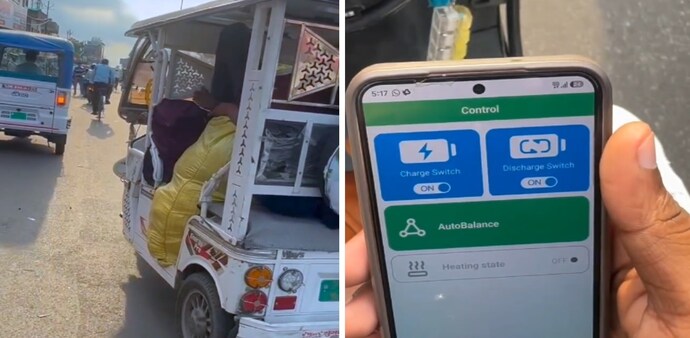
What many on social media are calling a harmless prank could, in reality, put lives at risk and expose participants to serious criminal charges. A viral trend sweeping across India shows teenagers and young adults using a smartphone app to remotely switch off the batteries of e-rickshaws, leaving vehicles stranded in traffic and bewildered drivers scrambling to get them moving again.
The videos may be attracting millions of views, but cybersecurity experts and social media users alike are warning that the consequences could extend far beyond online entertainment.
What is happening?
Numerous viral clips circulating on Instagram, YouTube and other platforms show people standing near e-rickshaws and using a mobile application to abruptly disable the vehicle's battery. In many cases, the rickshaws stop in the middle of busy roads, forcing drivers to push them manually or attempt repeated restarts.
DON'T MISS | Can Chinese apps like BAT-BMS remotely disable Your EV? What vehicle owners should know
Some videos even show distressed drivers breaking down in tears after being unable to identify why their vehicle suddenly stopped working.
The trend is often presented as "revenge" against allegedly rash e-rickshaw drivers, but critics argue it punishes innocent drivers whose vehicle is often their only means of earning a livelihood.
App behind the controversy
At the centre of the controversy is BAT-BMS, a legitimate battery management application developed by China's Shenzhen Grenergy Technology.
The app is designed to connect via Bluetooth with compatible lithium battery packs, allowing users to:
- Monitor battery health
- Check charging status
- View performance metrics
- Configure certain battery settings
Under normal circumstances, such apps are intended for battery owners and service technicians.
However, reports suggest the app can also connect to certain Bluetooth-enabled battery management systems (BMS) used in some low-cost e-rickshaws and electric scooters that lack proper authentication or password protection.
Because Bluetooth typically works within a range of around 10 to 15 metres, anyone nearby may be able to connect to vulnerable batteries and remotely issue commands—including switching off the battery.
MUST READ | Why e-rickshaws are suddenly stopping on the road? The Chinese BAT-BMS app behind it
While the app has reportedly been removed from Apple's App Store, it continues to be available on the Google Play Store.
Why this is a serious safety issue
Unlike a simple software prank, remotely disabling an electric vehicle can create immediate road hazards.
If an e-rickshaw suddenly loses power:
- It may come to an abrupt stop in moving traffic.
- Passengers could be stranded in unsafe locations.
- Following vehicles may not anticipate the sudden halt, increasing accident risks.
- Congested roads could experience significant traffic disruptions.
- Drivers may lose an entire day's earnings while trying to resolve the issue.
Since many e-rickshaw operators rely on daily income, even temporary disruption can have significant financial consequences.
Could it be illegal?
Yes. If someone intentionally accesses or interferes with another person's electronic system without authorisation, they may attract provisions of India's Information Technology Act, 2000.
Under Section 66 of the Information Technology Act, 2000, anyone who dishonestly or fraudulently commits offences covered under Section 43 of the Information Technology Act, 2000 — including unauthorised access to computer resources or causing disruption — can face:
- Imprisonment of up to three years
- A fine of up to ₹5 lakh
- Or both
Under the Information Technology Act, Section 66 criminalises hacking, unauthorised access and data tampering carried out with dishonest or fraudulent intent, prescribing punishment of up to three years' imprisonment, a fine of up to ₹5 lakh, or both. The law also includes related cyber offences: Section 66B penalises receiving or retaining stolen computer resources or communication devices; Section 66C covers identity theft involving another person's digital signature, passwords or biometric data; and Section 66D deals with cheating by impersonation using computer resources or digital devices. Violations under Sections 66B, 66C and 66D are punishable with imprisonment of up to three years and fines of up to ₹1 lakh.
Depending on the circumstances, additional provisions under other criminal laws could also apply if the act results in injury, property damage or public endangerment.
'Viral' doesn't mean harmless
The controversy also highlights a broader cybersecurity problem facing connected devices. As more vehicles and batteries incorporate wireless connectivity, weak Bluetooth security can create opportunities for misuse if manufacturers fail to implement proper authentication mechanisms.
For users, the incident serves as a reminder that exploiting security weaknesses in someone else's device isn't just unethical — it can also carry serious legal consequences.
What may appear to be a social media prank can quickly become a public safety hazard, disrupt someone's livelihood and potentially lead to criminal prosecution.
FAQs
- +−
What is the BAT-BMS app controversy involving e-rickshaws in India?
The controversy is about viral videos showing people using the BAT-BMS mobile app to remotely switch off batteries in some e-rickshaws. This can leave vehicles stranded on the road and cause serious trouble for drivers and passengers.
- +−
How are pranksters able to stop some e-rickshaws using a smartphone app?
Some low-cost e-rickshaws and electric scooters use Bluetooth-enabled battery management systems without strong password protection or authentication. If a vulnerable battery is within roughly 10 to 15 metres, an unauthorised person may be able to connect through the app and issue commands such as switching off the battery.
- +−
Why is remotely disabling an e-rickshaw a serious road safety issue?
A sudden power cut can make an e-rickshaw stop in moving traffic, strand passengers in unsafe places and increase the risk of collisions from vehicles behind. It can also worsen traffic jams and cause daily wage losses for drivers who depend on the vehicle for income.
- +−
Is using an app to switch off someone else’s e-rickshaw battery illegal in India?
Yes, it can be illegal. Unauthorised access to or interference with another person’s electronic system may attract provisions of the Information Technology Act, 2000. In serious cases, offenders may face imprisonment of up to three years, a fine of up to ₹5 lakh, or both, depending on the offence and intent.
- +−
What does this incident reveal about EV and battery cybersecurity?
It shows that connected batteries and vehicles can be misused if manufacturers do not build proper Bluetooth security and authentication. The incident is a warning that weak cyber protection in EV systems can create public safety risks as well as legal problems for anyone exploiting such vulnerabilities.
What many on social media are calling a harmless prank could, in reality, put lives at risk and expose participants to serious criminal charges. A viral trend sweeping across India shows teenagers and young adults using a smartphone app to remotely switch off the batteries of e-rickshaws, leaving vehicles stranded in traffic and bewildered drivers scrambling to get them moving again.
The videos may be attracting millions of views, but cybersecurity experts and social media users alike are warning that the consequences could extend far beyond online entertainment.
What is happening?
Numerous viral clips circulating on Instagram, YouTube and other platforms show people standing near e-rickshaws and using a mobile application to abruptly disable the vehicle's battery. In many cases, the rickshaws stop in the middle of busy roads, forcing drivers to push them manually or attempt repeated restarts.
DON'T MISS | Can Chinese apps like BAT-BMS remotely disable Your EV? What vehicle owners should know
Some videos even show distressed drivers breaking down in tears after being unable to identify why their vehicle suddenly stopped working.
The trend is often presented as "revenge" against allegedly rash e-rickshaw drivers, but critics argue it punishes innocent drivers whose vehicle is often their only means of earning a livelihood.
App behind the controversy
At the centre of the controversy is BAT-BMS, a legitimate battery management application developed by China's Shenzhen Grenergy Technology.
The app is designed to connect via Bluetooth with compatible lithium battery packs, allowing users to:
- Monitor battery health
- Check charging status
- View performance metrics
- Configure certain battery settings
Under normal circumstances, such apps are intended for battery owners and service technicians.
However, reports suggest the app can also connect to certain Bluetooth-enabled battery management systems (BMS) used in some low-cost e-rickshaws and electric scooters that lack proper authentication or password protection.
Because Bluetooth typically works within a range of around 10 to 15 metres, anyone nearby may be able to connect to vulnerable batteries and remotely issue commands—including switching off the battery.
MUST READ | Why e-rickshaws are suddenly stopping on the road? The Chinese BAT-BMS app behind it
While the app has reportedly been removed from Apple's App Store, it continues to be available on the Google Play Store.
Why this is a serious safety issue
Unlike a simple software prank, remotely disabling an electric vehicle can create immediate road hazards.
If an e-rickshaw suddenly loses power:
- It may come to an abrupt stop in moving traffic.
- Passengers could be stranded in unsafe locations.
- Following vehicles may not anticipate the sudden halt, increasing accident risks.
- Congested roads could experience significant traffic disruptions.
- Drivers may lose an entire day's earnings while trying to resolve the issue.
Since many e-rickshaw operators rely on daily income, even temporary disruption can have significant financial consequences.
Could it be illegal?
Yes. If someone intentionally accesses or interferes with another person's electronic system without authorisation, they may attract provisions of India's Information Technology Act, 2000.
Under Section 66 of the Information Technology Act, 2000, anyone who dishonestly or fraudulently commits offences covered under Section 43 of the Information Technology Act, 2000 — including unauthorised access to computer resources or causing disruption — can face:
- Imprisonment of up to three years
- A fine of up to ₹5 lakh
- Or both
Under the Information Technology Act, Section 66 criminalises hacking, unauthorised access and data tampering carried out with dishonest or fraudulent intent, prescribing punishment of up to three years' imprisonment, a fine of up to ₹5 lakh, or both. The law also includes related cyber offences: Section 66B penalises receiving or retaining stolen computer resources or communication devices; Section 66C covers identity theft involving another person's digital signature, passwords or biometric data; and Section 66D deals with cheating by impersonation using computer resources or digital devices. Violations under Sections 66B, 66C and 66D are punishable with imprisonment of up to three years and fines of up to ₹1 lakh.
Depending on the circumstances, additional provisions under other criminal laws could also apply if the act results in injury, property damage or public endangerment.
'Viral' doesn't mean harmless
The controversy also highlights a broader cybersecurity problem facing connected devices. As more vehicles and batteries incorporate wireless connectivity, weak Bluetooth security can create opportunities for misuse if manufacturers fail to implement proper authentication mechanisms.
For users, the incident serves as a reminder that exploiting security weaknesses in someone else's device isn't just unethical — it can also carry serious legal consequences.
What may appear to be a social media prank can quickly become a public safety hazard, disrupt someone's livelihood and potentially lead to criminal prosecution.