
'We can't become manufacturing hub': How Prashant Kishor wants to revive Bihar economy
Bihar is not going to become the cement factory for the country, says Prashant Kishor
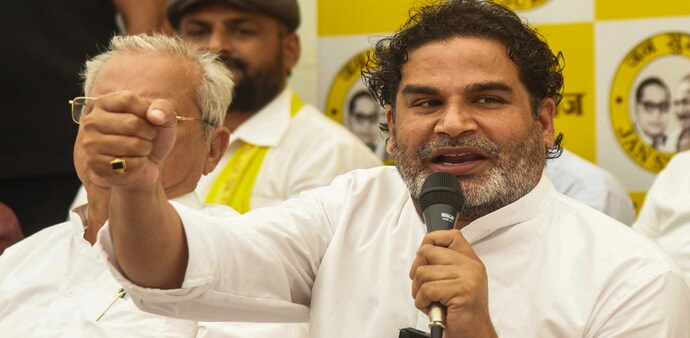
- Jul 29, 2025,
- Updated Jul 29, 2025 9:43 PM IST
Jan Suraaj founder Prashant Kishor believes Bihar's future lies not in factories but in classrooms. He suggested the state must stop chasing manufacturing dreams and instead reclaim its historical identity as a knowledge centre by focusing entirely on education and services.
"We cannot become a hub for manufacturing. Bihar is not going to become the cement factory for the country," he said in an interview with Live Cities. We need to choose: what is our biggest strategic advantage in this country? We were once a land of knowledge, and we must once again become a land of knowledge."
Asked how he plans to overcome bureaucratic resistance and fund constraints, Kishor recalled a conversation with former Punjab Chief Minister Parkash Singh Badal. "I asked him about this very issue of funds. He told me something very insightful - he said: 'Prashant, it is just not possible that a person or a government in power wants to do something, and is unable to do it because of a lack of funds. That simply cannot happen'."
Badal had pointed to how Punjab seized the Green Revolution because its leaders acted with clarity and urgency. "The Green Revolution was meant for the entire country, but Punjab benefited the most because the government pursued it with single-minded focus - the goal was to become self-sufficient in agriculture, and to produce so much food in Punjab that the entire country wouldn't go hungry," Kishor said.
He cited political historian Ramachandra Guha's work on India's top 10 Chief Ministers to underscore his point. "Whether it was K Kamaraj, (EMS) Namboodiripad, (YB) Chavan in Maharashtra, or Partap Singh Kairon - they each picked one key issue in their respective states and made sure it was accomplished, no matter what," Kishor said.
"Now people don't understand how this is even possible. But look - if students from across the country can go to Karnataka to study engineering, then if we build equally good engineering colleges in Bihar, people from all over the country will come here to study," he added. "My entire focus is solely on education and everything around it. If five lakh girls from Bihar are trained in nursing, then across India - where today you see nurses from Kerala - you will begin to see nurses from Bihar."
Outlining his vision, Kishor said: "I want an effectively functioning nursing college in every block. I want pharmacy colleges, polytechnics, large universities here. I want the country's best primary school system to be built in Bihar."
According to him, this shift to a knowledge-based service economy is what will give Bihar a credible and lasting economic revival. "Across the world, the most prosperous and respected societies - they have invested in education, and they have invested in the service sector," he said.
Jan Suraaj founder Prashant Kishor believes Bihar's future lies not in factories but in classrooms. He suggested the state must stop chasing manufacturing dreams and instead reclaim its historical identity as a knowledge centre by focusing entirely on education and services.
"We cannot become a hub for manufacturing. Bihar is not going to become the cement factory for the country," he said in an interview with Live Cities. We need to choose: what is our biggest strategic advantage in this country? We were once a land of knowledge, and we must once again become a land of knowledge."
Asked how he plans to overcome bureaucratic resistance and fund constraints, Kishor recalled a conversation with former Punjab Chief Minister Parkash Singh Badal. "I asked him about this very issue of funds. He told me something very insightful - he said: 'Prashant, it is just not possible that a person or a government in power wants to do something, and is unable to do it because of a lack of funds. That simply cannot happen'."
Badal had pointed to how Punjab seized the Green Revolution because its leaders acted with clarity and urgency. "The Green Revolution was meant for the entire country, but Punjab benefited the most because the government pursued it with single-minded focus - the goal was to become self-sufficient in agriculture, and to produce so much food in Punjab that the entire country wouldn't go hungry," Kishor said.
He cited political historian Ramachandra Guha's work on India's top 10 Chief Ministers to underscore his point. "Whether it was K Kamaraj, (EMS) Namboodiripad, (YB) Chavan in Maharashtra, or Partap Singh Kairon - they each picked one key issue in their respective states and made sure it was accomplished, no matter what," Kishor said.
"Now people don't understand how this is even possible. But look - if students from across the country can go to Karnataka to study engineering, then if we build equally good engineering colleges in Bihar, people from all over the country will come here to study," he added. "My entire focus is solely on education and everything around it. If five lakh girls from Bihar are trained in nursing, then across India - where today you see nurses from Kerala - you will begin to see nurses from Bihar."
Outlining his vision, Kishor said: "I want an effectively functioning nursing college in every block. I want pharmacy colleges, polytechnics, large universities here. I want the country's best primary school system to be built in Bihar."
According to him, this shift to a knowledge-based service economy is what will give Bihar a credible and lasting economic revival. "Across the world, the most prosperous and respected societies - they have invested in education, and they have invested in the service sector," he said.