
'We oppose bloc confrontation': China warns of nuclear proliferation risk as US revives AUKUS
The AUKUS deal, first announced in 2021, allows Australia to build nuclear-powered submarines using U.S. technology
- Oct 21, 2025,
- Updated Oct 21, 2025 6:21 PM IST
China on Tuesday slammed the revival of the AUKUS security pact, warning it will intensify nuclear risks and accelerate a regional arms race, as the U.S., U.K., and Australia deepen military cooperation to counter Beijing's influence in the Indo-Pacific.
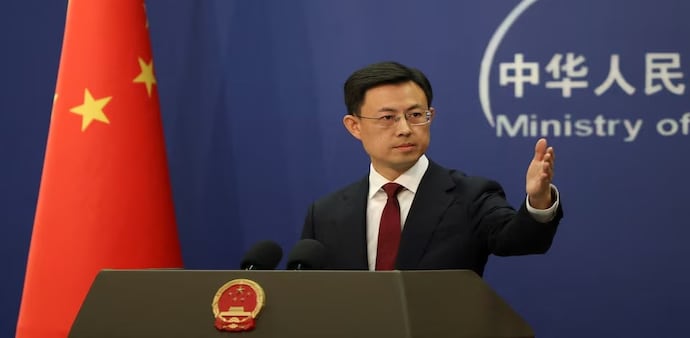
Chinese Foreign Ministry spokesperson Guo Jiakun said the trilateral submarine agreement, known as AUKUS, represents a "bloc confrontation" that threatens global non-proliferation efforts. "We oppose bloc confrontation and anything that increases the risk of nuclear proliferation and exacerbates arms race," Guo told reporters in Beijing.
The AUKUS deal, first announced in 2021, allows Australia to build nuclear-powered submarines using U.S. technology. It also expands into artificial intelligence, cyber defense, and quantum technologies—all aimed at enhancing deterrence capabilities across the Asia-Pacific.
After months of speculation that Washington might scale back its commitment, US President Donald Trump reaffirmed the pact during a meeting with Australian Prime Minister Anthony Albanese on Monday at the White House. Trump pledged to move "full steam ahead" with the agreement, which had been brokered under President Joe Biden’s administration.
Under the latest phase of AUKUS, Canberra will invest billions to expand submarine and shipbuilding infrastructure in Western Australia. U.S. and British submarines will be based there, with Australia set to become a strategic hub for allied naval operations.
The two nations also unveiled a separate agreement targeting China's dominance in rare earth metals. Australia will develop mines and processing plants with U.S. backing, supporting $8.5 billion in "ready-to-go" mining projects, Albanese said.
The deal aims to reduce global reliance on China, which controls 90% of the world's rare earth processing and remains a dominant exporter to the U.S., EU, and India. These minerals are essential to defense systems, green energy, and advanced electronics.
Beijing has long criticised AUKUS and the separate QUAD alliance-which includes the U.S., India, Japan, and Australia-as coordinated efforts to contain its rise.
(With inputs from PTI)
China on Tuesday slammed the revival of the AUKUS security pact, warning it will intensify nuclear risks and accelerate a regional arms race, as the U.S., U.K., and Australia deepen military cooperation to counter Beijing's influence in the Indo-Pacific.
Chinese Foreign Ministry spokesperson Guo Jiakun said the trilateral submarine agreement, known as AUKUS, represents a "bloc confrontation" that threatens global non-proliferation efforts. "We oppose bloc confrontation and anything that increases the risk of nuclear proliferation and exacerbates arms race," Guo told reporters in Beijing.
The AUKUS deal, first announced in 2021, allows Australia to build nuclear-powered submarines using U.S. technology. It also expands into artificial intelligence, cyber defense, and quantum technologies—all aimed at enhancing deterrence capabilities across the Asia-Pacific.
After months of speculation that Washington might scale back its commitment, US President Donald Trump reaffirmed the pact during a meeting with Australian Prime Minister Anthony Albanese on Monday at the White House. Trump pledged to move "full steam ahead" with the agreement, which had been brokered under President Joe Biden’s administration.
Under the latest phase of AUKUS, Canberra will invest billions to expand submarine and shipbuilding infrastructure in Western Australia. U.S. and British submarines will be based there, with Australia set to become a strategic hub for allied naval operations.
The two nations also unveiled a separate agreement targeting China's dominance in rare earth metals. Australia will develop mines and processing plants with U.S. backing, supporting $8.5 billion in "ready-to-go" mining projects, Albanese said.
The deal aims to reduce global reliance on China, which controls 90% of the world's rare earth processing and remains a dominant exporter to the U.S., EU, and India. These minerals are essential to defense systems, green energy, and advanced electronics.
Beijing has long criticised AUKUS and the separate QUAD alliance-which includes the U.S., India, Japan, and Australia-as coordinated efforts to contain its rise.
(With inputs from PTI)