
‘Wealth creators are seen as necessary evil’: Former CEA KV Subramanian on India’s socialist take on wealth generation in India
He feels that the popular viewpoint regarding wealth creators is shaped by political rhetoric, which often demeans wealth creators. He called for common people to understand the nuance that wealth creators are actually providing very important service in providing jobs and not fall for such rhetoric.
- Oct 20, 2024,
- Updated Oct 20, 2024 4:31 PM IST
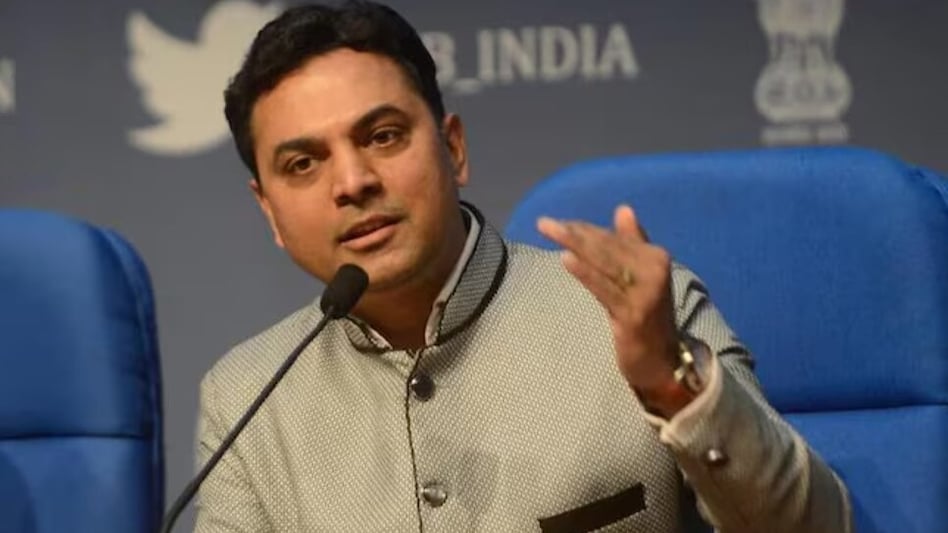
KV Subramanian, who served as the 17th Chief Economic Adviser to the Government of India from 2018 to 2021, said the third pillar of an economy is ethical wealth creation, which is often misunderstood in India.
In a podcast with ANI’s Smita Prakash, Professor Subramanian delved into the critical role of wealth creators in driving India’s economic progress, explaining why they are the backbone of a thriving economy.
Given our socialist past, we typically think about wealth and wealth creators as necessary evils, not as ones that are providing a big service to the country, he said.
Giving specific anecdotes about a house help and a rich man he explained the value of wealth creators.
“I come from a lower middle-class family you know. We used to have a house help. Now, this lady used to work not only in our family but in nine other families in other words lower middle-class families like us. This was not creating that much wealth as we were providing one-tenth of a household job. In contrast, the richest man in our town had between his business and his home about 100 people working for him. These were the people who were earning much more than the house help as he was creating wealth through his business etc. At that time, I didn’t understand but now as an economist, I understand that his wealth creation is providing so many jobs to 100 people. In terms of quantity of jobs, a lower middle-class family providing just one-tenth of a job while the wealth creator is providing 100 Jobs means a thousand times more wealth creation in quantity not just in quality,” he explained.
Looking at the wages, basically, those people were being paying paid at least five six times that of a house help, he added on the corelation of appreciating wealth creators in an economy.
Professor Subramanian elaborated that contrary to popular belief wealth creators are putting their money in companies, which are in turn creating jobs and wealth for others in a chain reaction.
Citing the example of Infosys, he said that the IT company was started in the late 80s by basically six people like Narayan Murthy, Nandan Nilekani and others. Today, it employs millions. So, it’s a firm that actually created so much wealth.
Subramanian also cited examples of new-age startups like Swiggy, Zomato, Flipkart etc which are providing people with jobs.
He feels that the popular viewpoint regarding wealth creators is shaped by political rhetoric, which often demeans wealth creators.
He called for common people to understand the nuance that wealth creators are actually providing very important service in providing jobs and not fall for such rhetoric.
Elaborating further on the culture of wealth creation in India, Subramanian also said that we write ‘shub labh’ beside the altar where we worship, which means 'do good and actually make profit out of that'. “That is our culture. If you go back to the Riga Veda, which is basically known as one of the oldest documents there is a Shri Stukam that is actually a hymn to the Goddess of Wealth Lakshmi that is our culture,” he added.
Subramanian also cited British economist Angus Maddison, who said that India was the world’s leading economic power from the 1st century to 1700, with a share of the world’s GDP ranging from 24-32 percent. Maddison’s studies of India’s economic history over 2,000 years also found that India’s GDP declined sharply during the British period.
Subramanian’s tenure as the Chief Economic Adviser was marked by his contributions to shaping India’s economic policies during crucial years, including the Covid-19 pandemic. He is now India’s Executive Director at the International Monetary Fund (IMF), where he continues to represent India on global economic matters.
KV Subramanian, who served as the 17th Chief Economic Adviser to the Government of India from 2018 to 2021, said the third pillar of an economy is ethical wealth creation, which is often misunderstood in India.
In a podcast with ANI’s Smita Prakash, Professor Subramanian delved into the critical role of wealth creators in driving India’s economic progress, explaining why they are the backbone of a thriving economy.
Given our socialist past, we typically think about wealth and wealth creators as necessary evils, not as ones that are providing a big service to the country, he said.
Giving specific anecdotes about a house help and a rich man he explained the value of wealth creators.
“I come from a lower middle-class family you know. We used to have a house help. Now, this lady used to work not only in our family but in nine other families in other words lower middle-class families like us. This was not creating that much wealth as we were providing one-tenth of a household job. In contrast, the richest man in our town had between his business and his home about 100 people working for him. These were the people who were earning much more than the house help as he was creating wealth through his business etc. At that time, I didn’t understand but now as an economist, I understand that his wealth creation is providing so many jobs to 100 people. In terms of quantity of jobs, a lower middle-class family providing just one-tenth of a job while the wealth creator is providing 100 Jobs means a thousand times more wealth creation in quantity not just in quality,” he explained.
Looking at the wages, basically, those people were being paying paid at least five six times that of a house help, he added on the corelation of appreciating wealth creators in an economy.
Professor Subramanian elaborated that contrary to popular belief wealth creators are putting their money in companies, which are in turn creating jobs and wealth for others in a chain reaction.
Citing the example of Infosys, he said that the IT company was started in the late 80s by basically six people like Narayan Murthy, Nandan Nilekani and others. Today, it employs millions. So, it’s a firm that actually created so much wealth.
Subramanian also cited examples of new-age startups like Swiggy, Zomato, Flipkart etc which are providing people with jobs.
He feels that the popular viewpoint regarding wealth creators is shaped by political rhetoric, which often demeans wealth creators.
He called for common people to understand the nuance that wealth creators are actually providing very important service in providing jobs and not fall for such rhetoric.
Elaborating further on the culture of wealth creation in India, Subramanian also said that we write ‘shub labh’ beside the altar where we worship, which means 'do good and actually make profit out of that'. “That is our culture. If you go back to the Riga Veda, which is basically known as one of the oldest documents there is a Shri Stukam that is actually a hymn to the Goddess of Wealth Lakshmi that is our culture,” he added.
Subramanian also cited British economist Angus Maddison, who said that India was the world’s leading economic power from the 1st century to 1700, with a share of the world’s GDP ranging from 24-32 percent. Maddison’s studies of India’s economic history over 2,000 years also found that India’s GDP declined sharply during the British period.
Subramanian’s tenure as the Chief Economic Adviser was marked by his contributions to shaping India’s economic policies during crucial years, including the Covid-19 pandemic. He is now India’s Executive Director at the International Monetary Fund (IMF), where he continues to represent India on global economic matters.