
West Asia crisis: Centre hikes commercial LPG allocation by 20%; list of industries that will benefit
The development comes at a time when the global energy markets are roiled by the ongoing West Asia conflict involving Iran and the US-Israel.
- Mar 27, 2026,
- Updated Mar 27, 2026 12:39 PM IST
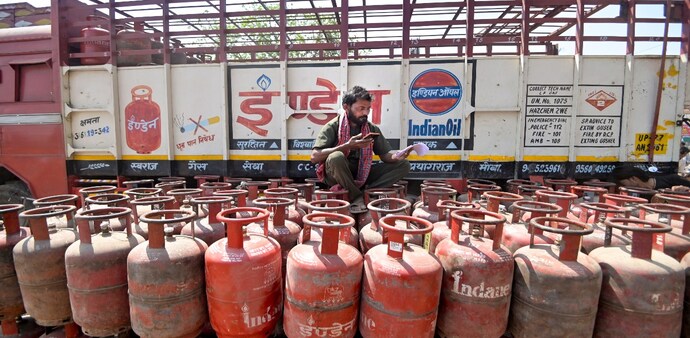
The Ministry of Petroleum and Natural Gas on Friday announced that the total allocation of commercial LPG cylinders will be hiked by 20 per cent from the existing 50 per cent to 70 per cent of the pre-crisis level of the packed non-domestic LPG.
The 50 per cent figure comprises 40 per cent of the pre-crisis quota allotted to states and an additional 10 per cent that was allotted based on their reforms to promote the adoption of piped natural gas (PNG).
The development comes at a time when the global energy markets are roiled by the ongoing West Asia conflict involving Iran and the US-Israel.
Industries that will benefit
The additional allocation of commercial LPG will be given on priority to labour-intensive industries such as steel, automobile, textile, dye, chemicals and plastics that also provide support to other essential sectors, according to a letter by Petroleum Ministry Secretary Dr Neeraj Mittal.
Among these, priority would be given to process industries or those that require LPG for specialised heating purposes, which cannot be substituted by natural gas.
As of March 23, the government increased the allocation of commercial LPG cylinders to 50 per cent. The government gave priority to sectors such as hospitals, educational institutions, community kitchens, hotels and restaurants.
Moreover, around 180 5-kg cylinders are allocated daily to migrant labourers.
Other consumer-friendly measures by the government
Earlier in the day, the government cut additional excise duty on petrol and diesel by ₹10 per litre. While the excise duty on petrol is down to ₹3 per litre, it is at ₹0 per litre for diesel.
After the reduction in excise duty, the incidence of excise duty on petrol will be Rs 11.9 per litre (Rs 1.40 basic excise duty, Rs 3 special additional excise duty, Rs 2.50 agriculture infrastructure and development cess and Rs 5 road and infrastructure cess).
On diesel, the incidence will be Rs 7.80 per litre (Rs 1.80 basis excise duty, Rs 4 agriculture infrastructure and development cess and Rs 2 road and infrastructure cess).
Besides this, the government imposed an export duty of ₹21.5 per litre on diesel and ₹29.5 per litre on aviation turbine fuel (ATF). Moreover, no windfall tax has been levied on domestic crude oil producers like ONGC.
The Ministry of Petroleum and Natural Gas on Friday announced that the total allocation of commercial LPG cylinders will be hiked by 20 per cent from the existing 50 per cent to 70 per cent of the pre-crisis level of the packed non-domestic LPG.
The 50 per cent figure comprises 40 per cent of the pre-crisis quota allotted to states and an additional 10 per cent that was allotted based on their reforms to promote the adoption of piped natural gas (PNG).
The development comes at a time when the global energy markets are roiled by the ongoing West Asia conflict involving Iran and the US-Israel.
Industries that will benefit
The additional allocation of commercial LPG will be given on priority to labour-intensive industries such as steel, automobile, textile, dye, chemicals and plastics that also provide support to other essential sectors, according to a letter by Petroleum Ministry Secretary Dr Neeraj Mittal.
Among these, priority would be given to process industries or those that require LPG for specialised heating purposes, which cannot be substituted by natural gas.
As of March 23, the government increased the allocation of commercial LPG cylinders to 50 per cent. The government gave priority to sectors such as hospitals, educational institutions, community kitchens, hotels and restaurants.
Moreover, around 180 5-kg cylinders are allocated daily to migrant labourers.
Other consumer-friendly measures by the government
Earlier in the day, the government cut additional excise duty on petrol and diesel by ₹10 per litre. While the excise duty on petrol is down to ₹3 per litre, it is at ₹0 per litre for diesel.
After the reduction in excise duty, the incidence of excise duty on petrol will be Rs 11.9 per litre (Rs 1.40 basic excise duty, Rs 3 special additional excise duty, Rs 2.50 agriculture infrastructure and development cess and Rs 5 road and infrastructure cess).
On diesel, the incidence will be Rs 7.80 per litre (Rs 1.80 basis excise duty, Rs 4 agriculture infrastructure and development cess and Rs 2 road and infrastructure cess).
Besides this, the government imposed an export duty of ₹21.5 per litre on diesel and ₹29.5 per litre on aviation turbine fuel (ATF). Moreover, no windfall tax has been levied on domestic crude oil producers like ONGC.