
West Asia crisis: Indian national killed in missile attack in Riyadh, 3rd Indian to die in Saudi Arabia since Feb 28
This is the third Indian fatality on land since the Iran-US conflict erupted on February 28. Earlier, two Indian nationals were killed and 10 others injured in a drone strike in Oman’s Sohar city on March 13.
- Mar 20, 2026,
- Updated Mar 20, 2026 6:58 PM IST
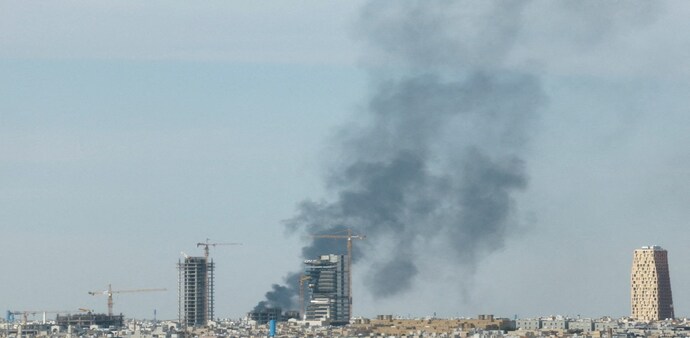
An Indian national has been killed in a missile attack on Riyadh on Wednesday. It is not yet clear whether the victim was directly hit or died due to debris from an intercepted missile.
Confirming the development, the Indian embassy in Riyadh issued a statement expressing condolences. “The Embassy of India expresses its deepest condolences on the tragic demise of an Indian national in Riyadh due to recent events on March 18th,” it said.
The mission added that it is in contact with the family and local authorities. “We remain committed to extending all possible assistance in this matter.”
This is the third Indian fatality on land since the Iran-US conflict erupted on February 28. Earlier, two Indian nationals were killed and 10 others injured in a drone strike in Oman’s Sohar city on March 13.
In addition, three Indian sailors lost their lives in attacks on merchant vessels in the region.
With tensions continuing to escalate, India has stepped up diplomatic engagement to ensure the safety of nearly 10 million Indian nationals living across West Asia.
Conflict spreads across region
The current phase of the conflict began on February 28, when US and Israeli strikes targeted Iranian military assets. That triggered a wave of retaliation from Iran and allied groups across the region.
Since then, missile and drone attacks have hit US-linked targets, shipping routes and cities, including Riyadh. While Saudi Arabia has intercepted several incoming missiles, falling debris has still caused casualties on the ground.
The escalation has also started to disrupt global shipping. Merchant vessels in the Gulf and the Red Sea have come under repeated attacks, pushing up insurance costs and forcing many companies to avoid these routes.
There are also growing concerns over energy supplies, as parts of the Strait of Hormuz, a key route for global oil trade, have been affected. Oil prices have surged past 100 dollars per barrel.
Air travel has taken a hit as well. Large parts of Gulf airspace remain closed, forcing airlines to take longer routes and deal with higher fuel costs.
Even as countries call for restraint, there is no clear sign of the situation easing, with the conflict now entering its fourth week.
An Indian national has been killed in a missile attack on Riyadh on Wednesday. It is not yet clear whether the victim was directly hit or died due to debris from an intercepted missile.
Confirming the development, the Indian embassy in Riyadh issued a statement expressing condolences. “The Embassy of India expresses its deepest condolences on the tragic demise of an Indian national in Riyadh due to recent events on March 18th,” it said.
The mission added that it is in contact with the family and local authorities. “We remain committed to extending all possible assistance in this matter.”
This is the third Indian fatality on land since the Iran-US conflict erupted on February 28. Earlier, two Indian nationals were killed and 10 others injured in a drone strike in Oman’s Sohar city on March 13.
In addition, three Indian sailors lost their lives in attacks on merchant vessels in the region.
With tensions continuing to escalate, India has stepped up diplomatic engagement to ensure the safety of nearly 10 million Indian nationals living across West Asia.
Conflict spreads across region
The current phase of the conflict began on February 28, when US and Israeli strikes targeted Iranian military assets. That triggered a wave of retaliation from Iran and allied groups across the region.
Since then, missile and drone attacks have hit US-linked targets, shipping routes and cities, including Riyadh. While Saudi Arabia has intercepted several incoming missiles, falling debris has still caused casualties on the ground.
The escalation has also started to disrupt global shipping. Merchant vessels in the Gulf and the Red Sea have come under repeated attacks, pushing up insurance costs and forcing many companies to avoid these routes.
There are also growing concerns over energy supplies, as parts of the Strait of Hormuz, a key route for global oil trade, have been affected. Oil prices have surged past 100 dollars per barrel.
Air travel has taken a hit as well. Large parts of Gulf airspace remain closed, forcing airlines to take longer routes and deal with higher fuel costs.
Even as countries call for restraint, there is no clear sign of the situation easing, with the conflict now entering its fourth week.