
When Indians paid extra for Bangladesh: 1971 relief fund memories clash with today’s hostility
The India-Bangladesh Relief Fund was among the largest citizen-driven humanitarian efforts in India’s post-Independence history. Triggered by the 1971 refugee crisis — when nearly 10 million people fled East Pakistan into India — the fund mobilised resources at a national scale.
- Dec 20, 2025,
- Updated Dec 22, 2025 9:40 PM IST
As India-Bangladesh relations face renewed strain amid a surge in anti-India rhetoric and street-level hostility in Bangladesh, a post by retired Indian Army officer Major General Harsha Kakar has reignited discussion on India’s role in the birth of its eastern neighbour and the sharp contrast with present realities.
Major General (Retd) Kakar on Saturday shared an old post on X (formerly Twitter), recalling a lesser-known but deeply symbolic chapter of India’s support during Bangladesh’s 1971 Liberation War. Highlighting the India-Bangladesh Relief Fund of the 1970s, Kakar underscored how ordinary Indians contributed financially — often unknowingly — to help a war-ravaged population fleeing repression in erstwhile East Pakistan.
“During the 1970s, lakhs of people in India paid 5 paise extra on every bus ticket, for over five years as Bangla Desh Relief Fund. At cinema halls, Rs 0.25 extra per ticket was charged as relief to Bangladesh,” Kakar wrote. “These were the contributions of our generation to help build a country in distress. Today, Bangladesh is behaving like India’s worst enemy. What gratitude.”
Nationwide effort for a humanitarian crisis
The India-Bangladesh Relief Fund was among the largest citizen-driven humanitarian efforts in India’s post-Independence history. Triggered by the 1971 refugee crisis — when nearly 10 million people fled East Pakistan into India — the fund mobilised resources at a national scale.
A temporary surcharge of 5 paise was imposed on postal money orders and telegrams, marked specifically for “Refugee Relief,” while special stamps were issued for the cause. In cities such as Mumbai, BEST bus commuters paid an additional 5 paise per ticket for several years. Cinema-goers across the country contributed 25 paise per ticket, and voluntary donations poured in from households already grappling with economic constraints.
These micro-contributions, spread across millions of citizens, helped finance refugee camps, food supplies, medical aid, and logistical support at a time when India was under immense financial and administrative strain.
Kakar’s remarks come at a time when bilateral ties are under pressure, with New Delhi closely watching developments in Bangladesh marked by rising Islamist mobilisation, violent protests, and repeated anti-India slogans by fringe and pro-Islamist outfits.
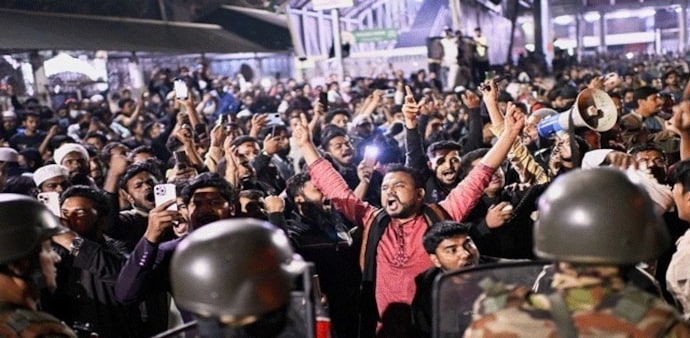
Recent months have seen incidents of mob violence and aggressive demonstrations in Dhaka, including attempts by protestors to march towards or breach security perimeters near the Indian High Commission — prompting concerns over the safety of Indian diplomatic missions and personnel. These developments have further complicated ties already tested by political churn, communal violence, and growing radicalisation in sections of Bangladeshi society.
Indian officials and strategic observers have expressed unease over what they see as shrinking space for secular and pro-India voices in Bangladesh, a sharp departure from the spirit of cooperation that once defined the relationship.
Question of memory & gratitude
For many in India, especially those who lived through the 1971 war, the current hostility feels jarring. The refugee influx during the Liberation War imposed a massive burden on India’s economy, with costs running into billions of dollars — largely managed through domestic resources and public contributions.
The relief fund, and the sacrifices behind it, symbolised national unity and moral commitment to Bangladesh’s independence. Today, as diplomatic relations face turbulence, many question historical memory, reciprocity, and the long-term trajectory of India-Bangladesh ties.
As India-Bangladesh relations face renewed strain amid a surge in anti-India rhetoric and street-level hostility in Bangladesh, a post by retired Indian Army officer Major General Harsha Kakar has reignited discussion on India’s role in the birth of its eastern neighbour and the sharp contrast with present realities.
Major General (Retd) Kakar on Saturday shared an old post on X (formerly Twitter), recalling a lesser-known but deeply symbolic chapter of India’s support during Bangladesh’s 1971 Liberation War. Highlighting the India-Bangladesh Relief Fund of the 1970s, Kakar underscored how ordinary Indians contributed financially — often unknowingly — to help a war-ravaged population fleeing repression in erstwhile East Pakistan.
“During the 1970s, lakhs of people in India paid 5 paise extra on every bus ticket, for over five years as Bangla Desh Relief Fund. At cinema halls, Rs 0.25 extra per ticket was charged as relief to Bangladesh,” Kakar wrote. “These were the contributions of our generation to help build a country in distress. Today, Bangladesh is behaving like India’s worst enemy. What gratitude.”
Nationwide effort for a humanitarian crisis
The India-Bangladesh Relief Fund was among the largest citizen-driven humanitarian efforts in India’s post-Independence history. Triggered by the 1971 refugee crisis — when nearly 10 million people fled East Pakistan into India — the fund mobilised resources at a national scale.
A temporary surcharge of 5 paise was imposed on postal money orders and telegrams, marked specifically for “Refugee Relief,” while special stamps were issued for the cause. In cities such as Mumbai, BEST bus commuters paid an additional 5 paise per ticket for several years. Cinema-goers across the country contributed 25 paise per ticket, and voluntary donations poured in from households already grappling with economic constraints.
These micro-contributions, spread across millions of citizens, helped finance refugee camps, food supplies, medical aid, and logistical support at a time when India was under immense financial and administrative strain.
Kakar’s remarks come at a time when bilateral ties are under pressure, with New Delhi closely watching developments in Bangladesh marked by rising Islamist mobilisation, violent protests, and repeated anti-India slogans by fringe and pro-Islamist outfits.
Recent months have seen incidents of mob violence and aggressive demonstrations in Dhaka, including attempts by protestors to march towards or breach security perimeters near the Indian High Commission — prompting concerns over the safety of Indian diplomatic missions and personnel. These developments have further complicated ties already tested by political churn, communal violence, and growing radicalisation in sections of Bangladeshi society.
Indian officials and strategic observers have expressed unease over what they see as shrinking space for secular and pro-India voices in Bangladesh, a sharp departure from the spirit of cooperation that once defined the relationship.
Question of memory & gratitude
For many in India, especially those who lived through the 1971 war, the current hostility feels jarring. The refugee influx during the Liberation War imposed a massive burden on India’s economy, with costs running into billions of dollars — largely managed through domestic resources and public contributions.
The relief fund, and the sacrifices behind it, symbolised national unity and moral commitment to Bangladesh’s independence. Today, as diplomatic relations face turbulence, many question historical memory, reciprocity, and the long-term trajectory of India-Bangladesh ties.