
'When political power is determined by lineage rather than...': Shashi Tharoor takes not-so veiled jab at Gandhi family
He calls for reforms to strengthen meritocracy and ensure leadership positions are filled based on ability, not family ties.
- Nov 4, 2025,
- Updated Nov 4, 2025 1:19 PM IST
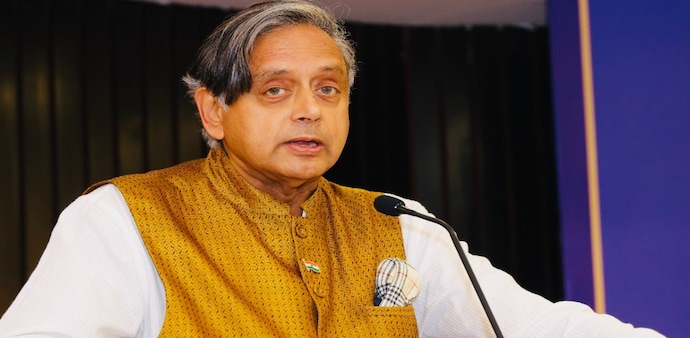
Congress leader Shashi Tharoor has reignited the discussion on the prevalence of dynastic politics in India through a recent article. In the article, Tharoor argues that the dominance of political families, especially the Nehru-Gandhi dynasty, has entrenched the idea that leadership is a birthright rather than a result of merit.
He calls for reforms to strengthen meritocracy and ensure leadership positions are filled based on ability, not family ties. Tharoor added that the quality of governance suffers when political power is determined by lineage and surname instead of ability, commitment or grassroots engagement.
"When political power is determined by lineage rather than ability, commitment or grassroots engagement, the quality of governance suffers. Drawing from a smaller talent pool is never advantageous, but it is especially problematic when candidates' main qualification is their surname," Tharoor said in his article titled 'Indian Politics Are a Family Business' published in Project Syndicate.
He added, "It is high time India traded dynasty for meritocracy. This would require fundamental reforms, from imposing legally mandated term limits to requiring meaningful internal party elections, together with a concerted effort to educate and empower the electorate to choose leaders based on merit."
Tharoor’s piece highlights the Nehru-Gandhi family—Jawaharlal Nehru, Indira Gandhi, Rajiv Gandhi, Rahul Gandhi, and Priyanka Gandhi Vadra—as central to India's political narrative. He notes their involvement in the country's freedom movement but argues that their legacy has reinforced the perception of leadership as hereditary.
"But it has also cemented the idea that political leadership can be a birthright. This idea has penetrated Indian politics across every party, in every region, and at every level," Tharoor further noted.
Beyond the Congress family, Tharoor points to dynastic succession in various parties, citing Odisha Chief Minister Naveen Patnaik, Uddhav Thackeray, Aaditya Thackeray, and referencing the Samajwadi Party, Rashtriya Janata Dal, DMK, and Shiromani Akali Dal to underline the widespread nature of such practices.
Furthermore, he said that this is a rampant phenomenon acrossd the Indian subcontinent -- Bhuttos and Sharifs in Pakistan, Sheikh and Zia families in Bangladesh and the Bandaranaikes and the Rajapaksas in Sri Lanka.
Explaining the reason behind dynastic politics being so prevalent, Tharoor wrote: "One reason might be that a family can serve effectively as a brand: candidates with built-in name recognition do not have to work as hard to attract voters’ attention or build their trust. If voters accepted a candidate’s father, aunt, or sibling, they would probably accept the candidate – no credibility-building required. This effect would have been particularly powerful in the India of the past, which had low literacy rates and media penetration."
His views have drawn responses from within his own party. Congress leader Udit Raj countered that family succession is a broader social phenomenon, not limited to politics.
"A doctor’s son becomes a doctor, a businessman’s child continues in business, and politics is no exception. Also, if a politician has a criminal background, it reflects the reality of our society," Raj told news agency ANI.
Congress leader Shashi Tharoor has reignited the discussion on the prevalence of dynastic politics in India through a recent article. In the article, Tharoor argues that the dominance of political families, especially the Nehru-Gandhi dynasty, has entrenched the idea that leadership is a birthright rather than a result of merit.
He calls for reforms to strengthen meritocracy and ensure leadership positions are filled based on ability, not family ties. Tharoor added that the quality of governance suffers when political power is determined by lineage and surname instead of ability, commitment or grassroots engagement.
"When political power is determined by lineage rather than ability, commitment or grassroots engagement, the quality of governance suffers. Drawing from a smaller talent pool is never advantageous, but it is especially problematic when candidates' main qualification is their surname," Tharoor said in his article titled 'Indian Politics Are a Family Business' published in Project Syndicate.
He added, "It is high time India traded dynasty for meritocracy. This would require fundamental reforms, from imposing legally mandated term limits to requiring meaningful internal party elections, together with a concerted effort to educate and empower the electorate to choose leaders based on merit."
Tharoor’s piece highlights the Nehru-Gandhi family—Jawaharlal Nehru, Indira Gandhi, Rajiv Gandhi, Rahul Gandhi, and Priyanka Gandhi Vadra—as central to India's political narrative. He notes their involvement in the country's freedom movement but argues that their legacy has reinforced the perception of leadership as hereditary.
"But it has also cemented the idea that political leadership can be a birthright. This idea has penetrated Indian politics across every party, in every region, and at every level," Tharoor further noted.
Beyond the Congress family, Tharoor points to dynastic succession in various parties, citing Odisha Chief Minister Naveen Patnaik, Uddhav Thackeray, Aaditya Thackeray, and referencing the Samajwadi Party, Rashtriya Janata Dal, DMK, and Shiromani Akali Dal to underline the widespread nature of such practices.
Furthermore, he said that this is a rampant phenomenon acrossd the Indian subcontinent -- Bhuttos and Sharifs in Pakistan, Sheikh and Zia families in Bangladesh and the Bandaranaikes and the Rajapaksas in Sri Lanka.
Explaining the reason behind dynastic politics being so prevalent, Tharoor wrote: "One reason might be that a family can serve effectively as a brand: candidates with built-in name recognition do not have to work as hard to attract voters’ attention or build their trust. If voters accepted a candidate’s father, aunt, or sibling, they would probably accept the candidate – no credibility-building required. This effect would have been particularly powerful in the India of the past, which had low literacy rates and media penetration."
His views have drawn responses from within his own party. Congress leader Udit Raj countered that family succession is a broader social phenomenon, not limited to politics.
"A doctor’s son becomes a doctor, a businessman’s child continues in business, and politics is no exception. Also, if a politician has a criminal background, it reflects the reality of our society," Raj told news agency ANI.