
'When this IMEC understanding was reached last Sept...': S Jaishankar on need for multiple transport corridors amid Red Sea crisis
External Affairs Minister S Jaishankar, in a recent conference, highlighted the need for multiple transport corridors citing the fragility of existing connectivity links. This comes in the wake of rising tensions in the Red Sea.
- Feb 21, 2024,
- Updated Feb 21, 2024 9:17 AM IST
External Affairs Minister S Jaishankar emphasized the need to establish multiple transport corridors with in-built resilience, citing recent events in the Red Sea as a manifestation of the existing connectivity link's fragility.
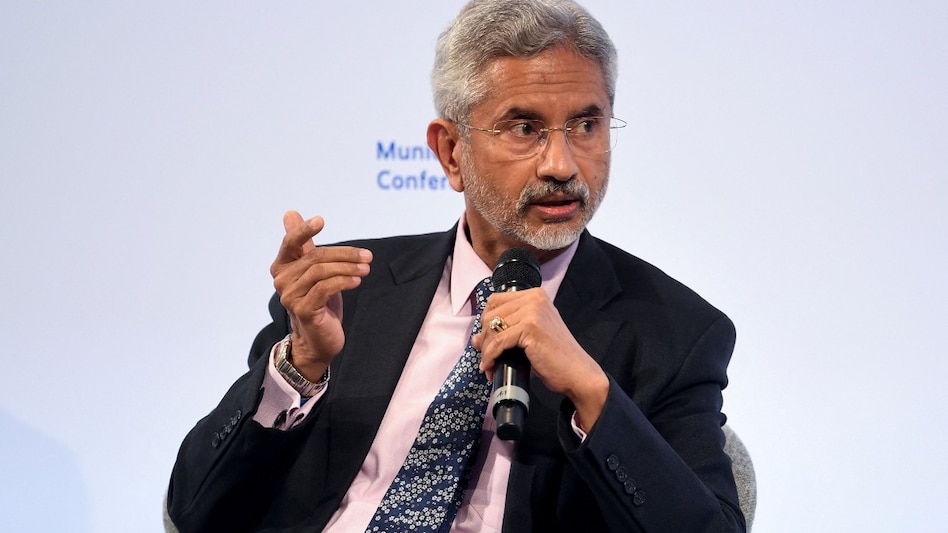
Speaking at a conference, Jaishankar highlighted India's strengthening ties with Europe and the potential for global economic growth through the India-Middle East-Europe Economic Corridor (IMEC).
He mentioned the necessity for different connectivity corridors, acknowledging that the fragility of existing routes was not fully recognized when the IMEC initiative was launched last September. He further spoke about the threats posed by Houthi militants' attacks on cargo vessels in the Red Sea.
"When this (IMEC) understanding in principle was reached last September on the sidelines of the G20, perhaps all of us were not adequately cognisant of the fragility of existing connectivity," Jaishankar was quoted as saying by news agency PTI.
He further said: "Recent events in the Red Sea in the Gulf of Aden have reminded us of that."
The IMEC initiative is viewed as a strategic counter to China's controversial Belt and Road Initiative (BRI). Jaishankar also mentioned other potential connectivity channels, including a longer one through Iran, the India-Myanmar-Thailand trilateral highway project, and the 'polar route'.
"There is a longer one which is being worked through Iran. But I also want to mention some other potential connectivity channels which would be of long-term interest to India, Europe and India," he explained.
He further said there is an assumption that the 'polar route' could open up a logistical pathway between India and Europe which would go through the Indo-Pacific.
Furthermore, he elaborated on connectivity initiatives within South Asia like the Bangladesh-Bhutan-India-Nepal (BBIN) initiative and the trilateral highway project aimed at connecting India with Vietnam.
“I must also share with our European friends that within South Asia, in this region and beyond, there are again very big connectivity projects already under execution, and still bolder thoughts in the making between India and its immediate neighbors, Bangladesh, Nepal, Bhutan, we have seen, actually, in terms of roads, grid connections, waterways, a very big change, which has come about,” he said.
Adding, “There is a much more arduous project, the trilateral highway. And in fact, if the IMEC connects India, to Europe through the West, and the trilateral highway when it is done, and we have challenges in Myanmar, but when the trilateral highway is done, it would go all the way to the Vietnamese coast. So you actually will have a lateral connectivity grid, which would connect Europe all the way to the Pacific, mostly by land. So it is surely a thought for your consideration.”
Furthermore, Jaishankar also expounded on the potential of the Indian economy. He said that India today has a GDP of $3.75 trillion, which is projected to reach $7.3 trillion by the end of the decade.
Citing a recent report by Goldman Sachs, he highlighted the robustness of the Indian economy and its future trajectory, predicting that India would become the second largest economy by 2075.
"So this is an arithmetical way of saying that India would be an increasingly significant economy, the second largest by 2075 and certainly the third largest by end of this decade in national terms and that is something which the European Union has to take into account," S Jaishankar noted.
(With PTI, India Today inputs)
External Affairs Minister S Jaishankar emphasized the need to establish multiple transport corridors with in-built resilience, citing recent events in the Red Sea as a manifestation of the existing connectivity link's fragility.
Speaking at a conference, Jaishankar highlighted India's strengthening ties with Europe and the potential for global economic growth through the India-Middle East-Europe Economic Corridor (IMEC).
He mentioned the necessity for different connectivity corridors, acknowledging that the fragility of existing routes was not fully recognized when the IMEC initiative was launched last September. He further spoke about the threats posed by Houthi militants' attacks on cargo vessels in the Red Sea.
"When this (IMEC) understanding in principle was reached last September on the sidelines of the G20, perhaps all of us were not adequately cognisant of the fragility of existing connectivity," Jaishankar was quoted as saying by news agency PTI.
He further said: "Recent events in the Red Sea in the Gulf of Aden have reminded us of that."
The IMEC initiative is viewed as a strategic counter to China's controversial Belt and Road Initiative (BRI). Jaishankar also mentioned other potential connectivity channels, including a longer one through Iran, the India-Myanmar-Thailand trilateral highway project, and the 'polar route'.
"There is a longer one which is being worked through Iran. But I also want to mention some other potential connectivity channels which would be of long-term interest to India, Europe and India," he explained.
He further said there is an assumption that the 'polar route' could open up a logistical pathway between India and Europe which would go through the Indo-Pacific.
Furthermore, he elaborated on connectivity initiatives within South Asia like the Bangladesh-Bhutan-India-Nepal (BBIN) initiative and the trilateral highway project aimed at connecting India with Vietnam.
“I must also share with our European friends that within South Asia, in this region and beyond, there are again very big connectivity projects already under execution, and still bolder thoughts in the making between India and its immediate neighbors, Bangladesh, Nepal, Bhutan, we have seen, actually, in terms of roads, grid connections, waterways, a very big change, which has come about,” he said.
Adding, “There is a much more arduous project, the trilateral highway. And in fact, if the IMEC connects India, to Europe through the West, and the trilateral highway when it is done, and we have challenges in Myanmar, but when the trilateral highway is done, it would go all the way to the Vietnamese coast. So you actually will have a lateral connectivity grid, which would connect Europe all the way to the Pacific, mostly by land. So it is surely a thought for your consideration.”
Furthermore, Jaishankar also expounded on the potential of the Indian economy. He said that India today has a GDP of $3.75 trillion, which is projected to reach $7.3 trillion by the end of the decade.
Citing a recent report by Goldman Sachs, he highlighted the robustness of the Indian economy and its future trajectory, predicting that India would become the second largest economy by 2075.
"So this is an arithmetical way of saying that India would be an increasingly significant economy, the second largest by 2075 and certainly the third largest by end of this decade in national terms and that is something which the European Union has to take into account," S Jaishankar noted.
(With PTI, India Today inputs)