
'Why glamourise street protests?': Kanwal Sibal warns against foreign forces exploiting youth concerns
Nothing good has come out of such street mobilisation in Nepal and Bangladesh, says Kanwal Sibal while responding to Shashi Tharoor
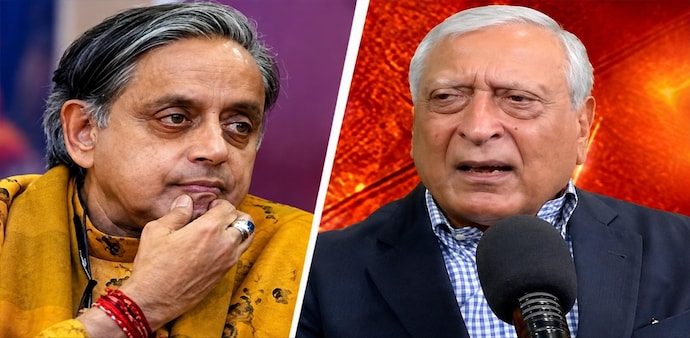
- Aug 18, 2026,
- Updated Aug 18, 2026 6:54 PM IST
Former Foreign Secretary Kanwal Sibal on Tuesday cautioned against "glamourising" street protests and adopting Western labels such as Gen Z, Gen X and Millennials to describe Indian youth.
Responding to Congress MP Shashi Tharoor's post on Gen Z protests, Sibal said genuine problems such as youth unemployment should not be used to promote street mobilisation.
"Problems of youth unemployment are real but why glamourise street protests?" Sibal said. "Nothing good has come out of such street mobilisation in Nepal and Bangladesh."
He cautioned that internal and external forces wanted to use youth mobilisation to destabilise the country.
Must Watch: BJP’s New Digital Gameplan: Deepak Mhaskey On Winning The Social Media Battle
'Genuine Problem' Being Exploited
Sibal said such forces could take advantage of genuine concerns and try to turn them into an anti-government movement.
"They want to take advantage of a genuine problem and convert it if possible into an anti- regime movement as if that would automatically produce a solution," he said.
Earlier today, Tharoor reacted to an article on youth protests, writing: "Can Gen-Z bring change to Pakistan too? Fascinating to see a sensitive Pakistani voice mirror the same concerns as Gen-Z in India."
The article was written by a Pakistani activist to Abhijeet Dipike, who, along with activist Sonam Wangchuk, led a protest against the NEET paper leak. The protest resulted in then Education Minister Dharmendra Pradhan's resignation.
Don't Miss: How mental healthcare is moving from awareness to a sustainable segment
'Be Rooted In Our Own Sociology'
Sibal also questioned the use of terms such as Gen Z, Gen X and Millennials in India.
"Gen Z , Gen X, Millennials are western social characterisations. We have adopted them slavishly to appear 'connected' internationally," he said.
He argued that such labels could allow foreign influences to shape how young Indians are viewed.
"This is how foreign influence, often alien to our 1.4 billion populace, permeates negatively the thinking of our youngsters," Sibal said.
He acknowledged that democratic countries are open to both positive and negative foreign influences.
"But our elite should be more discerning when adopting the baggage that comes with terms like GenZ, as if such terms catch uniform thinking of all those belonging to this age group," he said. "Let us be rooted in our own sociology."
In the article cited by Tharoor, the Pakistani activist said young people in both countries faced similar problems. "Exam leaks are just the tip of it. Zooming out, we all face common issues: unemployment, poverty, poor living standards across borders," the activist wrote.
The writer said the protest in India felt "refreshing and full of hope" to young people in Pakistan. "We cannot wait for another century to get the basics right. We must act now by educating, uniting and mobilising youngsters."
The activist added: "If you can stand up in Delhi, it gives a little more oxygen to a student in Lahore or Karachi who feels like they are suffocating."
Former Foreign Secretary Kanwal Sibal on Tuesday cautioned against "glamourising" street protests and adopting Western labels such as Gen Z, Gen X and Millennials to describe Indian youth.
Responding to Congress MP Shashi Tharoor's post on Gen Z protests, Sibal said genuine problems such as youth unemployment should not be used to promote street mobilisation.
"Problems of youth unemployment are real but why glamourise street protests?" Sibal said. "Nothing good has come out of such street mobilisation in Nepal and Bangladesh."
He cautioned that internal and external forces wanted to use youth mobilisation to destabilise the country.
Must Watch: BJP’s New Digital Gameplan: Deepak Mhaskey On Winning The Social Media Battle
'Genuine Problem' Being Exploited
Sibal said such forces could take advantage of genuine concerns and try to turn them into an anti-government movement.
"They want to take advantage of a genuine problem and convert it if possible into an anti- regime movement as if that would automatically produce a solution," he said.
Earlier today, Tharoor reacted to an article on youth protests, writing: "Can Gen-Z bring change to Pakistan too? Fascinating to see a sensitive Pakistani voice mirror the same concerns as Gen-Z in India."
The article was written by a Pakistani activist to Abhijeet Dipike, who, along with activist Sonam Wangchuk, led a protest against the NEET paper leak. The protest resulted in then Education Minister Dharmendra Pradhan's resignation.
Don't Miss: How mental healthcare is moving from awareness to a sustainable segment
'Be Rooted In Our Own Sociology'
Sibal also questioned the use of terms such as Gen Z, Gen X and Millennials in India.
"Gen Z , Gen X, Millennials are western social characterisations. We have adopted them slavishly to appear 'connected' internationally," he said.
He argued that such labels could allow foreign influences to shape how young Indians are viewed.
"This is how foreign influence, often alien to our 1.4 billion populace, permeates negatively the thinking of our youngsters," Sibal said.
He acknowledged that democratic countries are open to both positive and negative foreign influences.
"But our elite should be more discerning when adopting the baggage that comes with terms like GenZ, as if such terms catch uniform thinking of all those belonging to this age group," he said. "Let us be rooted in our own sociology."
In the article cited by Tharoor, the Pakistani activist said young people in both countries faced similar problems. "Exam leaks are just the tip of it. Zooming out, we all face common issues: unemployment, poverty, poor living standards across borders," the activist wrote.
The writer said the protest in India felt "refreshing and full of hope" to young people in Pakistan. "We cannot wait for another century to get the basics right. We must act now by educating, uniting and mobilising youngsters."
The activist added: "If you can stand up in Delhi, it gives a little more oxygen to a student in Lahore or Karachi who feels like they are suffocating."