












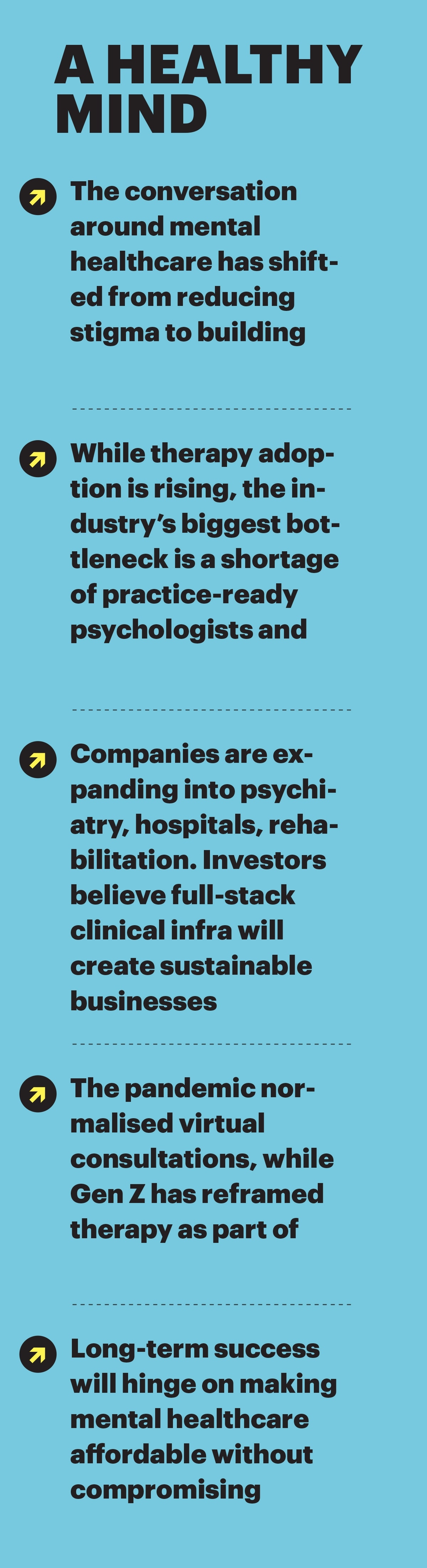


For years, mental healthcare in India occupied an uncomfortable space, largely spoken about through the lens of stigma, celebrity advocacy, and awareness campaigns. The conversation revolved around convincing people that it was acceptable to seek help. Today, that narrative is changing. The bigger question is no longer whether Indians recognise mental health as important but whether the country can build a sustainable mental healthcare industry capable of serving a rapidly growing demand.
That shift is visible across ecosystems. Digital-first start-ups are expanding therapy and psychiatric services, specialist providers are building integrated care models, hospitals are investing in dedicated psychiatric facilities, employers are embedding mental wellness into employee benefits, and insurers are slowly bringing mental health into mainstream coverage. Investors, too, are beginning to view the category not as a niche wellness play but as an emerging healthcare vertical.
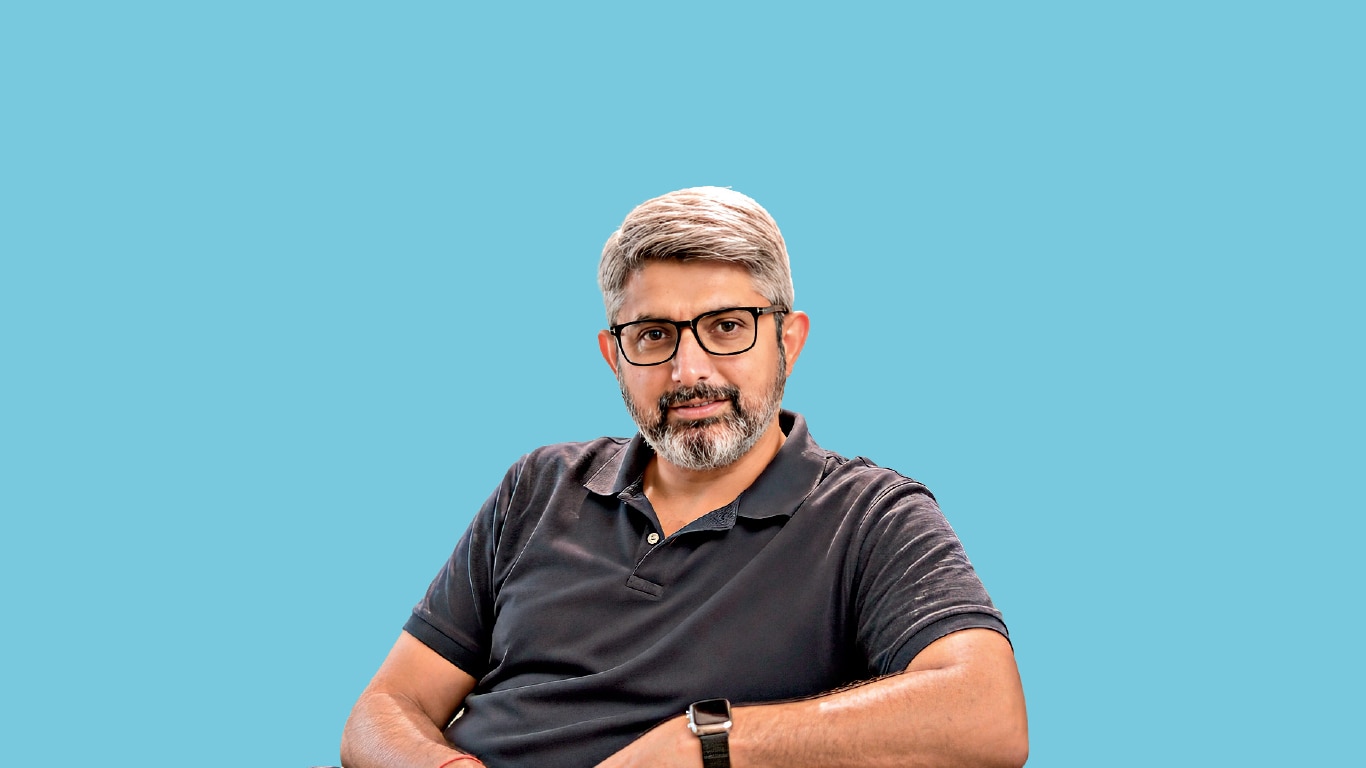
“Mental healthcare is becoming a real healthcare sector. I don’t see it as a fast-growing app or a wellness category anymore,” says Amit Malik, Founder & CEO, Amaha, a mental health start-up providing online and in-person psychiatric care, professional therapy, and self-care apps.
“The conversation has shifted from creating awareness to building delivery,” Malik adds.
Awareness to Action
The pandemic undoubtedly accelerated conversations around mental well-being, but operators say the momentum has outlasted Covid. Consumers are increasingly seeking therapy as part of preventive healthcare.
Dr Ritika Sinha, Co-founder of Rocket Health, believes digital adoption has fundamentally changed access. Rocket Health is a digital mental health platform, started in 2021, which operates as a marketplace.
“During the pandemic, even people who were sceptical about mental healthcare became comfortable seeking consultations virtually. That behavioural shift has stayed. Today, mental healthcare has become normal for many consumers, especially Gen Zs,” says Sinha.
The change is visible in Rocket Health’s own numbers, which touches around 10,000 monthly sessions. Roughly half its users now come from Tier II and Tier III cities, a reminder that demand is no longer confined to metropolitan India.
About 10.6% of Indian adults—roughly 11 out of every 100 adults—were living with a diagnosable mental health disorder, according to a 2015-16 National Mental Health Survey (NMHS) conducted by the National Institute of Mental Health and Neurosciences (NIMHANS).
Industry experts say Gen Z and millennials have been instrumental in reshaping India’s mental healthcare landscape. While millennials helped destigmatise conversations around mental well-being, Gen Z has gone a step further by normalising therapy as part of overall wellness rather than a last resort during a crisis. As awareness has translated into greater willingness to seek professional help, a new generation of mental healthcare start-ups—including YourDOST, Lissun, and MindPeers—has emerged to meet the growing demand.
Among the early entrants was Amaha, founded in 2016, backed by Fireside Ventures and Lightbox. The company has evolved from offering digital self-care tools into an integrated mental healthcare provider, spanning online therapy, psychiatric consultations and a 30-bed psychiatric hospital in Bengaluru.
The industry’s evolution has also been supported by policy reforms. The Mental Healthcare Act, 2017, required insurers to provide coverage for mental illness on a par with physical illness. The momentum gathered further when the Insurance Regulatory and Development Authority of India (IRDAI) directed all health insurers to fully integrate mental illness coverage into their policies.
Yet, for all the optimism, the industry finds itself at an inflection point. Demand has accelerated faster than the supply of trained professionals.
Economics of empathy
Ironically, India’s biggest constraint today may not be consumer demand but the industry’s ability to serve it. “The category has moved through three distinct phases—awareness, acknowledgement, and now the willingness to pay,” says Ankur Khaitan, Principal, Fireside Ventures. “Categories reach an inflection point only when consumers not only recognise the problem but are willing to spend to solve it. Mental healthcare is now entering that phase.”

However, every stakeholder interviewed by Business Today points to the same structural challenge —a shortage of practice-ready professionals.
Rocket Health employs nearly 90 psychologists and psychiatrists, but Dr. Sinha argues that India’s problem is less about the number of psychology graduates than about clinical readiness.
“We receive plenty of applications [for psychologists and psychiatrists). The challenge is quality. Students graduate with strong theoretical knowledge, but practical training is limited. Building rapport with patients, conducting therapy sessions and handling real-world cases require skills that are developed through practice, not textbooks.”
Amaha echoes the concern. Rather than viewing workforce development as a back-office function, the company considers clinician training a strategic investment. As mental healthcare scales, maintaining consistent clinical quality may become the industry’s biggest differentiator.
While companies agree on the challenges, their approaches differ.
“The viable business model in India is around building the spectrum of care,” says Malik. “Mental illnesses exist across different levels of severity, and patients often move between therapy, psychiatry, and inpatient care. That continuum is important.”
Rocket Health has taken almost the opposite route. It remains entirely online, describing itself as ‘a hospital on the internet’ rather than a marketplace of independent therapists. According to Dr. Sinha, the company has considered opening physical centres, but only as brand experience hubs rather than essential treatment infrastructure. “We’re not seeing consumers asking to move offline. Demand for online care itself is overwhelming,” she adds.
For investors, neither model is inherently superior. What matters is whether businesses can build durable clinical infrastructure. “The winners won’t simply be therapy apps,” says Khaitan. “They’ll be companies that build full-stack care models, supported by technology, data and clinical systems.”
If AI is reshaping healthcare globally, mental healthcare presents a more nuanced opportunity. None of the stakeholders believe AI will replace therapists. Instead, they see technology improving efficiency.
For Fireside Ventures, AI’s biggest opportunity lies in matching patients with therapists, improving clinical workflows and supporting decision-making rather than automating therapy itself.
That distinction is becoming increasingly important as startups navigate investor expectations around AI. In mental healthcare, trust remains difficult to automate.
The toughest question facing the sector is whether quality mental healthcare can also become commercially sustainable.
As healthcare has historically rewarded scale slowly, Dr. Sinha says that healthcare is a trust-based business. It cannot be scaled from zero to 200 overnight. One has to build it patiently, and quality has to remain at the centre of the efforts.
Pricing in this sector adds an other layer of complexity. Experts say that start-ups are working towards making it affordable, mental healthcare is now at the cusp of being recognised as any other mainstream healthcare sector in this country.
For investors, this balancing act is central to the industry’s future.
“The opportunity isn’t simply to build another digital platform,” says Khaitan. “It’s to build healthcare infrastructure that creates better outcomes while sustaining itself economically.”
Category building
Mental healthcare in India is, in many ways, where diagnostics or preventive healthcare once stood; recognised as important but still building the infrastructure needed to scale.
The road ahead remains challenging. India needs more trained clinicians, better insurance penetration, stronger quality standards and business models that can balance affordability with profitability.
The question is no longer whether Indians will seek mental healthcare, it is whether the ecosystem can build enough trust, talent and capacity to meet that demand.
For experts, the subtle shift—from crisis intervention to long-term emotional wellbeing—could define the industry’s next phase.
@PalakAgarwal64


