
‘Will liberate Donbas, Novorossiya’: Putin signals no territorial compromise amid US peace proposal
Donbas, comprising Donetsk and Luhansk, has been the epicentre of the war since 2014. Novorossiya, a broader historical term, refers to southeastern Ukrainian territories that Russia has increasingly sought to assert influence.
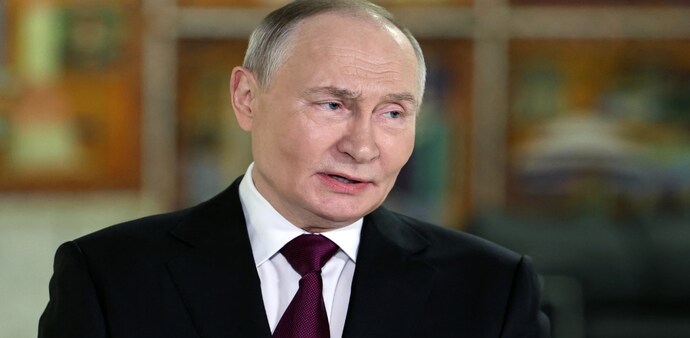
- Dec 4, 2025,
- Updated Dec 4, 2025 2:02 PM IST
Russian President Vladimir Putin, in an exclusive interview with India Today and Aaj Tak, reiterated that Moscow remains committed to securing full control over Donbas and the wider Novorossiya region — either through military operations or alternate political mechanisms. The remarks underline Russia’s unchanged territorial objectives even as diplomatic conversations with Washington begin to re-emerge.
Russia firm on territorial goals
Putin stated that Russia would “liberate Donbas and Novorossiya one way or another,” describing the regions as historically linked to Russia and central to its national security interests. His comments come amid intensified fighting around eastern Ukraine, where Russian forces have made incremental but steady advances.
Donbas, comprising Donetsk and Luhansk, has been the epicentre of the war since 2014. Novorossiya, a broader historical term, refers to southeastern Ukrainian territories that Russia has increasingly sought to assert influence over since the 2022 invasion.
Disagreements with US peace proposals
Putin confirmed that Russia had reviewed a 28-point peace proposal put forward by the United States but said Moscow “disagreed with several points.” Without revealing specifics, he described the negotiations as “complex work,” signalling both caution and a rare acknowledgement that discussions with Washington are ongoing.
According to Putin, the US suggested breaking the plan into four separate packages to allow issue-wise negotiation — an approach Russia is currently evaluating. The Kremlin’s public confirmation of these discussions marks a notable shift, considering months of diplomatic freeze between the two sides.
Russia-Ukraine war status
The war, now nearing its fourth year, remains locked in a grinding stalemate along a 1,000-km front. Russia currently controls roughly 20% of Ukrainian territory, including Crimea, parts of Zaporizhzhia and Kherson, and much of Luhansk and Donetsk. Ukraine’s 2023 counteroffensive failed to deliver major territorial gains, while Russian forces have gradually pushed forward in 2024-25.
Western military aid to Kyiv has slowed, leading to ammunition shortages and defensive vulnerabilities. Meanwhile, Moscow has intensified missile strikes on Ukrainian infrastructure and military hubs, seeking to further degrade Kyiv’s war-fighting capacity.
Trump’s proposed peace plan
Putin’s acknowledgment of US proposals coincides with increasing global attention on Donald Trump’s claimed peace plan for Ukraine. Although Trump has not made the full framework public, he has repeatedly said he could “end the war in 24 hours” if elected, and has suggested:
- Pressuring Ukraine to enter negotiations with Russia
- Conditioning US aid to Kyiv on participation in peace talks
- Potentially freezing the conflict along existing frontlines
- Seeking security guarantees that stop short of NATO membership for Ukraine
Reports in US media have indicated that advisers around Trump have drafted versions of a plan that would involve Ukraine ceding de facto control of Crimea and parts of Donbas to secure an immediate ceasefire — an idea Kyiv has firmly rejected.
The US government under the Biden administration has not endorsed this approach, but the circulating drafts have influenced broader geopolitical discussions, especially as war fatigue rises in Europe and America.
Putin’s latest comments suggest that while Moscow is open to structured dialogue with Washington, Russia’s core demands remain unchanged: recognition of its territorial claims, limits on NATO involvement in Ukraine, and long-term security guarantees.
Ukraine, backed by its Western allies, insists on full territorial restoration as a condition for lasting peace — a position fundamentally at odds with Russia’s vision.
Russian President Vladimir Putin, in an exclusive interview with India Today and Aaj Tak, reiterated that Moscow remains committed to securing full control over Donbas and the wider Novorossiya region — either through military operations or alternate political mechanisms. The remarks underline Russia’s unchanged territorial objectives even as diplomatic conversations with Washington begin to re-emerge.
Russia firm on territorial goals
Putin stated that Russia would “liberate Donbas and Novorossiya one way or another,” describing the regions as historically linked to Russia and central to its national security interests. His comments come amid intensified fighting around eastern Ukraine, where Russian forces have made incremental but steady advances.
Donbas, comprising Donetsk and Luhansk, has been the epicentre of the war since 2014. Novorossiya, a broader historical term, refers to southeastern Ukrainian territories that Russia has increasingly sought to assert influence over since the 2022 invasion.
Disagreements with US peace proposals
Putin confirmed that Russia had reviewed a 28-point peace proposal put forward by the United States but said Moscow “disagreed with several points.” Without revealing specifics, he described the negotiations as “complex work,” signalling both caution and a rare acknowledgement that discussions with Washington are ongoing.
According to Putin, the US suggested breaking the plan into four separate packages to allow issue-wise negotiation — an approach Russia is currently evaluating. The Kremlin’s public confirmation of these discussions marks a notable shift, considering months of diplomatic freeze between the two sides.
Russia-Ukraine war status
The war, now nearing its fourth year, remains locked in a grinding stalemate along a 1,000-km front. Russia currently controls roughly 20% of Ukrainian territory, including Crimea, parts of Zaporizhzhia and Kherson, and much of Luhansk and Donetsk. Ukraine’s 2023 counteroffensive failed to deliver major territorial gains, while Russian forces have gradually pushed forward in 2024-25.
Western military aid to Kyiv has slowed, leading to ammunition shortages and defensive vulnerabilities. Meanwhile, Moscow has intensified missile strikes on Ukrainian infrastructure and military hubs, seeking to further degrade Kyiv’s war-fighting capacity.
Trump’s proposed peace plan
Putin’s acknowledgment of US proposals coincides with increasing global attention on Donald Trump’s claimed peace plan for Ukraine. Although Trump has not made the full framework public, he has repeatedly said he could “end the war in 24 hours” if elected, and has suggested:
- Pressuring Ukraine to enter negotiations with Russia
- Conditioning US aid to Kyiv on participation in peace talks
- Potentially freezing the conflict along existing frontlines
- Seeking security guarantees that stop short of NATO membership for Ukraine
Reports in US media have indicated that advisers around Trump have drafted versions of a plan that would involve Ukraine ceding de facto control of Crimea and parts of Donbas to secure an immediate ceasefire — an idea Kyiv has firmly rejected.
The US government under the Biden administration has not endorsed this approach, but the circulating drafts have influenced broader geopolitical discussions, especially as war fatigue rises in Europe and America.
Putin’s latest comments suggest that while Moscow is open to structured dialogue with Washington, Russia’s core demands remain unchanged: recognition of its territorial claims, limits on NATO involvement in Ukraine, and long-term security guarantees.
Ukraine, backed by its Western allies, insists on full territorial restoration as a condition for lasting peace — a position fundamentally at odds with Russia’s vision.