
Will wait out Trump’s term, dial down public criticism: How India put the foot down ahead of US trade deal
India conveyed to Washington that it had faced other hostile US administrations in the past too, and would just wait out President Trump's term.
- Feb 5, 2026,
- Updated Feb 5, 2026 8:40 AM IST
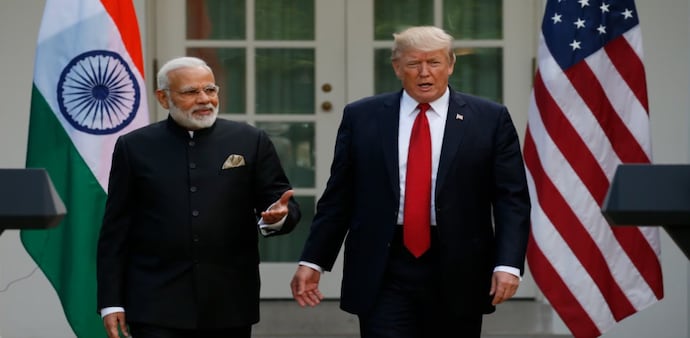
The Trump administration wasn’t the first hostile US administration India had to deal with, and New Delhi reportedly made that known to Washington. It refused to get bullied and said India would wait, if needed, for the India-US trade deal.
According to a report in Bloomberg, shortly after Prime Minister Narendra Modi’s bonhomie with Russian President Vladimir Putin and Chinese President Xi Jinping, India dispatched national security adviser Ajit Doval to Washington. Doval’s message was clear: India wanted to put the acrimony behind and negotiate the trade deal.
As per the report that quoted sources in the know, Doval told Secretary of State Marco Rubio that India would not be bullied by Trump and his top aides, and was willing to wait out his term. It had faced other hostile US administrations in the past too. New Delhi, however, wanted Trump and his aides to dial down their public criticism of India so that the two nations could get back to the negotiating table.
It came at a time when Trump had not only imposed 50 per cent tariffs on India, but also blamed New Delhi for funding the Ukraine war and called India a ‘dead’ economy.
Soon after, the report added, Trump called Modi on his birthday and praised him for doing a ‘tremendous’ job, showing the first signs of thawing the relationship. By the end of the year, the leaders had spoken a few more times.
Cut to last Monday when Trump announced that he had reached a trade agreement with Modi, and that tariffs on India would be lowered to 18 per cent. He said India agreed to buy $500 billion of US goods, reduce tariffs on US goods to 0, and to stop buying Russian oil. The Indian side is yet to issue a statement on the same.
The announcement, however, took officials in New Delhi by surprise, as many senior bureaucrats in the foreign and commerce ministries, including those who were part of the trade negotiations, were oblivious of a scheduled call between Trump and Modi.
India has been working to get the relations back on track as it believes it needs US capital, technology and military cooperation to deter China as well as make India a developed nation by 2047. Officials said Trump was just a blip in the time frame. Even though New Delhi remained optimistic through the whole ordeal, the initial ‘irrational exuberance’ of the bilateral relationship has faded.
More serious efforts to get the relationship on track came after the appointment of the new US Ambassador to India, Sergio Gor.
The Trump administration wasn’t the first hostile US administration India had to deal with, and New Delhi reportedly made that known to Washington. It refused to get bullied and said India would wait, if needed, for the India-US trade deal.
According to a report in Bloomberg, shortly after Prime Minister Narendra Modi’s bonhomie with Russian President Vladimir Putin and Chinese President Xi Jinping, India dispatched national security adviser Ajit Doval to Washington. Doval’s message was clear: India wanted to put the acrimony behind and negotiate the trade deal.
As per the report that quoted sources in the know, Doval told Secretary of State Marco Rubio that India would not be bullied by Trump and his top aides, and was willing to wait out his term. It had faced other hostile US administrations in the past too. New Delhi, however, wanted Trump and his aides to dial down their public criticism of India so that the two nations could get back to the negotiating table.
It came at a time when Trump had not only imposed 50 per cent tariffs on India, but also blamed New Delhi for funding the Ukraine war and called India a ‘dead’ economy.
Soon after, the report added, Trump called Modi on his birthday and praised him for doing a ‘tremendous’ job, showing the first signs of thawing the relationship. By the end of the year, the leaders had spoken a few more times.
Cut to last Monday when Trump announced that he had reached a trade agreement with Modi, and that tariffs on India would be lowered to 18 per cent. He said India agreed to buy $500 billion of US goods, reduce tariffs on US goods to 0, and to stop buying Russian oil. The Indian side is yet to issue a statement on the same.
The announcement, however, took officials in New Delhi by surprise, as many senior bureaucrats in the foreign and commerce ministries, including those who were part of the trade negotiations, were oblivious of a scheduled call between Trump and Modi.
India has been working to get the relations back on track as it believes it needs US capital, technology and military cooperation to deter China as well as make India a developed nation by 2047. Officials said Trump was just a blip in the time frame. Even though New Delhi remained optimistic through the whole ordeal, the initial ‘irrational exuberance’ of the bilateral relationship has faded.
More serious efforts to get the relationship on track came after the appointment of the new US Ambassador to India, Sergio Gor.