
Winter Session of Parliament: Atomic energy, higher education, corporate laws bills on agenda; Opposition gears up for SIR
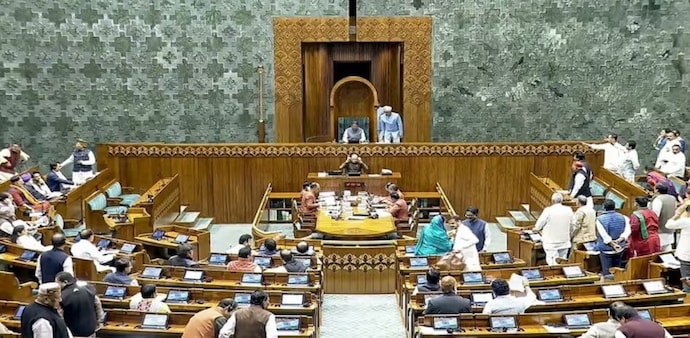
Winter Session of Parliament begins today: The government's agenda also features the Higher Education Commission of India Bill, which seeks to establish a commission for universities and higher educational institutions.
- Dec 1, 2025,
- Updated Dec 1, 2025 8:03 AM IST
The Winter Session of Parliament begins on Monday, with the government advancing its reforms agenda by introducing a bill to open the civil nuclear sector to private players. Scheduled to conclude on December 19, the three-week session includes 15 sittings. Meanwhile, the opposition has signalled plans to challenge the government over the Special Intensive Revision of rolls across 12 states and Union territories, and to raise the issue of air pollution in the national capital.
Parliamentary Affairs Minister Kiren Rijiju convened a meeting of floor leaders on Sunday to coordinate party strategies. A key legislative highlight is 'The Atomic Energy Bill, 2025', which aims to govern the use and regulation of atomic energy in India, enabling private sector participation in a field previously reserved for state entities. The session follows the BJP-led NDA's strong performance in the Bihar Assembly elections, expected to strengthen the government's push for reforms after a previous session marked by disruptions.
The government's agenda also features the Higher Education Commission of India Bill, which seeks to establish a commission for universities and higher educational institutions. The commission aims to facilitate greater autonomy and promote excellence through transparent accreditation.
Two bills from the previous session are scheduled for consideration. Other proposed bills include the National Highways (Amendment) Bill, aimed at ensuring faster and more transparent land acquisition for national highways, and the Corporate Laws (Amendment) Bill, 2025, which seeks to revise the Companies Act, 2013 and the LLP Act, 2008 to enhance ease of doing business. The Securities Markets Code Bill (SMC), 2025, is also on the agenda, consolidating several existing acts into a single regulatory framework for financial markets.
Amendments to the Arbitration and Conciliation Act are among the government's priorities. Law Ministry officials noted that a proposed amendment to section 34 of the law, along with a Supreme Court observation on company directors, led the government to refer the issue to a committee.
The first supplementary Budget for the year is set for discussion, alongside a series of legislative and regulatory measures aimed at modernising governance and business frameworks. Earlier, the government withdrew its proposal to empower the president to make regulations directly for the Union Territory of Chandigarh after strong resistance from multiple political parties, illustrating the contentious environment that may characterise the session.
Meanwhile, Opposition parties have demanded that a discussion on the Special Intensive Revision (SIR) of electoral rolls be included in Parliament's Winter session agenda. They warned that normal functioning of the House may be disrupted if their demand is not met.
At the all-party meeting before the session, opposition leaders identified SIR as a key issue. They also called for debates on national security and air pollution. The government has faced criticism for its approach to consultation.
Ram Gopal Yadav of the Samajwadi Party said, "We will not allow the House to function if discussion is not held on SIR.” Other opposition parties, including the Trinamool Congress (TMC), Dravida Munnetra Kazhagam (DMK), and the Communist Party of India (CPI), expressed concerns about the integrity of the voter list and called for transparency in the revision process.
Kalyan Banerjee of the TMC questioned, "If Parliament functions only with the government’s consent, then what value does the Opposition hold?" He also criticised the allocation of parliamentary time, stating, "We have called for allocating more time for Opposition as 70 per cent time is taken by the treasury benches."
Congress leaders Gaurav Gogoi and Jairam Ramesh raised further concerns about the government's handling of the session. Gogoi accused the ruling party of undermining parliamentary traditions.
The Winter Session of Parliament begins on Monday, with the government advancing its reforms agenda by introducing a bill to open the civil nuclear sector to private players. Scheduled to conclude on December 19, the three-week session includes 15 sittings. Meanwhile, the opposition has signalled plans to challenge the government over the Special Intensive Revision of rolls across 12 states and Union territories, and to raise the issue of air pollution in the national capital.
Parliamentary Affairs Minister Kiren Rijiju convened a meeting of floor leaders on Sunday to coordinate party strategies. A key legislative highlight is 'The Atomic Energy Bill, 2025', which aims to govern the use and regulation of atomic energy in India, enabling private sector participation in a field previously reserved for state entities. The session follows the BJP-led NDA's strong performance in the Bihar Assembly elections, expected to strengthen the government's push for reforms after a previous session marked by disruptions.
The government's agenda also features the Higher Education Commission of India Bill, which seeks to establish a commission for universities and higher educational institutions. The commission aims to facilitate greater autonomy and promote excellence through transparent accreditation.
Two bills from the previous session are scheduled for consideration. Other proposed bills include the National Highways (Amendment) Bill, aimed at ensuring faster and more transparent land acquisition for national highways, and the Corporate Laws (Amendment) Bill, 2025, which seeks to revise the Companies Act, 2013 and the LLP Act, 2008 to enhance ease of doing business. The Securities Markets Code Bill (SMC), 2025, is also on the agenda, consolidating several existing acts into a single regulatory framework for financial markets.
Amendments to the Arbitration and Conciliation Act are among the government's priorities. Law Ministry officials noted that a proposed amendment to section 34 of the law, along with a Supreme Court observation on company directors, led the government to refer the issue to a committee.
The first supplementary Budget for the year is set for discussion, alongside a series of legislative and regulatory measures aimed at modernising governance and business frameworks. Earlier, the government withdrew its proposal to empower the president to make regulations directly for the Union Territory of Chandigarh after strong resistance from multiple political parties, illustrating the contentious environment that may characterise the session.
Meanwhile, Opposition parties have demanded that a discussion on the Special Intensive Revision (SIR) of electoral rolls be included in Parliament's Winter session agenda. They warned that normal functioning of the House may be disrupted if their demand is not met.
At the all-party meeting before the session, opposition leaders identified SIR as a key issue. They also called for debates on national security and air pollution. The government has faced criticism for its approach to consultation.
Ram Gopal Yadav of the Samajwadi Party said, "We will not allow the House to function if discussion is not held on SIR.” Other opposition parties, including the Trinamool Congress (TMC), Dravida Munnetra Kazhagam (DMK), and the Communist Party of India (CPI), expressed concerns about the integrity of the voter list and called for transparency in the revision process.
Kalyan Banerjee of the TMC questioned, "If Parliament functions only with the government’s consent, then what value does the Opposition hold?" He also criticised the allocation of parliamentary time, stating, "We have called for allocating more time for Opposition as 70 per cent time is taken by the treasury benches."
Congress leaders Gaurav Gogoi and Jairam Ramesh raised further concerns about the government's handling of the session. Gogoi accused the ruling party of undermining parliamentary traditions.