
Women’s Reservation Act explained: How the idea started, who brought the first Bill and why the quota is still pending
The government wants to bring the 33% quota into effect sooner, rather than waiting for the full process linked to the next census.
- Nov 27, 2026,
- Updated Nov 27, 2026 1:30 PM IST
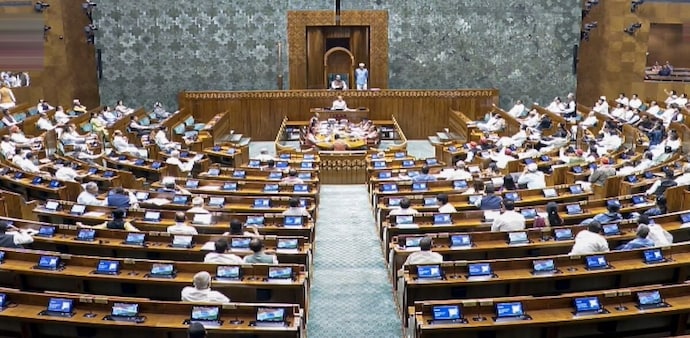
The 33% reservation for women in Parliament and state Assemblies is back in focus. The government has called Parliament for a special sitting from November 30, amid expectations that it could bring back a Bill linked to delimitation and the implementation of the women’s quota.
The Lok Sabha is scheduled to meet on November 30 and the Rajya Sabha on December 2. The sittings may continue till December 3.
The development comes seven months after the government’s earlier attempt to change the rules for implementing women’s reservation was defeated in the Lok Sabha in April 2026. The government now needs to win the support of more parties to pass a constitutional amendment.
But what exactly is the Women’s Reservation Act? Where did the idea come from? Who brought the first Bill? And why, despite the law being passed in 2023, have women still not got reserved seats in Parliament?
What is the Women’s Reservation Act?
The law provides for one-third, or 33%, of seats to be reserved for women in the Lok Sabha, state Legislative Assemblies and the Delhi Assembly.
It also says that one-third of the seats already reserved for Scheduled Castes and Scheduled Tribes will be reserved for women from these communities.
The law is officially called the Nari Shakti Vandan Adhiniyam. It was passed by Parliament in September 2023 and became the Constitution (106th Amendment) Act, 2023.
However, the 33% quota did not start immediately.
That is because the law says the reservation will come into effect only after a census and a delimitation exercise.
Why has the quota not started yet?
This is the key point.
The 2023 law links women’s reservation to delimitation.
Delimitation simply means redrawing the boundaries of Lok Sabha and Assembly constituencies and deciding how many seats each area should have.
Under the 2023 law, a census has to be conducted first. Once its figures are published, delimitation has to be carried out. Only after that will the seats reserved for women be identified.
So, the law has been passed, but the reserved seats have not yet been decided.
Must Read: BT Explainer | What is Delimitation Bill? How will it reshape the future of parliament?
Why is the government trying to change this now?
The government wants to bring the 33% quota into effect sooner, rather than waiting for the full process linked to the next census.
In April 2026, the government brought a constitutional amendment and a separate delimitation Bill. The proposal was to use the 2011 Census figures for delimitation instead of waiting for the next census. It also proposed increasing the number of Lok Sabha seats. The aim was to make it possible to implement the women’s quota before the 2029 Lok Sabha election.
But the proposal failed in the Lok Sabha on April 17, 2026.
Of the 528 MPs who voted, 298 supported the Bill and 230 opposed it. The government needed 352 votes for the constitutional amendment and fell short by 54 votes.
Now, with Parliament being called again, the government is expected to make another attempt.
Where did the idea of women’s reservation come from?
There is no one person who can be called the “founder” of the Women’s Reservation Bill.
The demand for greater political representation for women is much older than the 2023 law. Women’s organisations had been discussing the issue of reserved political seats as far back as the 1930s.
A major step came in 1993.
The 73rd and 74th Constitutional Amendments provided one-third reservation for women in panchayats and municipalities. But there was no similar reservation for women in the Lok Sabha and state Assemblies.
The demand for reservation in Parliament and state Assemblies continued after this.
Who brought the first Women’s Reservation Bill?
The first major Bill to reserve seats for women in Parliament and state Assemblies was introduced in 1996, during the government led by then Prime Minister H.D. Deve Gowda.
The Constitution (81st Amendment) Bill was introduced in the Lok Sabha on September 12, 1996. It proposed reserving at least one-third of the seats for women in the Lok Sabha and state Assemblies.
The Bill was sent to a Joint Parliamentary Committee for examination. But before it could become law, the Lok Sabha was dissolved and the Bill lapsed.
So, if the question is who started the legislative process, the answer is the H.D. Deve Gowda government in 1996.
But the idea itself was much older.
What happened after the 1996 Bill?
The Bill was brought back several times.
In 1998, the Vajpayee government introduced another Bill.
Another attempt was made in 1999, again under the Vajpayee government.
In 2008, the Manmohan Singh government introduced another Women’s Reservation Bill in the Rajya Sabha.
That Bill made more progress. It was passed by the Rajya Sabha in 2010. But it could not pass the Lok Sabha before the 15th Lok Sabha was dissolved. It therefore lapsed.
In short, there were major attempts in 1996, 1998, 1999 and 2008 before the proposal finally became law in 2023.
Why was women’s reservation being demanded?
The main reason was simple: women were not adequately represented in Parliament and state Assemblies.
The material accompanying the 2023 Bill noted that women made up about 15% of the 17th Lok Sabha. Women also accounted for around 9% of members of state Assemblies on average.
Supporters of reservation argue that if women do not have enough representation in elected bodies, their concerns may not get enough attention during policymaking.
There is also some evidence from local government. A study cited in the 2023 Bill found that women elected through reservation in panchayats spent more on public goods linked to women’s concerns.
Why 33%?
The one-third figure was not completely new.
Women already had one-third reservation in panchayats and municipalities after the 73rd and 74th Constitutional Amendments.
The 2023 law extended the same broad idea to the Lok Sabha and state Assemblies.
The law says one-third of the total seats will be reserved for women. It also includes one-third of the seats reserved for SCs and STs.
What changed in 2023?
The Narendra Modi government brought the latest Bill in September 2023.
The Union Cabinet approved it on September 18, 2023. Law Minister Arjun Ram Meghwal introduced it in the Lok Sabha on September 19.
The Lok Sabha passed it on September 20 and the Rajya Sabha passed it on September 21.
It then became the Constitution (106th Amendment) Act, 2023, popularly known as the Nari Shakti Vandan Adhiniyam.
This was the first time the women’s reservation proposal successfully crossed both Houses of Parliament and became law.
Why is delimitation linked to women’s reservation?
The government’s argument is that the seats have to be properly identified before reservation can begin.
The law therefore links the process to a census and delimitation.
For example, once constituencies are redrawn, some of them can be marked as seats reserved for women.
The reserved seats will also be rotated after delimitation. This means the same constituency will not necessarily remain reserved for women forever.
Why is delimitation controversial?
Because delimitation is not only about women’s reservation.
It can also change the number of Lok Sabha seats given to different states.
States with faster population growth could get more seats, while states that have controlled population growth have raised concerns that their share of seats could fall.
This is why several southern states have opposed the government’s approach to delimitation, even while supporting women’s reservation itself.
The issue has therefore become a larger political debate about how seats in the Lok Sabha should be divided among states.
What happened in April 2026?
The government tried to change the existing arrangement in April.
Its proposal sought to use the 2011 Census for the delimitation exercise instead of waiting for a fresh census. The government also proposed increasing the number of Lok Sabha seats.
The idea was to remove the delay and make the 33% women’s quota possible before the 2029 general election.
But the constitutional amendment failed in the Lok Sabha.
The government needed 352 votes but got 298. A total of 230 MPs voted against it.