
Women's Reservation Act kicks in on April 16, but women won't see reserved seats until 2029: Here's why
The Women's Reservation Act 2023, which guarantees a 33% quota for women in the Lok Sabha and state legislative assemblies, was notified by the Union Law Ministry with effect from April 16, 2026
- Apr 17, 2026,
- Updated Apr 17, 2026 11:03 AM IST
Women's Reservation Act: A law three decades in the making formally came into force on Thursday, but the women it promises to empower in Parliament will have to wait a little longer. The Women's Reservation Act 2023, which guarantees a 33% quota for women in the Lok Sabha and state legislative assemblies, was notified by the Union Law Ministry with effect from April 16, 2026.
The timing, however, has raised questions. Parliament is currently debating amendments to the very same law to advance its implementation to 2029.
Why is the law in force, but the quota isn't
An official cited "technicalities" for bringing the act into force at this point, without elaborating further. The official was clear on one thing: the reservation cannot be implemented in the current House.
The reason lies in the law's architecture itself. Under the 2023 legislation, the quota is tied to the completion of a delimitation exercise, one that can only follow the next census, currently expected in 2027. That means under the original framework, the reservation would not have become enforceable before 2034.
The notification that brought the act into force on Thursday read: "In exercise of the powers conferred by sub-section (2) of section 1 of the Constitution (One Hundred and Sixth Amendment) Act, 2023, the Central Government hereby appoints the 16th day of April, 2026 as the date on which the provisions of the said Act shall come into force."
The push to accelerate to 2029
It is precisely to avoid waiting until 2034 that the government has introduced three bills currently being debated in the Lok Sabha. The proposed amendments are aimed at enabling the women's quota to be implemented from 2029, cutting five years off the original timeline.
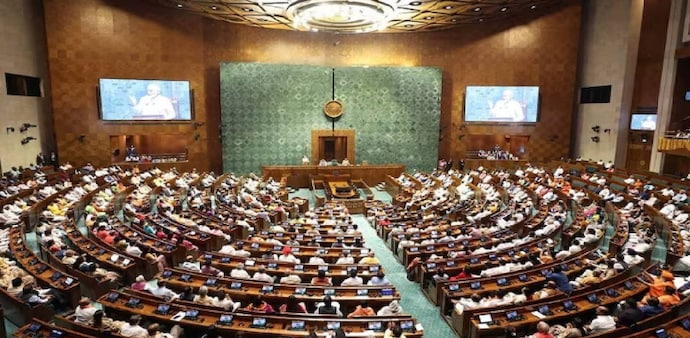
The Women's Reservation Act, formally known as the Nari Shakti Vandan Adhiniyam, was passed by Parliament in September 2023 in a historic session held in the new Parliament building. It amended the Constitution to reserve one-third of seats for women in the Lok Sabha and state assemblies, a legislative milestone that had been debated, deferred and delayed since the mid-1990s.
The act is now law. The seats, however, are still years away.
(With inputs from PTI)
Women's Reservation Act: A law three decades in the making formally came into force on Thursday, but the women it promises to empower in Parliament will have to wait a little longer. The Women's Reservation Act 2023, which guarantees a 33% quota for women in the Lok Sabha and state legislative assemblies, was notified by the Union Law Ministry with effect from April 16, 2026.
The timing, however, has raised questions. Parliament is currently debating amendments to the very same law to advance its implementation to 2029.
Why is the law in force, but the quota isn't
An official cited "technicalities" for bringing the act into force at this point, without elaborating further. The official was clear on one thing: the reservation cannot be implemented in the current House.
The reason lies in the law's architecture itself. Under the 2023 legislation, the quota is tied to the completion of a delimitation exercise, one that can only follow the next census, currently expected in 2027. That means under the original framework, the reservation would not have become enforceable before 2034.
The notification that brought the act into force on Thursday read: "In exercise of the powers conferred by sub-section (2) of section 1 of the Constitution (One Hundred and Sixth Amendment) Act, 2023, the Central Government hereby appoints the 16th day of April, 2026 as the date on which the provisions of the said Act shall come into force."
The push to accelerate to 2029
It is precisely to avoid waiting until 2034 that the government has introduced three bills currently being debated in the Lok Sabha. The proposed amendments are aimed at enabling the women's quota to be implemented from 2029, cutting five years off the original timeline.
The Women's Reservation Act, formally known as the Nari Shakti Vandan Adhiniyam, was passed by Parliament in September 2023 in a historic session held in the new Parliament building. It amended the Constitution to reserve one-third of seats for women in the Lok Sabha and state assemblies, a legislative milestone that had been debated, deferred and delayed since the mid-1990s.
The act is now law. The seats, however, are still years away.
(With inputs from PTI)