
'World’s fastest-growing major economy': Canadian PM arrives in Mumbai for 4-day India visit
Mark Carney will travel to New Delhi on March 1, with formal talks scheduled with PM Modi the following day. The leaders are expected to review engagement across energy security, education, mineral supply chains, commercial cooperation and people-to-people ties.
- Feb 27, 2026,
- Updated Feb 27, 2026 9:23 PM IST
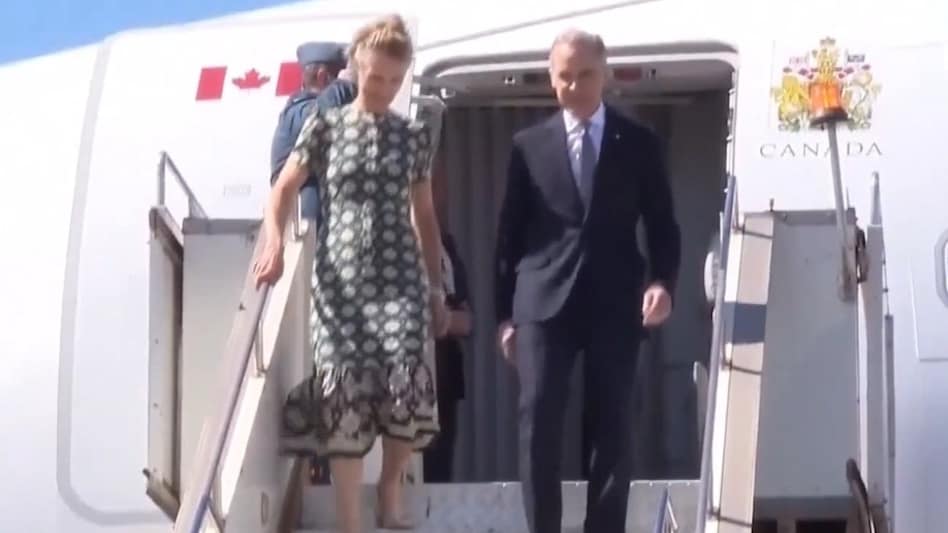
Canadian Prime Minister Mark Carney arrived in India on February 27 for his first official visit, beginning with a high-profile Mumbai leg centred on trade, business and economic engagement. The trip is widely seen as an attempt to reset and stabilise India–Canada ties after a prolonged period of diplomatic strain.
Carney, who is in India from February 27 to March 2, 2026, will hold talks with Prime Minister Narendra Modi in New Delhi on March 2, discussions expected to shape a broader diplomatic and geopolitical recalibration between the two countries.
“India is the world’s fastest-growing major economy. We just arrived in Mumbai to meet with business leaders — and forge partnerships that will unlock new opportunities for Canadian workers and businesses,” Carney wrote on X (formerly Twitter).
Carney’s visit begins in Mumbai on February 27, where he is meeting CEOs, innovators and leaders of major pension funds. The outreach underscores Ottawa’s renewed focus on deepening commercial ties with one of the world’s fastest-expanding large economies.
Both sides are seeking to accelerate cooperation in areas such as technology, energy transition, critical minerals, financial services and advanced manufacturing. Canada’s large pension funds, which already have significant exposure to Indian infrastructure and real estate, are expected to explore fresh investment opportunities.
Carney will travel to New Delhi on March 1, with formal talks scheduled with PM Modi the following day. The leaders are expected to review engagement across energy security, education, mineral supply chains, commercial cooperation and people-to-people ties.
India’s Ministry of External Affairs has described the visit as an important step toward normalising and broadening ties, grounded in mutual respect and strengthened by deep societal linkages.
The two prime ministers will also participate in the India-Canada CEOs Forum, signalling a push to revitalise two-way investment and technology partnerships.
As Canada seeks to diversify its trade relationships and expand engagement across the Indo-Pacific, the Indian diaspora is increasingly viewed as a natural bridge between the two economies.
Carney’s office has described India not only as the world’s fastest-growing major economy but also as one of Canada’s strongest Indo-Pacific partners — underlining the strategic logic behind the renewed push for engagement.
As both governments look to turn the page on recent tensions, the visit signals a pragmatic shift: from friction to economic alignment, with trade, talent and technology forming the core of a potential new chapter in India-Canada relations.
Canadian Prime Minister Mark Carney arrived in India on February 27 for his first official visit, beginning with a high-profile Mumbai leg centred on trade, business and economic engagement. The trip is widely seen as an attempt to reset and stabilise India–Canada ties after a prolonged period of diplomatic strain.
Carney, who is in India from February 27 to March 2, 2026, will hold talks with Prime Minister Narendra Modi in New Delhi on March 2, discussions expected to shape a broader diplomatic and geopolitical recalibration between the two countries.
“India is the world’s fastest-growing major economy. We just arrived in Mumbai to meet with business leaders — and forge partnerships that will unlock new opportunities for Canadian workers and businesses,” Carney wrote on X (formerly Twitter).
Carney’s visit begins in Mumbai on February 27, where he is meeting CEOs, innovators and leaders of major pension funds. The outreach underscores Ottawa’s renewed focus on deepening commercial ties with one of the world’s fastest-expanding large economies.
Both sides are seeking to accelerate cooperation in areas such as technology, energy transition, critical minerals, financial services and advanced manufacturing. Canada’s large pension funds, which already have significant exposure to Indian infrastructure and real estate, are expected to explore fresh investment opportunities.
Carney will travel to New Delhi on March 1, with formal talks scheduled with PM Modi the following day. The leaders are expected to review engagement across energy security, education, mineral supply chains, commercial cooperation and people-to-people ties.
India’s Ministry of External Affairs has described the visit as an important step toward normalising and broadening ties, grounded in mutual respect and strengthened by deep societal linkages.
The two prime ministers will also participate in the India-Canada CEOs Forum, signalling a push to revitalise two-way investment and technology partnerships.
As Canada seeks to diversify its trade relationships and expand engagement across the Indo-Pacific, the Indian diaspora is increasingly viewed as a natural bridge between the two economies.
Carney’s office has described India not only as the world’s fastest-growing major economy but also as one of Canada’s strongest Indo-Pacific partners — underlining the strategic logic behind the renewed push for engagement.
As both governments look to turn the page on recent tensions, the visit signals a pragmatic shift: from friction to economic alignment, with trade, talent and technology forming the core of a potential new chapter in India-Canada relations.