
Your traffic record could soon affect your vehicle insurance premium. What it means for you?
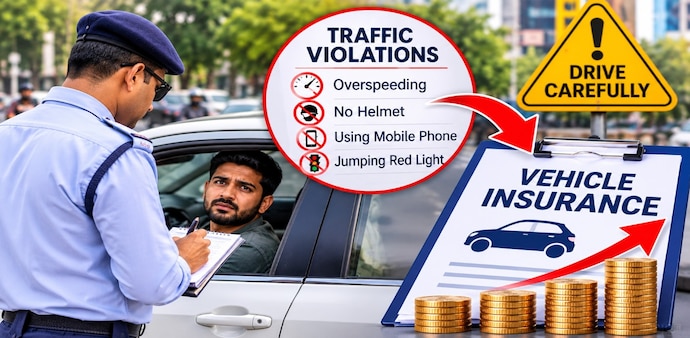
Drive Carefully or Pay More: Breaking traffic rules could become more expensive for vehicle owners as the Ministry of Road Transport and Highways is considering linking traffic violations recorded last year with vehicle insurance premiums. Check details:
- Nov 26, 2026,
- Updated Nov 26, 2026 11:30 AM IST
Vehicle owners with repeated traffic violations could soon pay more for motor insurance, under a proposal being examined by the Road Transport Ministry. The government is also considering single-premium insurance plans of four years for cars and six years for two-wheelers, as part of efforts to reduce the number of uninsured vehicles on Indian roads, The Times of India reported.
Premium linked to challans
The ministry is working on a plan to link motor insurance premiums to traffic offences recorded against vehicle owners in the preceding year. If implemented, repeat offenders—or owners with specific violations against their vehicle—may face higher premiums at renewal.
MUST READ: New motor insurance rules from December 15: Car, bike owners can choose 4 types of cover
The proposal is still at a planning stage, and the government has not finalised which offences would trigger an increase, how much the premium would rise, or how the data would be shared with insurers.
The move is aimed at improving road-safety compliance and discouraging violations such as jumping signals, speeding, and driving without a valid licence. It could also create a financial incentive for drivers to maintain a clean record, with safer motorists potentially benefiting from lower insurance costs.
Single premium for long-term cover
Alongside the violation-linked pricing proposal, the ministry is considering a single premium for longer-duration motor insurance policies.
Under the plan, car owners could buy a four-year policy and two-wheeler owners a six-year policy by paying the premium once, instead of renewing annually.
Officials hope that long-term policies will make it easier for owners to remain insured continuously and reduce lapses caused by missed annual renewals. The initiative forms part of a broader effort to tackle uninsured vehicles, which pose a risk to accident victims and other road users.
‘No insurance, no fuel’ pilot
The ministry’s wider proposals also include a pilot of a “no insurance, no fuel” initiative. The Supreme Court committee on road safety has asked the road transport and petroleum ministries to test the measure at five petrol pumps each in Haryana and Uttar Pradesh.
DON'T MISS: No PUC, no fuel & ₹10,000 fine: Gurugram turns fuel pumps into checkpoints with 300 new cameras
The pumps would use automatic number-plate recognition (ANPR) cameras to identify vehicles and verify whether they have valid insurance before dispensing fuel. The Supreme Court had earlier directed the government to examine measures to ensure that vehicles plying on roads carry valid insurance coverage.
What it means for owners
For now, these remain proposals rather than notified rules. Vehicle owners do not need to make any immediate change to their existing insurance policies, but the developments signal that traffic conduct, insurance continuity, and fuel purchases could become more closely linked in the future.