
No adverse findings found during inspection of Boeing 737 Max fleet, says SpiceJet amid Alaska Airlines mishap
This comes after DGCA ordered domestic airlines to immediately carry out inspection of emergency exits of all Boeing 737-8 Max planes in their fleets as an "abundant precautionary measure" in the wake of the Alaska Airlines incident.
- Jan 8, 2024,
- Updated Jan 8, 2024 2:15 PM IST
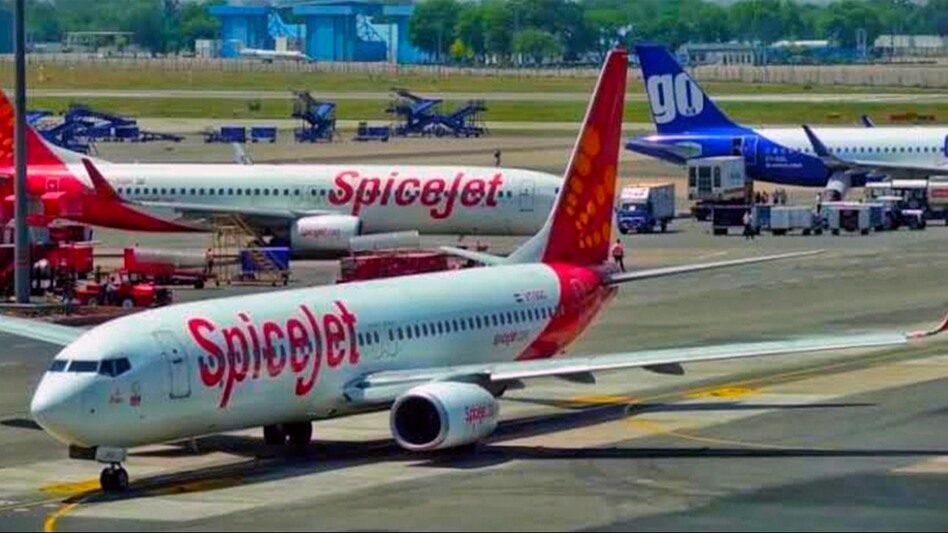
Budget carrier SpiceJet on Monday said that it has successfully carried out a comprehensive examination of the Boeing 737 Max fleet and no adverse findings were identified during this inspection.
“Our flight operations remained unaffected and continued to operate as usual. It is important to note that SpiceJet does not operate the B737-9 variant of the MAX,” a SpiceJet spokesperson said.
This action came as a response to a directive from India's aviation safety regulator, the Directorate General of Civil Aviation (DGCA), following a mid-flight incident involving an Alaska Airlines Boeing 737 MAX-9 in the United States.
The DGCA had mandated a "one-time inspection" of all over wing emergency exits on the operating Boeing 737 MAX-8 planes by noon on Sunday, prior to the report. The inspections were deemed necessary as a precautionary measure, despite the Indian carriers not operating the MAX-9 variant involved in the Alaska Airlines incident. The MAX-8 and MAX-9 are part of the same aircraft family and share many similarities, which prompted the DGCA's directive.
Alaska Airlines 737 MAX-9 plane, operating flight 1282 from Portland to Ontario (California), was forced to make an emergency landing shortly after takeoff on Friday. The incident was triggered by a mid-air window blowout, resulting in a section of the fuselage breaking away. This caused decompression in the cabin and led to the formation of a door-sized hole in the plane's fuselage at an altitude of approximately 16,000 feet.
Despite the alarming circumstances, all 171 passengers and six crew members onboard the aircraft safely returned without any serious injuries.
Apart from SpiceJet, Akasa Air and Air India Express had successfully completed the inspection of their Boeing 737 MAX-8 aircraft.
The checks were satisfactorily performed on the operational fleet of Boeing B737-8 Max aircraft by Air India Express (4), SpiceJet (8), and Akasa (20). Akasa Air's fleet includes one B737-8200, a high-density variant of the 737 MAX-8, which also passed the inspection.
At the time of the report, there were 44 Boeing 737 MAX-8 aircraft with Indian carriers, according to fleet databases, although not all were operational. Akasa Air's entire fleet of 22 planes comprised 737 MAX-8 aircraft, while SpiceJet and Air India Express operated 13 and 9 of these aircraft, respectively, within their larger fleets.
Both Akasa Air and SpiceJet confirmed that no adverse findings were identified during the inspections and that their flight operations remained unaffected. They also clarified that they do not operate the Boeing 737 Max-9 variant.
Meanwhile, DGCA on Monday said the checks of Boeing 737-8 Max planes have been completed satisfactorily. "These checks have been satisfactorily performed on the fleet of operational fleet of Boeing B737-8 Max aircraft by Air India Express (4), Spicejet (8) and Akasa (20)," the aviation regulator said in a statement.
Following the incident, Alaska Airlines voluntarily grounded its fleet of 65 Boeing 737 MAX-9 jets for inspections, and the American aviation regulator, the Federal Aviation Administration (FAA), temporarily grounded 171 planes for safety checks. Other airlines with the 737 MAX-9 in their fleets also conducted inspections.
Also Read: Flipkart layoffs: Company plans to fire 1,100-1,500 employees, says report
Budget carrier SpiceJet on Monday said that it has successfully carried out a comprehensive examination of the Boeing 737 Max fleet and no adverse findings were identified during this inspection.
“Our flight operations remained unaffected and continued to operate as usual. It is important to note that SpiceJet does not operate the B737-9 variant of the MAX,” a SpiceJet spokesperson said.
This action came as a response to a directive from India's aviation safety regulator, the Directorate General of Civil Aviation (DGCA), following a mid-flight incident involving an Alaska Airlines Boeing 737 MAX-9 in the United States.
The DGCA had mandated a "one-time inspection" of all over wing emergency exits on the operating Boeing 737 MAX-8 planes by noon on Sunday, prior to the report. The inspections were deemed necessary as a precautionary measure, despite the Indian carriers not operating the MAX-9 variant involved in the Alaska Airlines incident. The MAX-8 and MAX-9 are part of the same aircraft family and share many similarities, which prompted the DGCA's directive.
Alaska Airlines 737 MAX-9 plane, operating flight 1282 from Portland to Ontario (California), was forced to make an emergency landing shortly after takeoff on Friday. The incident was triggered by a mid-air window blowout, resulting in a section of the fuselage breaking away. This caused decompression in the cabin and led to the formation of a door-sized hole in the plane's fuselage at an altitude of approximately 16,000 feet.
Despite the alarming circumstances, all 171 passengers and six crew members onboard the aircraft safely returned without any serious injuries.
Apart from SpiceJet, Akasa Air and Air India Express had successfully completed the inspection of their Boeing 737 MAX-8 aircraft.
The checks were satisfactorily performed on the operational fleet of Boeing B737-8 Max aircraft by Air India Express (4), SpiceJet (8), and Akasa (20). Akasa Air's fleet includes one B737-8200, a high-density variant of the 737 MAX-8, which also passed the inspection.
At the time of the report, there were 44 Boeing 737 MAX-8 aircraft with Indian carriers, according to fleet databases, although not all were operational. Akasa Air's entire fleet of 22 planes comprised 737 MAX-8 aircraft, while SpiceJet and Air India Express operated 13 and 9 of these aircraft, respectively, within their larger fleets.
Both Akasa Air and SpiceJet confirmed that no adverse findings were identified during the inspections and that their flight operations remained unaffected. They also clarified that they do not operate the Boeing 737 Max-9 variant.
Meanwhile, DGCA on Monday said the checks of Boeing 737-8 Max planes have been completed satisfactorily. "These checks have been satisfactorily performed on the fleet of operational fleet of Boeing B737-8 Max aircraft by Air India Express (4), Spicejet (8) and Akasa (20)," the aviation regulator said in a statement.
Following the incident, Alaska Airlines voluntarily grounded its fleet of 65 Boeing 737 MAX-9 jets for inspections, and the American aviation regulator, the Federal Aviation Administration (FAA), temporarily grounded 171 planes for safety checks. Other airlines with the 737 MAX-9 in their fleets also conducted inspections.
Also Read: Flipkart layoffs: Company plans to fire 1,100-1,500 employees, says report