
Economic activity strong; low Omicron severity brightens near-term prospects: RBI
The Indian economy has seen upticks in several incoming high frequency indicators along with strong consumer and business confidence, RBI said in its monthly bulletin.
- Jan 17, 2022,
- Updated Jan 17, 2022 8:45 PM IST
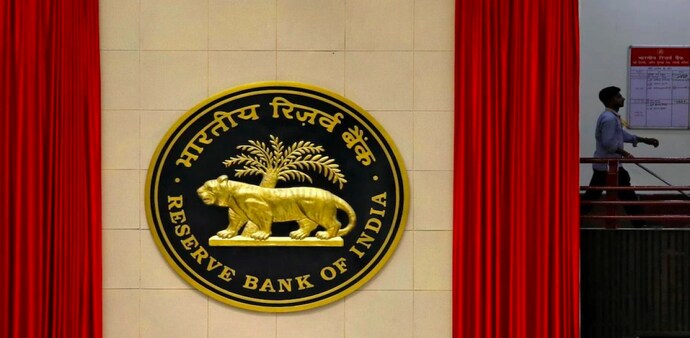
Despite the Omicron scare, the economic activity in India remains strong with upbeat consumer and business confidence and an uptick in bank credit, the Reserve Bank of India (RBI) said in its monthly bulletin for January.
Besides, expectations that Omicron may turn out to be more of a "flash flood" than a wave have brightened near-term prospects, the central bank said in the section titled 'State of the Economy'.
"As the world stepped into the new year, the path of the recovery in India as in the rest of the global economy encountered headwinds from a rapid surge in infections due to Omicron. Nonetheless, amidst upbeat consumer and business confidence and an uptick in bank credit, aggregate demand conditions stay resilient, while on the supply front, rabi sowing has exceeded last year's level and the normal acreage. Manufacturing and several categories of services remain in expansion," it said.
While there has been a moderation in some sectors since December, on the external front, India's robust export performance in December reflects resilient demand for Indian goods. Imports also surged on the back of improvement in domestic demand, the RBI said.
It said that the mobility indicators exhibited a sequential moderation in January due to rising COVID-19 cases. However, aggregate demand conditions have stayed resilient, with issuance of E-way bills, an indicator of freight movement, surging to 7.2 crore in December, the second highest in its history.
On government's fiscal position, RBI said that it "continued to post improvement, with net tax revenues touching an all-time high of 73.5 per cent of budget estimates (BE) and the gross fiscal deficit plummeting to 46.2 per cent of BE during April-November 2021, as against the five-year average of 50.6 per cent and 112.5 per cent, respectively."
The bulletin also highlighted the increase in GST collection and improvement in state finances.
On the global outlook, the bulletin said that it remains clouded by considerable uncertainty. Amidst disruptions in production, supply chains and transportation, inflation continues to mount across geographies, widening the divergence between monetary policy stances across jurisdictions.
"There are indications that supply chain disruptions and shipping costs are slowly easing, although the waning of inflation may take longer. This provides a window of opportunity to focus all energies on accelerating and broadening the global recovery."
However, the Indian economy has seen upticks in several incoming high frequency indicators along with a strong consumer and business confidence. In addition, vaccination has also increased rapidly in the country.
"On the Omicron variant, the recent data from the UK and South Africa suggest that such infections are 66 to 80 per cent less severe, with a lower need for hospitalisation. This has brightened near-term prospects and financial markets reflect this optimism," it concluded.
Despite the Omicron scare, the economic activity in India remains strong with upbeat consumer and business confidence and an uptick in bank credit, the Reserve Bank of India (RBI) said in its monthly bulletin for January.
Besides, expectations that Omicron may turn out to be more of a "flash flood" than a wave have brightened near-term prospects, the central bank said in the section titled 'State of the Economy'.
"As the world stepped into the new year, the path of the recovery in India as in the rest of the global economy encountered headwinds from a rapid surge in infections due to Omicron. Nonetheless, amidst upbeat consumer and business confidence and an uptick in bank credit, aggregate demand conditions stay resilient, while on the supply front, rabi sowing has exceeded last year's level and the normal acreage. Manufacturing and several categories of services remain in expansion," it said.
While there has been a moderation in some sectors since December, on the external front, India's robust export performance in December reflects resilient demand for Indian goods. Imports also surged on the back of improvement in domestic demand, the RBI said.
It said that the mobility indicators exhibited a sequential moderation in January due to rising COVID-19 cases. However, aggregate demand conditions have stayed resilient, with issuance of E-way bills, an indicator of freight movement, surging to 7.2 crore in December, the second highest in its history.
On government's fiscal position, RBI said that it "continued to post improvement, with net tax revenues touching an all-time high of 73.5 per cent of budget estimates (BE) and the gross fiscal deficit plummeting to 46.2 per cent of BE during April-November 2021, as against the five-year average of 50.6 per cent and 112.5 per cent, respectively."
The bulletin also highlighted the increase in GST collection and improvement in state finances.
On the global outlook, the bulletin said that it remains clouded by considerable uncertainty. Amidst disruptions in production, supply chains and transportation, inflation continues to mount across geographies, widening the divergence between monetary policy stances across jurisdictions.
"There are indications that supply chain disruptions and shipping costs are slowly easing, although the waning of inflation may take longer. This provides a window of opportunity to focus all energies on accelerating and broadening the global recovery."
However, the Indian economy has seen upticks in several incoming high frequency indicators along with a strong consumer and business confidence. In addition, vaccination has also increased rapidly in the country.
"On the Omicron variant, the recent data from the UK and South Africa suggest that such infections are 66 to 80 per cent less severe, with a lower need for hospitalisation. This has brightened near-term prospects and financial markets reflect this optimism," it concluded.