
RBI Deputy Governor Swaminathan calls for adequate safeguards, human accountability for AI adoption in finance
Swaminathan said that adopting AI without adequate safeguards could create entirely new forms of harm.
- Apr 13, 2026,
- Updated Apr 13, 2026 6:01 PM IST
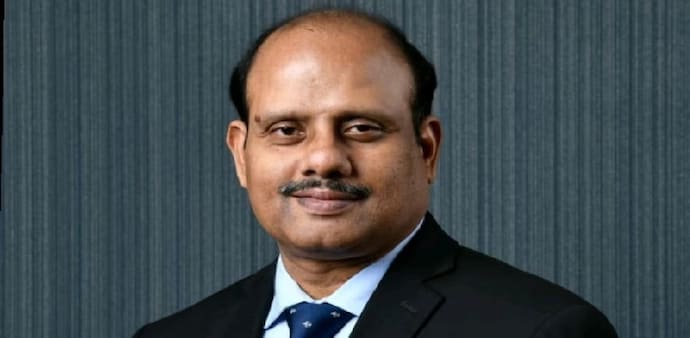
Any powerful technology is a double-edged sword, feels Swaminathan J., Deputy Governor of the Reserve Bank of India (RBI), who says that while artificial intelligence (AI) and its use in finance may have lots of promise, there will have to be adequate safeguards.
“If AI is adopted without adequate safeguards, it can amplify existing weaknesses and create entirely new forms of harm. Therefore, the conversation about AI in finance must be balanced. We should neither be taken in by technological hype nor retreat into being defensive,” stressed Swaminathan.
The usage of AI is gaining traction around the world. Even in financial services, banks are increasingly adopting AI for customer interaction, for instance.
Swaminathan said human responsibility must always remain central and while AI may support decision-making, accountability must remain with humans and institutions. He also called for fairness and explainability to be built into the system from the beginning.
Swaminathan pointed AI-enabled systems can make customer interactions simpler, more responsive; AI can help improve credit delivery; and it can contribute “meaningfully” to fraud detection and risk management.
However, he also highlighted major concerns, during a speech he delivered in Thanjavur over the weekend for the V. Narayanan Memorial Lecture.
For instance, he noted that AI systems learn from data and if distortions are embedded in the data, they could be reproduced by the model.
“What appears objective on the surface may, in fact, nurture unfairness beneath the surface. In finance, this is not merely a technical concern. It is a question of consumer protection, inclusion, and equity,” said Swaminathan.
Data privacy and misuse is another issue he flagged. Since financial data is among the most sensitive forms of personal information, he felt institutions must think seriously about consent, storage, sharing, access controls and purpose limitation. “Data governance cannot be treated as a side issue. In the age of AI, trust becomes central,” he stated.
He also pointed out that a flawed AI model could affect millions of customers. Importantly, while AI can strengthen defences, it could also equip attackers, he said.
“Fraudsters and bad actors can use AI to craft more convincing phishing attempts, create deepfakes, probe systems more effectively and automate malicious activity. As finance becomes more digital and more interconnected, resilience becomes even more critical,” noted Swaminathan.
He said banking at its heart was a business of “trust” and any technological change must remain anchored in stewardship, trust and responsibility.
Any powerful technology is a double-edged sword, feels Swaminathan J., Deputy Governor of the Reserve Bank of India (RBI), who says that while artificial intelligence (AI) and its use in finance may have lots of promise, there will have to be adequate safeguards.
“If AI is adopted without adequate safeguards, it can amplify existing weaknesses and create entirely new forms of harm. Therefore, the conversation about AI in finance must be balanced. We should neither be taken in by technological hype nor retreat into being defensive,” stressed Swaminathan.
The usage of AI is gaining traction around the world. Even in financial services, banks are increasingly adopting AI for customer interaction, for instance.
Swaminathan said human responsibility must always remain central and while AI may support decision-making, accountability must remain with humans and institutions. He also called for fairness and explainability to be built into the system from the beginning.
Swaminathan pointed AI-enabled systems can make customer interactions simpler, more responsive; AI can help improve credit delivery; and it can contribute “meaningfully” to fraud detection and risk management.
However, he also highlighted major concerns, during a speech he delivered in Thanjavur over the weekend for the V. Narayanan Memorial Lecture.
For instance, he noted that AI systems learn from data and if distortions are embedded in the data, they could be reproduced by the model.
“What appears objective on the surface may, in fact, nurture unfairness beneath the surface. In finance, this is not merely a technical concern. It is a question of consumer protection, inclusion, and equity,” said Swaminathan.
Data privacy and misuse is another issue he flagged. Since financial data is among the most sensitive forms of personal information, he felt institutions must think seriously about consent, storage, sharing, access controls and purpose limitation. “Data governance cannot be treated as a side issue. In the age of AI, trust becomes central,” he stated.
He also pointed out that a flawed AI model could affect millions of customers. Importantly, while AI can strengthen defences, it could also equip attackers, he said.
“Fraudsters and bad actors can use AI to craft more convincing phishing attempts, create deepfakes, probe systems more effectively and automate malicious activity. As finance becomes more digital and more interconnected, resilience becomes even more critical,” noted Swaminathan.
He said banking at its heart was a business of “trust” and any technological change must remain anchored in stewardship, trust and responsibility.