
UPI MDR heatmap: SBI, ICICI Bank, Axis Bank and PhonePe stand to gain, retailers could pay more: Report
Banks and fintech firms such as State Bank of India, ICICI Bank, Axis Bank, PhonePe and PayU could emerge as the biggest beneficiaries if the government restores Merchant Discount Rate (MDR) on select UPI transactions, while organised retailers, jewellers and hospitality businesses may bear the highest costs, according to an industry heatmap.
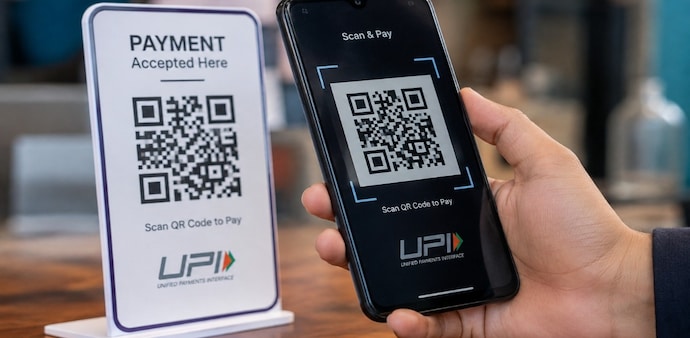
- Aug 6, 2026,
- Updated Aug 6, 2026 6:18 PM IST
If the government eventually restores the Merchant Discount Rate (MDR) on select Unified Payments Interface (UPI) transactions, the impact is unlikely to be uniform across industries. A heatmap prepared by industry experts shows that while banks and fintech companies stand to gain from a new revenue stream, organised retail, jewellery, hospitality and consumer durables could bear the highest costs.
The analysis assumes the framework currently under discussion—a proposed 0.25-0.30% MDR on UPI payments above ₹2,000 made to large merchants. It evaluates 28 sectors using three filters: whether transactions take place on UPI, whether the average ticket size exceeds ₹2,000 and whether the merchant is a large business. Only sectors meeting all three conditions score high on MDR sensitivity.
The proposal gained legislative momentum on Thursday after the Lok Sabha passed the Payment and Settlement Systems (Amendment) Bill, 2026. The Bill amends the Payment and Settlement Systems Act, 2007, creating the legal framework for the government to notify charges on specified electronic payment modes, including the possibility of MDR on UPI.
While it removes the existing statutory provision that barred banks and payment service providers from levying MDR on notified electronic payment modes, it does not by itself reintroduce MDR on UPI. The final rate, merchant categories and implementation timeline will be notified separately by the government.
Banks and fintechs
The report identifies fintech firms as the biggest beneficiaries, assigning them "Very High" sensitivity because MDR would create a direct revenue stream for payment processors. Companies such as PhonePe, PayU, Razorpay, Pine Labs and Paytm, which facilitate merchant payments, could benefit if eligible transactions begin attracting MDR.
Banks including State Bank of India, HDFC Bank, ICICI Bank, Axis Bank, Kotak Mahindra Bank and Yes Bank are also expected to gain. As acquiring and issuing banks, they currently process UPI transactions without earning MDR, relying instead on government incentives. The proposed framework could provide an additional source of payment-processing income.
High-impact sectors
Among merchant categories, organised retail and e-commerce emerge as the most exposed because of their extensive use of UPI and concentration of large merchants. Major retailers such as Reliance Retail, Tata Digital, Amazon India, Flipkart and large supermarket chains could see higher payment acceptance costs on eligible transactions.
The same applies to jewellery retailers, hospitality chains and consumer durable stores, where purchase values frequently exceed ₹2,000. These sectors receive a High sensitivity rating because they satisfy all three conditions—UPI acceptance, higher ticket sizes and organised merchant presence.
Moderate impact
Several sectors fall into the Moderate category. These include insurance, mobility, healthcare, education, food and FMCG, NBFCs, family-owned conglomerates, investment platforms and sports, gaming and media.
For insurers, the impact is mixed because UPI also supports premium collection and digital distribution. Food and FMCG businesses, despite heavy UPI usage, receive only a moderate score because most transactions remain below the proposed ₹2,000 threshold. NBFCs and investment platforms are classified as "ambiguous" or "mixed" because possible regulatory exemptions remain unclear.
| Sector | Sensitivity | Likely Impact | Why? |
| Fintech (PhonePe, PayU, Paytm, Razorpay, Pine Labs) | Very High | Revenue Gain | MDR creates a new revenue stream for payment processors. |
| Banks (SBI, HDFC Bank, ICICI Bank, Axis Bank, Kotak, Yes Bank) | High | Revenue Gain | Banks could earn MDR on eligible UPI merchant transactions. |
| Organised Retail & E-commerce | High | Higher Merchant Cost | High UPI usage, large merchants and many transactions above ₹2,000. |
| Jewellery | High | Higher Merchant Cost | High-value purchases make the sector highly exposed. |
| Hospitality | High | Higher Merchant Cost | Hotels and travel businesses frequently process high-ticket UPI payments. |
| Consumer Durables | High | Higher Merchant Cost | Electronics and appliance purchases often exceed the proposed threshold. |
| Insurance | Moderate | Mixed | Additional MDR cost, but UPI also supports premium collection and distribution. |
| Mobility | Moderate | Higher Cost | Mixed ticket sizes and merchant profile. |
| Healthcare | Moderate | Higher Cost | Blend of high- and low-value payments. |
| Education | Moderate | Higher Cost | Large institutions may fall within the proposed framework. |
| Food & FMCG | Moderate | Limited Cost | High UPI usage but mostly low-ticket transactions. |
| NBFCs | Moderate | Mixed | Impact depends on whether exemptions are granted. |
| Telecom | Low | Limited Cost | Large merchants but predominantly small-ticket payments. |
| Technology, Energy, Tax Services | Low | Minimal/Mixed | Primarily B2B or policy-driven transactions. |
| Manufacturing, Metals, Defence, Consulting, Infrastructure | Minimal | Minimal Impact | Businesses largely operate outside the retail UPI ecosystem. |
Minimal effect on B2B industries
Industries dominated by business-to-business transactions are expected to remain largely insulated. These include technology services, renewable energy, infrastructure, real estate, manufacturing, metals, defence, consulting and industry associations.
Since these sectors either have limited dependence on retail UPI payments or process relatively few consumer transactions above ₹2,000, the report assigns them Low or Minimal MDR sensitivity.
The report cautions that the heatmap is an analytical exercise based on available NPCI transaction data and public disclosures. It also notes that the share of payments above ₹2,000 is estimated rather than measured, certain sectors may eventually receive exemptions, and the proposed MDR framework has yet to be notified by the government.
Much will depend on the final contours of the framework. The government is yet to notify the MDR rate, define which merchants qualify as "large", specify transaction thresholds, clarify sector-specific exemptions and decide whether an upper cap on MDR will apply. Until then, the sector rankings remain indicative rather than definitive.
If the government eventually restores the Merchant Discount Rate (MDR) on select Unified Payments Interface (UPI) transactions, the impact is unlikely to be uniform across industries. A heatmap prepared by industry experts shows that while banks and fintech companies stand to gain from a new revenue stream, organised retail, jewellery, hospitality and consumer durables could bear the highest costs.
The analysis assumes the framework currently under discussion—a proposed 0.25-0.30% MDR on UPI payments above ₹2,000 made to large merchants. It evaluates 28 sectors using three filters: whether transactions take place on UPI, whether the average ticket size exceeds ₹2,000 and whether the merchant is a large business. Only sectors meeting all three conditions score high on MDR sensitivity.
The proposal gained legislative momentum on Thursday after the Lok Sabha passed the Payment and Settlement Systems (Amendment) Bill, 2026. The Bill amends the Payment and Settlement Systems Act, 2007, creating the legal framework for the government to notify charges on specified electronic payment modes, including the possibility of MDR on UPI.
While it removes the existing statutory provision that barred banks and payment service providers from levying MDR on notified electronic payment modes, it does not by itself reintroduce MDR on UPI. The final rate, merchant categories and implementation timeline will be notified separately by the government.
Banks and fintechs
The report identifies fintech firms as the biggest beneficiaries, assigning them "Very High" sensitivity because MDR would create a direct revenue stream for payment processors. Companies such as PhonePe, PayU, Razorpay, Pine Labs and Paytm, which facilitate merchant payments, could benefit if eligible transactions begin attracting MDR.
Banks including State Bank of India, HDFC Bank, ICICI Bank, Axis Bank, Kotak Mahindra Bank and Yes Bank are also expected to gain. As acquiring and issuing banks, they currently process UPI transactions without earning MDR, relying instead on government incentives. The proposed framework could provide an additional source of payment-processing income.
High-impact sectors
Among merchant categories, organised retail and e-commerce emerge as the most exposed because of their extensive use of UPI and concentration of large merchants. Major retailers such as Reliance Retail, Tata Digital, Amazon India, Flipkart and large supermarket chains could see higher payment acceptance costs on eligible transactions.
The same applies to jewellery retailers, hospitality chains and consumer durable stores, where purchase values frequently exceed ₹2,000. These sectors receive a High sensitivity rating because they satisfy all three conditions—UPI acceptance, higher ticket sizes and organised merchant presence.
Moderate impact
Several sectors fall into the Moderate category. These include insurance, mobility, healthcare, education, food and FMCG, NBFCs, family-owned conglomerates, investment platforms and sports, gaming and media.
For insurers, the impact is mixed because UPI also supports premium collection and digital distribution. Food and FMCG businesses, despite heavy UPI usage, receive only a moderate score because most transactions remain below the proposed ₹2,000 threshold. NBFCs and investment platforms are classified as "ambiguous" or "mixed" because possible regulatory exemptions remain unclear.
| Sector | Sensitivity | Likely Impact | Why? |
| Fintech (PhonePe, PayU, Paytm, Razorpay, Pine Labs) | Very High | Revenue Gain | MDR creates a new revenue stream for payment processors. |
| Banks (SBI, HDFC Bank, ICICI Bank, Axis Bank, Kotak, Yes Bank) | High | Revenue Gain | Banks could earn MDR on eligible UPI merchant transactions. |
| Organised Retail & E-commerce | High | Higher Merchant Cost | High UPI usage, large merchants and many transactions above ₹2,000. |
| Jewellery | High | Higher Merchant Cost | High-value purchases make the sector highly exposed. |
| Hospitality | High | Higher Merchant Cost | Hotels and travel businesses frequently process high-ticket UPI payments. |
| Consumer Durables | High | Higher Merchant Cost | Electronics and appliance purchases often exceed the proposed threshold. |
| Insurance | Moderate | Mixed | Additional MDR cost, but UPI also supports premium collection and distribution. |
| Mobility | Moderate | Higher Cost | Mixed ticket sizes and merchant profile. |
| Healthcare | Moderate | Higher Cost | Blend of high- and low-value payments. |
| Education | Moderate | Higher Cost | Large institutions may fall within the proposed framework. |
| Food & FMCG | Moderate | Limited Cost | High UPI usage but mostly low-ticket transactions. |
| NBFCs | Moderate | Mixed | Impact depends on whether exemptions are granted. |
| Telecom | Low | Limited Cost | Large merchants but predominantly small-ticket payments. |
| Technology, Energy, Tax Services | Low | Minimal/Mixed | Primarily B2B or policy-driven transactions. |
| Manufacturing, Metals, Defence, Consulting, Infrastructure | Minimal | Minimal Impact | Businesses largely operate outside the retail UPI ecosystem. |
Minimal effect on B2B industries
Industries dominated by business-to-business transactions are expected to remain largely insulated. These include technology services, renewable energy, infrastructure, real estate, manufacturing, metals, defence, consulting and industry associations.
Since these sectors either have limited dependence on retail UPI payments or process relatively few consumer transactions above ₹2,000, the report assigns them Low or Minimal MDR sensitivity.
The report cautions that the heatmap is an analytical exercise based on available NPCI transaction data and public disclosures. It also notes that the share of payments above ₹2,000 is estimated rather than measured, certain sectors may eventually receive exemptions, and the proposed MDR framework has yet to be notified by the government.
Much will depend on the final contours of the framework. The government is yet to notify the MDR rate, define which merchants qualify as "large", specify transaction thresholds, clarify sector-specific exemptions and decide whether an upper cap on MDR will apply. Until then, the sector rankings remain indicative rather than definitive.