
'Not quite happy to see MDR in UPI': Capitalmind CEO suggests ₹5 cap instead of percentage fee
'Not quite happy to see MDR in UPI': Capitalmind CEO suggests ₹5 cap instead of percentage fee
Percent-based MDR is like percent-based brokerage, it should be history, says Deepak Shenoy
Business Today Desk
- Aug 6, 2026,
- Updated Aug 6, 2026 6:06 PM IST
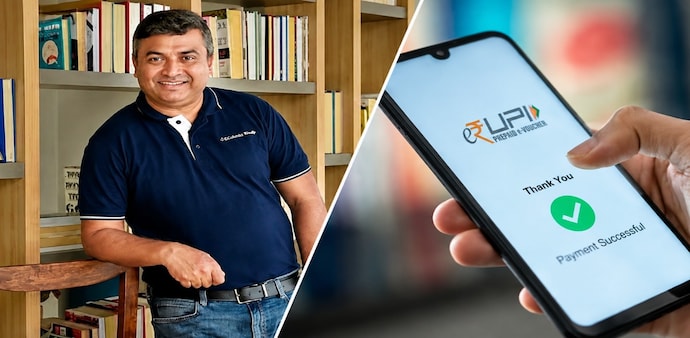
Capitalmind founder and CEO Deepak Shenoy on Thursday weighed in on the debate over bringing back merchant discount rate (MDR) on UPI payments. While supporting the idea of charging merchants, he argued that the fee should not be linked to the transaction value.
Don't Miss: Digital payments through UPI could become chargeable. Here's what consumers need to know
Advertisement
"Not quite happy to see mdr in upi. Neft and Rtgs are free and well used. It should have a max absolute number like 5 rupees, or 0.2% whichever is lower," the CEO wrote on X.
He said the cost isn't higher for higher numbers, and at this volume even Rs 5 is good. "Percent-based mdr is like percent-based brokerage...should be history," Shenoy said.
On Tuesday, the Finance Ministry proposed changes to the Payment and Settlement Systems Act, 2007, paving the way for the possible return of MDR on UPI transactions.
Advertisement
The Finance Ministry has proposed scrapping Section 10A of the Act, which currently mandates zero MDR on UPI and RuPay debit card transactions.
The proposed amendment would allow the government to notify MDR rates in the future as part of efforts to fund "UPI's next phase of growth."
The move follows concerns that the zero-MDR model has made the UPI ecosystem financially unsustainable as transaction volumes continue to surge.
Must Read: India's free UPI era may be nearing its end—for big businesses
WHAT IS MDR?
Merchant Discount Rate (MDR) is the fee merchants pay to banks and payment service providers to process digital payments.
It is regulated by the Reserve Bank of India (RBI).
Since 2020, MDR has been zero for UPI and RuPay debit card transactions. Merchants receive the full payment amount without any deduction.
Advertisement
Under the proposed framework, consumers are not expected to pay any fee.
Government sources told Business Today that the proposal is not intended to affect individual users or small merchants. Instead, discussions have centred on levying MDR only on large merchants, including major e-commerce platforms and businesses that cross a prescribed annual turnover threshold.
Small-value transactions and person-to-person UPI payments are expected to remain outside the proposed framework.
WHO COULD BE AFFECTED?
The proposed changes indicate that MDR may apply only to UPI and RuPay debit card transactions above ₹2,000.
According to government data, only about 4% of person-to-merchant (P2M) UPI transactions in 2025-26 exceeded ₹2,000. However, these transactions accounted for nearly two-thirds of the total value of UPI payments.
This means the overwhelming majority of UPI transactions are expected to remain free.
In FY 2025-26, India recorded 24,161.69 crore UPI transactions worth ₹314.23 lakh crore.
Currently, the government subsidises low-value UPI payments of up to ₹2,000 made to small merchants through its incentive scheme. The incentive is capped at 0.15% of the transaction value and shared among banks, payment service providers and third-party app providers.
A Parliamentary Standing Committee on Finance had noted in March 2026 that about 88% of all digital transactions in India are UPI-based. It also warned that the zero-MDR model may not be financially sustainable as UPI expands further.
Advertisement
WHAT RBI GOVERNOR SAID
Responding to questions after the latest monetary policy announcement, RBI Governor Sanjay Malhotra said it was "very premature" to comment on possible UPI charges because the government's amendment process is still underway.
He, however, said: "The costs have to be paid by someone. We all want that this public infrastructure should continue to strengthen. Let's wait and watch for further developments on this."
Malhotra added that someone is already bearing the cost of running the payments infrastructure and said the funding could come through MDR or other mechanisms. "The cost is already getting passed on. It may not be directly onto the very user, but someone is paying the cost...What is important is that we continue to invest and we continue to find the means, whether it is MDR or other things. Let's wait and see how the situation evolves."
Capitalmind founder and CEO Deepak Shenoy on Thursday weighed in on the debate over bringing back merchant discount rate (MDR) on UPI payments. While supporting the idea of charging merchants, he argued that the fee should not be linked to the transaction value.
Don't Miss: Digital payments through UPI could become chargeable. Here's what consumers need to know
Advertisement
"Not quite happy to see mdr in upi. Neft and Rtgs are free and well used. It should have a max absolute number like 5 rupees, or 0.2% whichever is lower," the CEO wrote on X.
He said the cost isn't higher for higher numbers, and at this volume even Rs 5 is good. "Percent-based mdr is like percent-based brokerage...should be history," Shenoy said.
On Tuesday, the Finance Ministry proposed changes to the Payment and Settlement Systems Act, 2007, paving the way for the possible return of MDR on UPI transactions.
Advertisement
The Finance Ministry has proposed scrapping Section 10A of the Act, which currently mandates zero MDR on UPI and RuPay debit card transactions.
The proposed amendment would allow the government to notify MDR rates in the future as part of efforts to fund "UPI's next phase of growth."
The move follows concerns that the zero-MDR model has made the UPI ecosystem financially unsustainable as transaction volumes continue to surge.
Must Read: India's free UPI era may be nearing its end—for big businesses
WHAT IS MDR?
Merchant Discount Rate (MDR) is the fee merchants pay to banks and payment service providers to process digital payments.
It is regulated by the Reserve Bank of India (RBI).
Since 2020, MDR has been zero for UPI and RuPay debit card transactions. Merchants receive the full payment amount without any deduction.
Advertisement
Under the proposed framework, consumers are not expected to pay any fee.
Government sources told Business Today that the proposal is not intended to affect individual users or small merchants. Instead, discussions have centred on levying MDR only on large merchants, including major e-commerce platforms and businesses that cross a prescribed annual turnover threshold.
Small-value transactions and person-to-person UPI payments are expected to remain outside the proposed framework.
WHO COULD BE AFFECTED?
The proposed changes indicate that MDR may apply only to UPI and RuPay debit card transactions above ₹2,000.
According to government data, only about 4% of person-to-merchant (P2M) UPI transactions in 2025-26 exceeded ₹2,000. However, these transactions accounted for nearly two-thirds of the total value of UPI payments.
This means the overwhelming majority of UPI transactions are expected to remain free.
In FY 2025-26, India recorded 24,161.69 crore UPI transactions worth ₹314.23 lakh crore.
Currently, the government subsidises low-value UPI payments of up to ₹2,000 made to small merchants through its incentive scheme. The incentive is capped at 0.15% of the transaction value and shared among banks, payment service providers and third-party app providers.
A Parliamentary Standing Committee on Finance had noted in March 2026 that about 88% of all digital transactions in India are UPI-based. It also warned that the zero-MDR model may not be financially sustainable as UPI expands further.
Advertisement
WHAT RBI GOVERNOR SAID
Responding to questions after the latest monetary policy announcement, RBI Governor Sanjay Malhotra said it was "very premature" to comment on possible UPI charges because the government's amendment process is still underway.
He, however, said: "The costs have to be paid by someone. We all want that this public infrastructure should continue to strengthen. Let's wait and watch for further developments on this."
Malhotra added that someone is already bearing the cost of running the payments infrastructure and said the funding could come through MDR or other mechanisms. "The cost is already getting passed on. It may not be directly onto the very user, but someone is paying the cost...What is important is that we continue to invest and we continue to find the means, whether it is MDR or other things. Let's wait and see how the situation evolves."
Read more!