
Will luxury realty projects die soon?
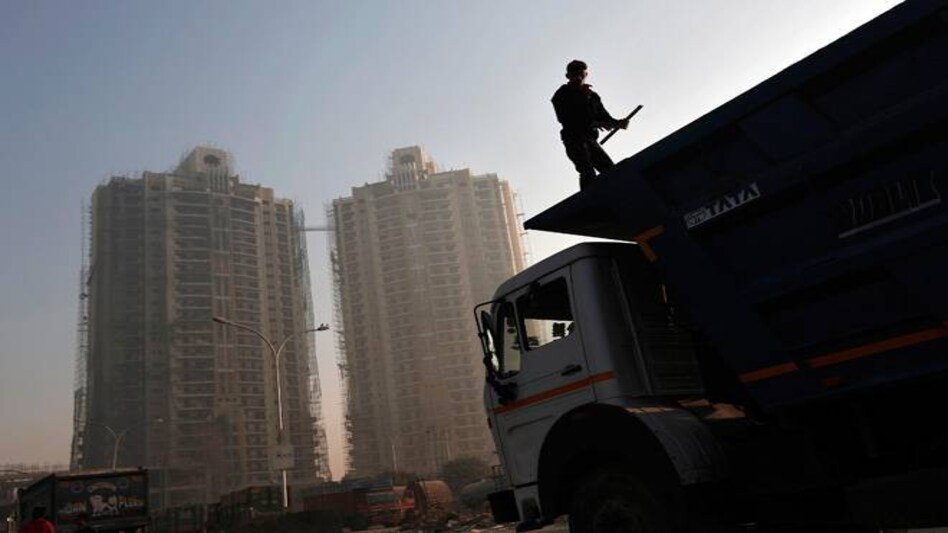
Big real estate projects face a number of challenges in terms of timing and project costs. There are several reasons behind these.
- Apr 26, 2017,
- Updated Apr 26, 2017 7:15 PM IST
Big real estate projects face a number of challenges interms of timing and project costs. There are several reasons behind these. Oneis a sluggish permission-and-approval cycle, partly due to the developerchanging project schedules time and again and partly due to the absence of asingle-window clearance system.
As of now, funding in general is slow albeitsteady, which is posing a problem for several developers in terms of tight cashflows and liquidity crunch. With large-scale projects, these inadequacies getcompounded even more, leading to delayed possession or stalling.
Second, there is a demand-supply mismatch in the high-endand luxury segment, leading to a slowdown. While demand is around 8.5 lakhunits, supply is close to 10.5 lakh. That is a huge supply surplus, which hasalready created a massive mismatch between what buyers are looking for and whatis available in the market.
In spite of supply exceeding demand, ready possession isstill abysmal. In Worli, a South Mumbai locality, many high-end and luxury homeprojects came up in 2005. But in the following 12 years, only three completedprojects have been handed over to customers. And the price in the region hasrisen 10 times - from Rs 6,500-7,000 per sq. ft to Rs 70,000 per sq. ft. Both Gurugramand Bengaluru have too many projects, but these are in the Rs 2-5 crore rangewith not much appreciation in the past 24-36 months. However, a Worli unit willbe in the region of Rs 5-35 crore. If we look at the investment return over thenext five years for the projects in those two cities, they will be better comparedwith many other locations.
Once the Real Estate (Regulation and Development) Act orRERA's mechanism is in place in each state, we can expect projects to bedelivered on time, which is a big concern today. Discounts and flexible paymentplans, which happen to be the current market trends, should not shut out acustomer from monitoring a developer's track record and reputation, projectconstruction activity, location advantages of the project and the market'sresponse to current and past projects.
There is pressure on builders from lenders and the fear oflitigation post Unitech and Orbit. They are working towards completing theirrespective projects, coming out with various schemes for investors and keepingfuture projects on hold. The focus is on completing these projects andunlocking the money blocked in them and making alternative funding arrangementsto finish the ongoing ventures.
One benefit of big-sized realty projects is the plethora ofrecreational amenities available for each target segment - from toddlers toteenagers to senior citizens. The reasons being not only demand, but also thata bigger society with a greater number of units can afford superiorinfrastructure. Such all-encompassing societies are offering a better and attractivelifestyle to homebuyers.
Furthermore, these projects are usually carried out byreputed developers. Hence, there is assurance that the developer will notcompromise on the quality of the project. Big real estate projects have adedicated committee post construction, which manages maintenance costs andoversees general upkeep. The disadvantages of buying a home in large-scaleprojects vary from delays in possession to higher super-built-up area costs onaccount of the extravagant infrastructure and amenities. The price tag of sucha lavish property is quite high, which exposes the buyer to financial risks incase of a downturn.
On the whole, making such decisions depends on theindividual and his/her tailored needs. Nevertheless, the benefits outweigh theshortcomings of a big-sized realty project. From an investment perspective, aproperty in a big realty project has higher saleability risk and low returns oninvestment. Moreover, an exit from such an investment will customarily come atthe ready-for-possession stage. Today we can see a shift in demand fromsmall-scale buildings with basic amenities such as parking and a foyer tolarge-scale buildings or societies. Having said that, there is not much scopefor price appreciation as prices are now exorbitant and bigger projects comewith their own set of financial risks due to the high initial outflow asdiscussed above. Too many luxury projects coming up at the same time and in thesame location will also lead to a slowdown in sale of high-ticket properties.
Projects in the luxury segment which have been completed andthose under construction will get absorbed over the next 18-24 months. But thepain will remain in this space at least for that period. And going forward,developers, too, will be extremely careful about launching such projects.
Ajay Jain is Executive Director, Investment Banking, and Head, Real Estate Group, at Centrum Capital
Big real estate projects face a number of challenges interms of timing and project costs. There are several reasons behind these. Oneis a sluggish permission-and-approval cycle, partly due to the developerchanging project schedules time and again and partly due to the absence of asingle-window clearance system.
As of now, funding in general is slow albeitsteady, which is posing a problem for several developers in terms of tight cashflows and liquidity crunch. With large-scale projects, these inadequacies getcompounded even more, leading to delayed possession or stalling.
Second, there is a demand-supply mismatch in the high-endand luxury segment, leading to a slowdown. While demand is around 8.5 lakhunits, supply is close to 10.5 lakh. That is a huge supply surplus, which hasalready created a massive mismatch between what buyers are looking for and whatis available in the market.
In spite of supply exceeding demand, ready possession isstill abysmal. In Worli, a South Mumbai locality, many high-end and luxury homeprojects came up in 2005. But in the following 12 years, only three completedprojects have been handed over to customers. And the price in the region hasrisen 10 times - from Rs 6,500-7,000 per sq. ft to Rs 70,000 per sq. ft. Both Gurugramand Bengaluru have too many projects, but these are in the Rs 2-5 crore rangewith not much appreciation in the past 24-36 months. However, a Worli unit willbe in the region of Rs 5-35 crore. If we look at the investment return over thenext five years for the projects in those two cities, they will be better comparedwith many other locations.
Once the Real Estate (Regulation and Development) Act orRERA's mechanism is in place in each state, we can expect projects to bedelivered on time, which is a big concern today. Discounts and flexible paymentplans, which happen to be the current market trends, should not shut out acustomer from monitoring a developer's track record and reputation, projectconstruction activity, location advantages of the project and the market'sresponse to current and past projects.
There is pressure on builders from lenders and the fear oflitigation post Unitech and Orbit. They are working towards completing theirrespective projects, coming out with various schemes for investors and keepingfuture projects on hold. The focus is on completing these projects andunlocking the money blocked in them and making alternative funding arrangementsto finish the ongoing ventures.
One benefit of big-sized realty projects is the plethora ofrecreational amenities available for each target segment - from toddlers toteenagers to senior citizens. The reasons being not only demand, but also thata bigger society with a greater number of units can afford superiorinfrastructure. Such all-encompassing societies are offering a better and attractivelifestyle to homebuyers.
Furthermore, these projects are usually carried out byreputed developers. Hence, there is assurance that the developer will notcompromise on the quality of the project. Big real estate projects have adedicated committee post construction, which manages maintenance costs andoversees general upkeep. The disadvantages of buying a home in large-scaleprojects vary from delays in possession to higher super-built-up area costs onaccount of the extravagant infrastructure and amenities. The price tag of sucha lavish property is quite high, which exposes the buyer to financial risks incase of a downturn.
On the whole, making such decisions depends on theindividual and his/her tailored needs. Nevertheless, the benefits outweigh theshortcomings of a big-sized realty project. From an investment perspective, aproperty in a big realty project has higher saleability risk and low returns oninvestment. Moreover, an exit from such an investment will customarily come atthe ready-for-possession stage. Today we can see a shift in demand fromsmall-scale buildings with basic amenities such as parking and a foyer tolarge-scale buildings or societies. Having said that, there is not much scopefor price appreciation as prices are now exorbitant and bigger projects comewith their own set of financial risks due to the high initial outflow asdiscussed above. Too many luxury projects coming up at the same time and in thesame location will also lead to a slowdown in sale of high-ticket properties.
Projects in the luxury segment which have been completed andthose under construction will get absorbed over the next 18-24 months. But thepain will remain in this space at least for that period. And going forward,developers, too, will be extremely careful about launching such projects.
Ajay Jain is Executive Director, Investment Banking, and Head, Real Estate Group, at Centrum Capital