
Green Pharma City is designed as a benchmark for future-ready pharmaceutical development, says D. Sridhar Babu
Telangana bets big on pharma to strengthen global leadership
- Jul 28, 2025,
- Updated Jul 28, 2025 3:41 PM IST
Hyderabad accounts for one-third of global vaccine output, 40 percent of India’s pharmaceutical production, and half of its Active Pharmaceutical Ingredients (API) exports. With seven of the top 10 global pharma giants operating in the city and 30 percent of India’s abbreviated new drug application (ANDA) approvals originating here, Telangana is doubling down on its ambition to become the life sciences capital of the world.
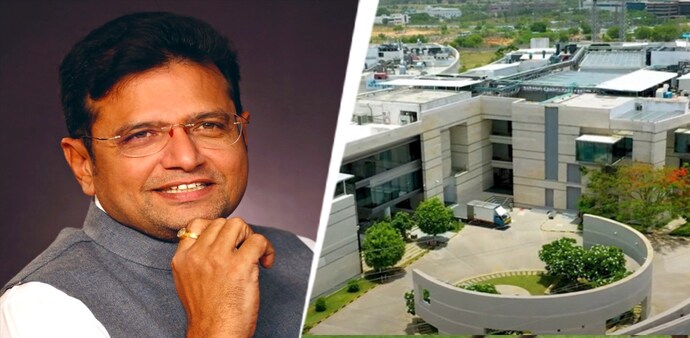
In an exclusive interview with Business Today, D. Sridhar Babu, Minister for Information Technology, Industries and Commerce, and Legislative Affairs, Government of Telangana, outlined how the state plans to scale up its pharmaceutical ecosystem through infrastructure, policy, and innovation. Edited excerpts: Telangana is a major pharmaceutical hub. What is the state doing to strengthen its position further in the global pharma industry?
Telangana continues to attract global investments and remains a key player in India’s pharmaceutical growth story. Hyderabad contributes one-third of global vaccine output, 40 percent of the country’s pharmaceutical production, and 50 percent of API exports. We are expanding Genome Valley—India’s largest life sciences cluster—and developing Green Pharma City—a world-class, sustainable manufacturing and R&D hub. We are also setting up 10 pharma villages to decentralise production and promote regional development. Between 2023 and 2024, we attracted over ₹36,000 crore in investments across 140 projects, generating 51,000 direct jobs. Companies such as Amgen, Eli Lilly, and MSD are expanding their footprint here, further strengthening our global positioning. What is the status of the Hyderabad Pharma City project?
We have rebranded it as Green Pharma City—an advanced, sustainable industrial cluster located just 25 km from Hyderabad International Airport. The project has adopted a green development model with zero liquid discharge, centralised waste management, and energy-efficient infrastructure. It is designed around the “Work, Live, Learn, and Play” philosophy and is part of the larger Future City project. We have already signed MoUs with 17 major companies—including Dr. Reddy’s, Bharat Biotech, Laurus Labs, and Sai Life Sciences—totalling investments of over ₹11,100 crore and 22,300 jobs. What incentives are being offered to attract investments in API and biologics manufacturing?
Our upcoming Life Sciences Policy 2025–30 builds on Telangana’s industrial policy by introducing targeted financial incentives. While the existing T-IDEA policy supports new and expanding enterprises, the new policy places a stronger focus on emerging sectors. It simplifies regulatory processes and offers capital subsidies, interest reimbursements, and land allotments tailored to encourage investment in high-value segments such as APIs, biologics, and precision medicine. How is Telangana supporting adoption of AI, big data, and automation in drug discovery and manufacturing?
We are actively promoting digital transformation across the pharmaceutical value chain—from discovery to distribution. Under the Telangana AI Mission, we have set up an AI Advisory Council and launched skilling programmes through C4IR to prepare the workforce for AI-driven healthcare. We are also developing an AI City to support applied research and deployment. Global Capability Centres (GCCs) of companies such as Eli Lilly and Amgen in Hyderabad are already driving innovation in data analytics, digital therapeutics, and automation. What is being done to boost pharmaceutical R&D and promote novel drug development?
We have built plug-and-play R&D infrastructure to help global companies reduce setup time and operational costs. Genome Valley offers ready-to-use lab spaces with shared utilities such as vacuum, power, and reagent storage. To drive early-stage discovery, we are launching a dedicated innovation fund in partnership with industry to support translational research and startups. Our goal is to create an agile ecosystem where ideas can quickly move from laboratory to market.
What role is Telangana playing in reducing India’s dependency on China for APIs?
Telangana is central to India’s API manufacturing, contributing over 50 percent of national exports. Post-COVID, we have intensified efforts to localise supply chains. Through the PLI scheme and our own support mechanisms, companies such as Dr. Reddy’s are expanding local API capacity. We have also fast-tracked project approvals and are developing pharma villages to bring down manufacturing costs. While Chinese APIs are still cheaper, our infrastructure and policy support are helping bridge that gap. Are there state-level initiatives to support pharmaceutical startups and MSMEs?
Yes. We have a dedicated MSME policy and a strong SME ecosystem within Genome Valley. The Biotechnology Incubation Centre (BTIC) supports over 10 startups with laboratory access, mentorship, and infrastructure. Our innovation-led model ensures SMEs work alongside large companies, contributing to breakthroughs and global market readiness. How is Telangana leveraging IT to make the pharmaceutical industry more globally competitive
Our IT strength is being harnessed across pharmaceutical sectors through AI-led discovery, automated manufacturing, and blockchain-enabled supply chains. GCCs of companies such as BMS, Sanofi, and Amgen in Hyderabad are leading work on clinical research, data analytics, and digital health solutions. This convergence of IT and life sciences is what makes Telangana a unique and future-ready destination. Is Telangana becoming a destination for clinical research and trials?
Yes, and we are actively enabling it. We are working on regulatory simplification, skilling, and awareness initiatives to make the state a go-to destination for trials. Recommendations from BioAsia 2025 have helped shape policies around clinical research integration in medical education, financial incentives, and broader stakeholder engagement. What is the state doing to expand pharmaceutical exports and help companies access emerging global markets?
Telangana’s pharmaceutical exports reached ₹36,893 crore in 2023–24—32 percent of the state’s merchandise exports. We are working closely with Pharmexcil, headquartered in Hyderabad, to organise global trade events, provide regulatory support, and connect companies with international buyers. These efforts are helping our firms expand into new markets across Latin America, Africa, and Southeast Asia. With many pharmaceutical firms expanding, what infrastructure is being developed to support the sector?
We are investing in expanding Genome Valley, Medical Devices Park, and setting up a cost-effective medical devices hub. Green Pharma City and 10 planned pharma villages will offer centralised utilities, green infrastructure, and logistics support. Our goal is to ensure uninterrupted access to power, water, and skilled labour, all aligned with environmental norms. What is being done to attract investment in biopharma and vaccine manufacturing?
We are expanding Genome Valley further and operationalising B-Hub, a biopharma scale-up and accelerator facility. It provides a 200L single-use bioreactor setup ideal for SMEs working on proof-of-concept and early-stage products. The plug-and-play lab spaces here eliminate regulatory and infrastructure hurdles for new entrants. Are there any new public-private partnerships (PPPs) in the pharmaceutical sector?
Yes. We have launched several new PPPs. These include B-Hub in Genome Valley for biopharma scale-up, the Flow Chemistry Hub with Dr. Reddy’s and Laurus Labs to promote green API manufacturing, and the AMR Centre of Excellence for antimicrobial resistance training and policy. We are also running the C4IR Life Sciences Skilling Programme in collaboration with companies such as Syngene, Aragen, and Aurigene to close workforce skill gaps. How is the state ensuring that pharmaceutical growth aligns with sustainability and regulatory compliance?
Sustainability is a core design principle for all our clusters. Green Pharma City follows zero liquid discharge norms and has centralised effluent treatment systems. Regulatory frameworks are embedded into project planning, and our parks are equipped to manage emissions and waste responsibly. Growth is not just about scale; it is about being environmentally conscious and globally benchmarked.
Hyderabad accounts for one-third of global vaccine output, 40 percent of India’s pharmaceutical production, and half of its Active Pharmaceutical Ingredients (API) exports. With seven of the top 10 global pharma giants operating in the city and 30 percent of India’s abbreviated new drug application (ANDA) approvals originating here, Telangana is doubling down on its ambition to become the life sciences capital of the world.
In an exclusive interview with Business Today, D. Sridhar Babu, Minister for Information Technology, Industries and Commerce, and Legislative Affairs, Government of Telangana, outlined how the state plans to scale up its pharmaceutical ecosystem through infrastructure, policy, and innovation. Edited excerpts: Telangana is a major pharmaceutical hub. What is the state doing to strengthen its position further in the global pharma industry?
Telangana continues to attract global investments and remains a key player in India’s pharmaceutical growth story. Hyderabad contributes one-third of global vaccine output, 40 percent of the country’s pharmaceutical production, and 50 percent of API exports. We are expanding Genome Valley—India’s largest life sciences cluster—and developing Green Pharma City—a world-class, sustainable manufacturing and R&D hub. We are also setting up 10 pharma villages to decentralise production and promote regional development. Between 2023 and 2024, we attracted over ₹36,000 crore in investments across 140 projects, generating 51,000 direct jobs. Companies such as Amgen, Eli Lilly, and MSD are expanding their footprint here, further strengthening our global positioning. What is the status of the Hyderabad Pharma City project?
We have rebranded it as Green Pharma City—an advanced, sustainable industrial cluster located just 25 km from Hyderabad International Airport. The project has adopted a green development model with zero liquid discharge, centralised waste management, and energy-efficient infrastructure. It is designed around the “Work, Live, Learn, and Play” philosophy and is part of the larger Future City project. We have already signed MoUs with 17 major companies—including Dr. Reddy’s, Bharat Biotech, Laurus Labs, and Sai Life Sciences—totalling investments of over ₹11,100 crore and 22,300 jobs. What incentives are being offered to attract investments in API and biologics manufacturing?
Our upcoming Life Sciences Policy 2025–30 builds on Telangana’s industrial policy by introducing targeted financial incentives. While the existing T-IDEA policy supports new and expanding enterprises, the new policy places a stronger focus on emerging sectors. It simplifies regulatory processes and offers capital subsidies, interest reimbursements, and land allotments tailored to encourage investment in high-value segments such as APIs, biologics, and precision medicine. How is Telangana supporting adoption of AI, big data, and automation in drug discovery and manufacturing?
We are actively promoting digital transformation across the pharmaceutical value chain—from discovery to distribution. Under the Telangana AI Mission, we have set up an AI Advisory Council and launched skilling programmes through C4IR to prepare the workforce for AI-driven healthcare. We are also developing an AI City to support applied research and deployment. Global Capability Centres (GCCs) of companies such as Eli Lilly and Amgen in Hyderabad are already driving innovation in data analytics, digital therapeutics, and automation. What is being done to boost pharmaceutical R&D and promote novel drug development?
We have built plug-and-play R&D infrastructure to help global companies reduce setup time and operational costs. Genome Valley offers ready-to-use lab spaces with shared utilities such as vacuum, power, and reagent storage. To drive early-stage discovery, we are launching a dedicated innovation fund in partnership with industry to support translational research and startups. Our goal is to create an agile ecosystem where ideas can quickly move from laboratory to market.
What role is Telangana playing in reducing India’s dependency on China for APIs?
Telangana is central to India’s API manufacturing, contributing over 50 percent of national exports. Post-COVID, we have intensified efforts to localise supply chains. Through the PLI scheme and our own support mechanisms, companies such as Dr. Reddy’s are expanding local API capacity. We have also fast-tracked project approvals and are developing pharma villages to bring down manufacturing costs. While Chinese APIs are still cheaper, our infrastructure and policy support are helping bridge that gap. Are there state-level initiatives to support pharmaceutical startups and MSMEs?
Yes. We have a dedicated MSME policy and a strong SME ecosystem within Genome Valley. The Biotechnology Incubation Centre (BTIC) supports over 10 startups with laboratory access, mentorship, and infrastructure. Our innovation-led model ensures SMEs work alongside large companies, contributing to breakthroughs and global market readiness. How is Telangana leveraging IT to make the pharmaceutical industry more globally competitive
Our IT strength is being harnessed across pharmaceutical sectors through AI-led discovery, automated manufacturing, and blockchain-enabled supply chains. GCCs of companies such as BMS, Sanofi, and Amgen in Hyderabad are leading work on clinical research, data analytics, and digital health solutions. This convergence of IT and life sciences is what makes Telangana a unique and future-ready destination. Is Telangana becoming a destination for clinical research and trials?
Yes, and we are actively enabling it. We are working on regulatory simplification, skilling, and awareness initiatives to make the state a go-to destination for trials. Recommendations from BioAsia 2025 have helped shape policies around clinical research integration in medical education, financial incentives, and broader stakeholder engagement. What is the state doing to expand pharmaceutical exports and help companies access emerging global markets?
Telangana’s pharmaceutical exports reached ₹36,893 crore in 2023–24—32 percent of the state’s merchandise exports. We are working closely with Pharmexcil, headquartered in Hyderabad, to organise global trade events, provide regulatory support, and connect companies with international buyers. These efforts are helping our firms expand into new markets across Latin America, Africa, and Southeast Asia. With many pharmaceutical firms expanding, what infrastructure is being developed to support the sector?
We are investing in expanding Genome Valley, Medical Devices Park, and setting up a cost-effective medical devices hub. Green Pharma City and 10 planned pharma villages will offer centralised utilities, green infrastructure, and logistics support. Our goal is to ensure uninterrupted access to power, water, and skilled labour, all aligned with environmental norms. What is being done to attract investment in biopharma and vaccine manufacturing?
We are expanding Genome Valley further and operationalising B-Hub, a biopharma scale-up and accelerator facility. It provides a 200L single-use bioreactor setup ideal for SMEs working on proof-of-concept and early-stage products. The plug-and-play lab spaces here eliminate regulatory and infrastructure hurdles for new entrants. Are there any new public-private partnerships (PPPs) in the pharmaceutical sector?
Yes. We have launched several new PPPs. These include B-Hub in Genome Valley for biopharma scale-up, the Flow Chemistry Hub with Dr. Reddy’s and Laurus Labs to promote green API manufacturing, and the AMR Centre of Excellence for antimicrobial resistance training and policy. We are also running the C4IR Life Sciences Skilling Programme in collaboration with companies such as Syngene, Aragen, and Aurigene to close workforce skill gaps. How is the state ensuring that pharmaceutical growth aligns with sustainability and regulatory compliance?
Sustainability is a core design principle for all our clusters. Green Pharma City follows zero liquid discharge norms and has centralised effluent treatment systems. Regulatory frameworks are embedded into project planning, and our parks are equipped to manage emissions and waste responsibly. Growth is not just about scale; it is about being environmentally conscious and globally benchmarked.