
Sun Pharma will continue investing in R&D after Organon deal: CFO Jayashree Satagopan
Sun Pharma expects strong cash flows from the combined business to support debt reduction, innovation investments and growth across specialty medicines, women’s health and global markets.
- Jun 10, 2026,
- Updated Jun 10, 2026 5:19 PM IST
Sun Pharmaceutical Industries’ $11.75-billion acquisition of Organon marks the largest deal in the company’s history and expands its presence in women’s health, specialty medicines and key international markets. The transaction will increase the contribution of specialty and innovative medicines to about 27% of the combined business and strengthen Sun’s footprint in geographies such as China. While the acquisition will increase leverage in the near term, the company expects strong cash generation from the combined entity to support both debt reduction and future investments.
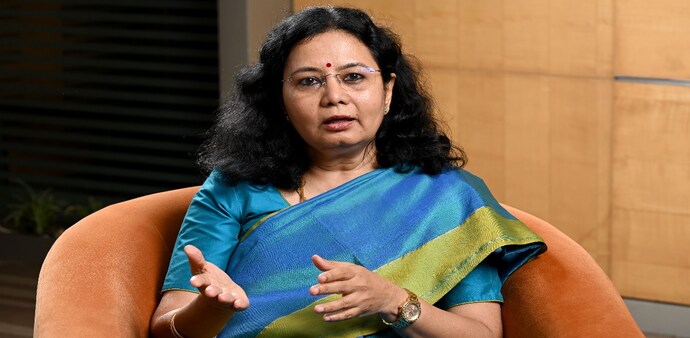
In an interview with Business Today, Jayashree Satagopan, Chief Financial Officer of Sun Pharma, discusses the rationale behind the acquisition, integration priorities, innovation spending, growth opportunities and the company’s outlook for the next phase of expansion. Edited excerpts:
BT: With debt levels rising after the Organon acquisition, how do you balance deleveraging with continued investment in R&D and growth?
JS: There is strong cash generation from both entities—approximately $2.5 billion on a pro forma basis. That cash will be purposefully deployed towards both debt repayment and investment in pipeline products. We believe Sun’s R&D spend will not be curtailed. Sun has always been a growth-focused company, and we will continue to invest in R&D.
BT: How should investors think about leverage following the acquisition?
JS: Organon carries approximately $8.5 billion in gross debt. Netted off with cash, including proceeds from a recent divestment, the net debt position is around $7.6-7.8 billion.
For the acquisition financing, we are using approximately $2-2.5 billion from our own cash accruals, and the rest through bank financing. Post-transaction, we expect net debt-to-EBITDA to be approximately 2.3x. For an acquisition of this scale, which offers geographical expansion, entry into new segments and significant growth opportunities, that is a comfortable position.
The combined business generates close to $2.5 billion in cash annually and debt repayment will be a priority. Sun has historically remained cash positive and we will be disciplined in managing leverage. Over the next few years, we expect to move towards a much more comfortable balance sheet position.
BT: What makes the Organon acquisition strategically important for Sun Pharma’s next phase of growth?
JS: The focus for Sun continues to be growing the innovative medicines portfolio. With this acquisition, specialty and innovative medicines will account for about 27% of the combined business. Organon provides a faster path for expanding this portfolio.
Women’s health is an attractive segment that will add meaningfully to Sun. Our capital allocation has increasingly focused on building the innovative medicines business and the Organon acquisition aligns well with that strategy. We will continue evaluating opportunities in therapies of interest and pursue them selectively.
BT: The Organon business has seen limited growth for several years. What gives Sun Pharma confidence that it can unlock greater value from the business?
JS: Organon’s challenges largely stem from the debt burden it carried following its spin-off from Merck. A significant portion of its cash generation has gone towards debt servicing and dividend payouts.
The combined organisation will generate approximately $2.5 billion in annual cash flows, creating meaningful capacity to reduce debt and invest in pipeline products. More importantly, the two businesses are highly complementary. Sun products can be commercialised in Organon’s markets, while Organon’s products can be introduced in geographies where Sun has a strong presence.
The combined business will create opportunities across established brands, women’s health, biosimilars and in-licensing. We also see opportunities to cross-sell products across markets where the two companies complement each other. In addition, we have identified potential synergies of over $350 million that could materialise over the next two to four years. Overall, we believe the transaction should be accretive to growth and margins in the medium to long term.
BT: How does the deal strengthen Sun Pharma’s specialty and innovative medicines business?
JS: With this acquisition, the share of specialty and innovative medicines increases from about 20% to 27% of the combined business. The focus on innovative medicines therefore continues.
In-licensing opportunities allow us to bring close-to-market assets and commercialise them across geographies where both Organon and Sun have a presence.
One of the constraints we have faced has been field-force availability in certain markets. In Europe, for example, we have used partners to commercialise some of our products. With the combined business, we will have a larger field force that can support innovative medicines across multiple markets. Our focus and investments in this business will continue.
BT: China becomes a much more meaningful market through Organon. How do you view the opportunity there?
JS: China is an interesting market where we currently operate through a licensed partner for our innovative medicines business. Organon brings close to $800 million in revenues there, giving us an opportunity to look at our innovative medicines portfolio differently in that market.
We also see China as a country where significant innovation is happening in biosimilars. It could help us identify products for China and for global markets. China is expected to become the world’s second-largest pharmaceutical market after the US. Sun’s presence there today is limited, so this adds a very meaningful geography. Any large global pharmaceutical company that aspires to grow cannot afford to ignore China.
BT: After Ranbaxy and now Organon, what lessons has Sun Pharma learnt about integrating large global businesses?
JS: The first requirement is understanding and appreciating the strengths that each organisation brings in terms of products, geographies and capabilities.
The second aspect is culture. Sun is a large Indian pharmaceutical company with a significant global presence, while Organon has its own culture and operating model. Successful integration requires listening, learning and identifying the best elements of both organisations.
The third aspect is leveraging complementary strengths. Whether through products, markets or scale, the combined organisation should be better positioned to pursue growth opportunities and realise the synergies that have been identified.
BT: The US generics market remains challenging. How do you see the balance between innovative medicines growth and generics evolving?
JS: Our focus in the US remains on innovative medicines and that has been reflected in the growth we have delivered over the past several years.
Generics continues to be an attractive business, although pricing pressure remains a reality. New product launches can help offset those pressures. As our manufacturing facilities become fully compliant, we expect to expand the portfolio further and support another phase of growth.
BT: Sun’s India business recorded its strongest market-share gains since the Ranbaxy acquisition. What is driving that performance?
JS: The India business has been strengthening over several years. Our engagement with doctors and prescribers has improved significantly. We have expanded our field force and now have nearly 16,500 sales personnel on the ground.
We have also streamlined the portfolio and introduced products that address important healthcare needs. Above all, the India business maintains a strong focus on execution, which has helped deliver consistent growth.
BT: Sun Pharma invested more than ₹3,550 crore in R&D during FY26. How do you evaluate returns on those investments?
JS: We evaluate all R&D investments through a structured review process. Metrics include the number of ANDAs and NDAs filed, formulation projects under development and life-cycle extension opportunities across both the domestic formulations business and the innovative medicines portfolio.
Projects are reviewed periodically to assess whether they remain on track and whether they are likely to generate the returns anticipated when the investment was approved.
BT: Looking three to five years ahead, where do you see the biggest growth opportunities for Sun Pharma?
JS: We see opportunities across the business. Generics will continue to grow. Biosimilars should become a more meaningful contributor. Our established brands portfolio complements our branded generics business, while life-cycle management, formulations and combination products offer additional opportunities.
Women’s health strengthens our innovative medicines portfolio, which is already growing. We operate in 140 countries and have approximately 18 markets where revenues exceed $100 million annually. That gives us multiple growth levers across products, geographies and therapeutic segments. We believe the opportunities ahead are broad-based and significant.
Sun Pharmaceutical Industries’ $11.75-billion acquisition of Organon marks the largest deal in the company’s history and expands its presence in women’s health, specialty medicines and key international markets. The transaction will increase the contribution of specialty and innovative medicines to about 27% of the combined business and strengthen Sun’s footprint in geographies such as China. While the acquisition will increase leverage in the near term, the company expects strong cash generation from the combined entity to support both debt reduction and future investments.
In an interview with Business Today, Jayashree Satagopan, Chief Financial Officer of Sun Pharma, discusses the rationale behind the acquisition, integration priorities, innovation spending, growth opportunities and the company’s outlook for the next phase of expansion. Edited excerpts:
BT: With debt levels rising after the Organon acquisition, how do you balance deleveraging with continued investment in R&D and growth?
JS: There is strong cash generation from both entities—approximately $2.5 billion on a pro forma basis. That cash will be purposefully deployed towards both debt repayment and investment in pipeline products. We believe Sun’s R&D spend will not be curtailed. Sun has always been a growth-focused company, and we will continue to invest in R&D.
BT: How should investors think about leverage following the acquisition?
JS: Organon carries approximately $8.5 billion in gross debt. Netted off with cash, including proceeds from a recent divestment, the net debt position is around $7.6-7.8 billion.
For the acquisition financing, we are using approximately $2-2.5 billion from our own cash accruals, and the rest through bank financing. Post-transaction, we expect net debt-to-EBITDA to be approximately 2.3x. For an acquisition of this scale, which offers geographical expansion, entry into new segments and significant growth opportunities, that is a comfortable position.
The combined business generates close to $2.5 billion in cash annually and debt repayment will be a priority. Sun has historically remained cash positive and we will be disciplined in managing leverage. Over the next few years, we expect to move towards a much more comfortable balance sheet position.
BT: What makes the Organon acquisition strategically important for Sun Pharma’s next phase of growth?
JS: The focus for Sun continues to be growing the innovative medicines portfolio. With this acquisition, specialty and innovative medicines will account for about 27% of the combined business. Organon provides a faster path for expanding this portfolio.
Women’s health is an attractive segment that will add meaningfully to Sun. Our capital allocation has increasingly focused on building the innovative medicines business and the Organon acquisition aligns well with that strategy. We will continue evaluating opportunities in therapies of interest and pursue them selectively.
BT: The Organon business has seen limited growth for several years. What gives Sun Pharma confidence that it can unlock greater value from the business?
JS: Organon’s challenges largely stem from the debt burden it carried following its spin-off from Merck. A significant portion of its cash generation has gone towards debt servicing and dividend payouts.
The combined organisation will generate approximately $2.5 billion in annual cash flows, creating meaningful capacity to reduce debt and invest in pipeline products. More importantly, the two businesses are highly complementary. Sun products can be commercialised in Organon’s markets, while Organon’s products can be introduced in geographies where Sun has a strong presence.
The combined business will create opportunities across established brands, women’s health, biosimilars and in-licensing. We also see opportunities to cross-sell products across markets where the two companies complement each other. In addition, we have identified potential synergies of over $350 million that could materialise over the next two to four years. Overall, we believe the transaction should be accretive to growth and margins in the medium to long term.
BT: How does the deal strengthen Sun Pharma’s specialty and innovative medicines business?
JS: With this acquisition, the share of specialty and innovative medicines increases from about 20% to 27% of the combined business. The focus on innovative medicines therefore continues.
In-licensing opportunities allow us to bring close-to-market assets and commercialise them across geographies where both Organon and Sun have a presence.
One of the constraints we have faced has been field-force availability in certain markets. In Europe, for example, we have used partners to commercialise some of our products. With the combined business, we will have a larger field force that can support innovative medicines across multiple markets. Our focus and investments in this business will continue.
BT: China becomes a much more meaningful market through Organon. How do you view the opportunity there?
JS: China is an interesting market where we currently operate through a licensed partner for our innovative medicines business. Organon brings close to $800 million in revenues there, giving us an opportunity to look at our innovative medicines portfolio differently in that market.
We also see China as a country where significant innovation is happening in biosimilars. It could help us identify products for China and for global markets. China is expected to become the world’s second-largest pharmaceutical market after the US. Sun’s presence there today is limited, so this adds a very meaningful geography. Any large global pharmaceutical company that aspires to grow cannot afford to ignore China.
BT: After Ranbaxy and now Organon, what lessons has Sun Pharma learnt about integrating large global businesses?
JS: The first requirement is understanding and appreciating the strengths that each organisation brings in terms of products, geographies and capabilities.
The second aspect is culture. Sun is a large Indian pharmaceutical company with a significant global presence, while Organon has its own culture and operating model. Successful integration requires listening, learning and identifying the best elements of both organisations.
The third aspect is leveraging complementary strengths. Whether through products, markets or scale, the combined organisation should be better positioned to pursue growth opportunities and realise the synergies that have been identified.
BT: The US generics market remains challenging. How do you see the balance between innovative medicines growth and generics evolving?
JS: Our focus in the US remains on innovative medicines and that has been reflected in the growth we have delivered over the past several years.
Generics continues to be an attractive business, although pricing pressure remains a reality. New product launches can help offset those pressures. As our manufacturing facilities become fully compliant, we expect to expand the portfolio further and support another phase of growth.
BT: Sun’s India business recorded its strongest market-share gains since the Ranbaxy acquisition. What is driving that performance?
JS: The India business has been strengthening over several years. Our engagement with doctors and prescribers has improved significantly. We have expanded our field force and now have nearly 16,500 sales personnel on the ground.
We have also streamlined the portfolio and introduced products that address important healthcare needs. Above all, the India business maintains a strong focus on execution, which has helped deliver consistent growth.
BT: Sun Pharma invested more than ₹3,550 crore in R&D during FY26. How do you evaluate returns on those investments?
JS: We evaluate all R&D investments through a structured review process. Metrics include the number of ANDAs and NDAs filed, formulation projects under development and life-cycle extension opportunities across both the domestic formulations business and the innovative medicines portfolio.
Projects are reviewed periodically to assess whether they remain on track and whether they are likely to generate the returns anticipated when the investment was approved.
BT: Looking three to five years ahead, where do you see the biggest growth opportunities for Sun Pharma?
JS: We see opportunities across the business. Generics will continue to grow. Biosimilars should become a more meaningful contributor. Our established brands portfolio complements our branded generics business, while life-cycle management, formulations and combination products offer additional opportunities.
Women’s health strengthens our innovative medicines portfolio, which is already growing. We operate in 140 countries and have approximately 18 markets where revenues exceed $100 million annually. That gives us multiple growth levers across products, geographies and therapeutic segments. We believe the opportunities ahead are broad-based and significant.