
'We'll become top insulin supplier': Biocon's new target as Big Pharma shifts to GLP-1 drugs
The push comes as larger drugmakers prioritise GLP-1 therapies, opening room in the insulin market.
- Jun 17, 2026,
- Updated Jun 17, 2026 3:30 PM IST
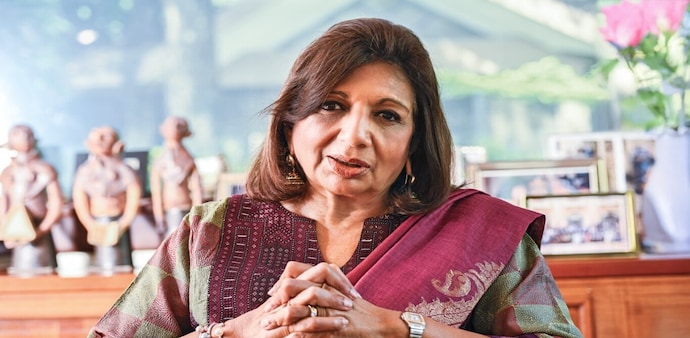
Biocon Ltd. is looking to become the world’s largest insulin supplier over the next few years, betting on rising demand for the drug as major pharmaceutical companies shift their attention to newer therapies. Co-founder and Executive Chairperson Kiran Mazumdar-Shaw said the company sees a significant opportunity in the global market.
In an interview with Bloomberg Television’s Latitude with Haslinda Amin, Mazumdar-Shaw said: “In five years, we could be the number one insulin company in the world. We are one of the few companies globally that has the scale to address that opportunity.” The Bengaluru-based company, which makes generic drugs and biosimilars, is currently the third-largest insulin supplier globally by volume and has invested heavily in expanding production capacity, she said.
Biocon’s plans reflect changing trends in the $30 billion global insulin market. Large drugmakers are increasingly directing resources towards next-generation metabolic medicines such as glucagon-like peptides, or GLP-1s. Novo Nordisk A/S and Eli Lilly & Co., whose growth was driven by insulin sales for decades, are now focusing more on other diabetes and weight-loss drugs that offer higher growth and profits.
More than 830 million people worldwide live with diabetes, and millions depend on insulin therapy to manage the disease. Demand is expected to grow as diabetes becomes more common across emerging markets in Asia, Africa and Latin America, where access to affordable medicines remains uneven.
She said the current situation is a “windfall for me because I’m able to now fill in that gap and my insulin business has just taken off,” adding that Biocon is looking to expand capacity through partnerships around the world, including with companies that have pen and cartridge facilities.
Mazumdar-Shaw founded Biocon in 1978 as an industrial enzymes producer in a joint venture with an Irish company. The company now has a market capitalisation of more than $7 billion. According to the Bloomberg Billionaires Index, Mazumdar-Shaw has a net worth of $2.3 billion from her stakes in Biocon, Syngene International Ltd. and Narayana Hrudayalaya Ltd.
Biocon’s strategy differs from that of many Indian and global drugmakers chasing the obesity and diabetes drug segment. As patents for semaglutide, the key ingredient in Novo Nordisk’s Wegovy and Ozempic, begin expiring in markets including India and Canada, cheaper versions are entering those countries.
“We have to be a bit aware that generic GLP-1s are a crowded market,” Mazumdar-Shaw said. “I think being a generics player, we are quite realistic about the fact that there’s a lot of global competition.” With prices in India being extremely low, Biocon does not plan to sell generic semaglutide there and is instead focusing on select markets such as Canada, Latin America, Brazil, the Middle East and Southeast Asia.
Biocon Ltd. is looking to become the world’s largest insulin supplier over the next few years, betting on rising demand for the drug as major pharmaceutical companies shift their attention to newer therapies. Co-founder and Executive Chairperson Kiran Mazumdar-Shaw said the company sees a significant opportunity in the global market.
In an interview with Bloomberg Television’s Latitude with Haslinda Amin, Mazumdar-Shaw said: “In five years, we could be the number one insulin company in the world. We are one of the few companies globally that has the scale to address that opportunity.” The Bengaluru-based company, which makes generic drugs and biosimilars, is currently the third-largest insulin supplier globally by volume and has invested heavily in expanding production capacity, she said.
Biocon’s plans reflect changing trends in the $30 billion global insulin market. Large drugmakers are increasingly directing resources towards next-generation metabolic medicines such as glucagon-like peptides, or GLP-1s. Novo Nordisk A/S and Eli Lilly & Co., whose growth was driven by insulin sales for decades, are now focusing more on other diabetes and weight-loss drugs that offer higher growth and profits.
More than 830 million people worldwide live with diabetes, and millions depend on insulin therapy to manage the disease. Demand is expected to grow as diabetes becomes more common across emerging markets in Asia, Africa and Latin America, where access to affordable medicines remains uneven.
She said the current situation is a “windfall for me because I’m able to now fill in that gap and my insulin business has just taken off,” adding that Biocon is looking to expand capacity through partnerships around the world, including with companies that have pen and cartridge facilities.
Mazumdar-Shaw founded Biocon in 1978 as an industrial enzymes producer in a joint venture with an Irish company. The company now has a market capitalisation of more than $7 billion. According to the Bloomberg Billionaires Index, Mazumdar-Shaw has a net worth of $2.3 billion from her stakes in Biocon, Syngene International Ltd. and Narayana Hrudayalaya Ltd.
Biocon’s strategy differs from that of many Indian and global drugmakers chasing the obesity and diabetes drug segment. As patents for semaglutide, the key ingredient in Novo Nordisk’s Wegovy and Ozempic, begin expiring in markets including India and Canada, cheaper versions are entering those countries.
“We have to be a bit aware that generic GLP-1s are a crowded market,” Mazumdar-Shaw said. “I think being a generics player, we are quite realistic about the fact that there’s a lot of global competition.” With prices in India being extremely low, Biocon does not plan to sell generic semaglutide there and is instead focusing on select markets such as Canada, Latin America, Brazil, the Middle East and Southeast Asia.