
Not just a business opportunity: Chandrasekaran says Air India is a 'responsibility' for Tata Group
The Tatas took over loss-making Air India and Air India Express in January 2022 and set an ambitious five-year transformation plan.
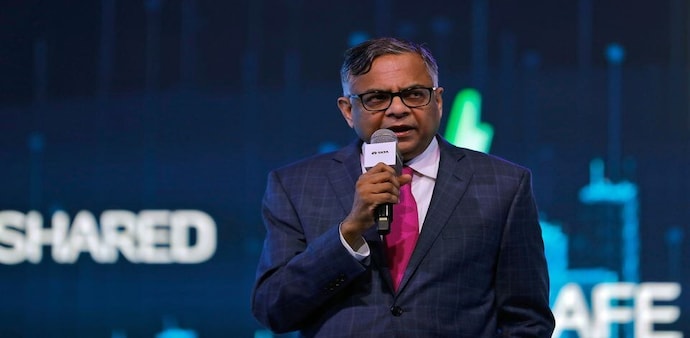
- Nov 30, 2025,
- Updated Nov 30, 2025 12:19 PM IST
Air India is not just a business opportunity but a national responsibility for the Tata Group, Tata Sons Chairman N. Chandrasekaran said on Saturday. "When the Tata Group decided to buy Air India in 2022, people both publicly and privately asked me why. When the Group was doing well, why was it getting into this sector?" Chandrasekaran said while speaking at an event marking the 121st birth anniversary of JRD Tata. "But I firmly believe that for the Tata Group, Air India is just not a business opportunity. It's a responsibility."
The Tatas took over loss-making Air India and Air India Express in January 2022 and set an ambitious five-year transformation plan. Chandrasekaran said progress has been slower than expected because global supply chain volatility has delayed aircraft upgrades, availability of parts and even new aircraft deliveries.
Despite these headwinds, he said India's broader economic trajectory will drive sustained aviation growth. "Every single percentage growth in GDP will give a 2 per cent growth in the domestic aviation sector. (If) India grows 8 per cent, the aviation industry grows 16 per cent."
He described the current period as a long-run growth phase that will unfold over the next three decades, but added, "It's not easy. And it's increasingly difficult, because the aviation sector faces continuous challenges."
The Tata Sons Chairman said that the global supply chain makes the availability of parts and infrastructure pretty unpredictable, adding that "every plan that you have is becoming difficult, because of the situations that you face in this area."
Chandrasekaran said aviation is both capital-intensive and low-margin, while also being highly exposed to external shocks. "Geopolitics is a surprise. Suddenly, your flight routes will change, because you cannot fly over a territory. If you cannot fly over a particular territory, your flights take longer. Your flights take longer, your fuel costs go up…We have to manage all of this."
He linked the sector's importance to India’s growth outlook, pointing to rising consumption and infrastructure investment. "We will become a USD 5 trillion economy, and we will grow beyond that…but if this has to happen, one of the aspects that needs to work is connectivity."
On Air India's fleet upgrade, Chandrasekaran said the group has been accelerating retrofit plans after delays caused by supply chain constraints. "The airline should have retrofitted all its domestic fleet by this year-end, and the wide-body fleet will be retrofitted over the next couple of years."
He added that new aircraft deliveries will increase steadily. "We will start getting new planes every month over the next three years...we should have almost 95 per cent or 99 per cent of our fleet modern. But we will work on each one of these dimensions. But that's the commitment that we are working towards. (But) It will take time."
Air India is not just a business opportunity but a national responsibility for the Tata Group, Tata Sons Chairman N. Chandrasekaran said on Saturday. "When the Tata Group decided to buy Air India in 2022, people both publicly and privately asked me why. When the Group was doing well, why was it getting into this sector?" Chandrasekaran said while speaking at an event marking the 121st birth anniversary of JRD Tata. "But I firmly believe that for the Tata Group, Air India is just not a business opportunity. It's a responsibility."
The Tatas took over loss-making Air India and Air India Express in January 2022 and set an ambitious five-year transformation plan. Chandrasekaran said progress has been slower than expected because global supply chain volatility has delayed aircraft upgrades, availability of parts and even new aircraft deliveries.
Despite these headwinds, he said India's broader economic trajectory will drive sustained aviation growth. "Every single percentage growth in GDP will give a 2 per cent growth in the domestic aviation sector. (If) India grows 8 per cent, the aviation industry grows 16 per cent."
He described the current period as a long-run growth phase that will unfold over the next three decades, but added, "It's not easy. And it's increasingly difficult, because the aviation sector faces continuous challenges."
The Tata Sons Chairman said that the global supply chain makes the availability of parts and infrastructure pretty unpredictable, adding that "every plan that you have is becoming difficult, because of the situations that you face in this area."
Chandrasekaran said aviation is both capital-intensive and low-margin, while also being highly exposed to external shocks. "Geopolitics is a surprise. Suddenly, your flight routes will change, because you cannot fly over a territory. If you cannot fly over a particular territory, your flights take longer. Your flights take longer, your fuel costs go up…We have to manage all of this."
He linked the sector's importance to India’s growth outlook, pointing to rising consumption and infrastructure investment. "We will become a USD 5 trillion economy, and we will grow beyond that…but if this has to happen, one of the aspects that needs to work is connectivity."
On Air India's fleet upgrade, Chandrasekaran said the group has been accelerating retrofit plans after delays caused by supply chain constraints. "The airline should have retrofitted all its domestic fleet by this year-end, and the wide-body fleet will be retrofitted over the next couple of years."
He added that new aircraft deliveries will increase steadily. "We will start getting new planes every month over the next three years...we should have almost 95 per cent or 99 per cent of our fleet modern. But we will work on each one of these dimensions. But that's the commitment that we are working towards. (But) It will take time."