
Research, academia and industry need to integrate better to take India’s spacetech ecosystem forward, says minister Jitendra Singh
Research, academia and industry need to integrate better to take India’s spacetech ecosystem forward, says minister Jitendra Singh
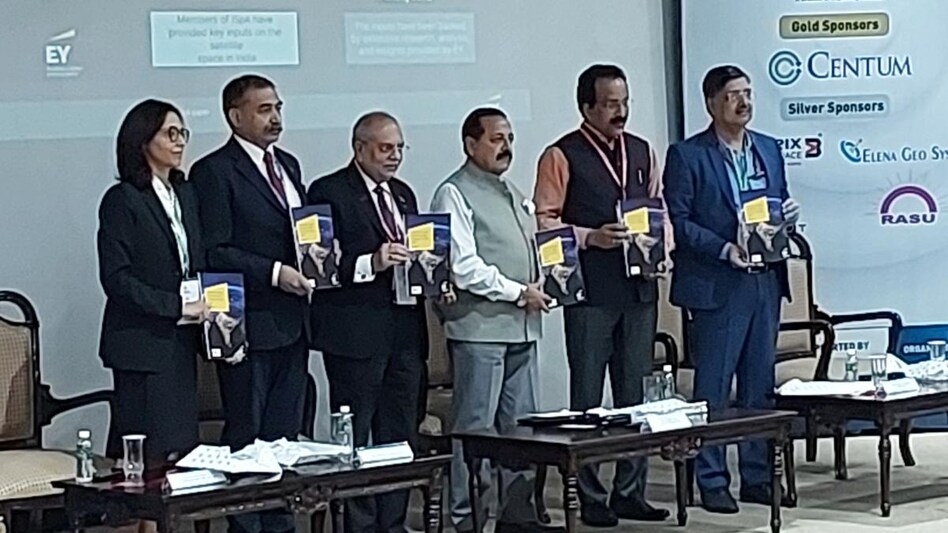
The deputy minister in the Department of Space also released a joint EY and ISpA joint study that sees the Indian spacetech sector, currently growing at a CAGR of 13 per cent, becoming a $13 billion industry by 2025.
Manish Pant
- Oct 10, 2022,
- Updated Oct 10, 2022 6:45 PM IST
Minister of state (independent charge) for the ministries of science & technology and earth sciences, and prime minister Narendra Modi’s deputy in the Department of Space, Dr. Jitendra Singh has called for greater synergies among stakeholders in India’s spacetech sector to take it to the next level in its evolution.
Advertisement
“The greatest priority would be of a wider integration. We not only have to sustain the sector but also need to have an integration of research, academia and the industry,” Dr. Singh said in an address delivered at the first edition of the Indian Space Conclave organised by the apex industry body, the Indian Space Association (ISpA) in New Delhi on Monday.
The minister said while the national space agency, the Indian Space Research Organisation (ISRO), was there to partner with start-ups with its technical expertise, they must also take ownership by becoming stakeholders in the ecosystem at the very beginning.
“So, let’s have projects suggested by you. Let’s also have start-ups that the industry needs and not at random,” Dr. Singh said, adding, “Let the industry come forward from the beginning to have projects oriented to meet the requirements of the industry as well the futuristic needs of the nation and the world.”
Advertisement
He said that most of the value addition will be delivered by sectors that weren’t explored adequately in the past 75 years such as infrastructure and healthcare. It was this realisation that led the government to decide after 2015 that it did not have to limit space technology to merely launching rockets or space missions, he observed.
“Today, you have space technology in the railway, highways, smart cities, etc. Space technology has, thus, entered every household. It is an essential part of all infrastructural sectors, including each ministry and department,” he remarked.
Pointing out India’s emergence as one of the strongest players in geospatial technology, the minister said the spacetech sector would buoy its growth over the next 25 years.
Advertisement
“And, therefore, I don’t hesitate to say that the ascent of India by 2047 has already begun via the space sector. Our achievements and capabilities in the area of space exploration have heralded that,” he asserted.
The minister also complimented ISpA for becoming a bridge between private industry and government agencies by engaging with all the right people in the ministries of science & technology, earth sciences and the Department of Space.
Dr. Singh also released a joint study by EY and ISpA that forecasts the Indian spacetech economy to grow at a CAGR of 13 per cent to become a $13 billion industry by 2025 from $9.6 billion in 2020.
Also read: Yamaha Motor leasing company forays into e-scooters by investing in Hyderabad-based start-up
Also read: Maiden Pharma row: Govt to review product quality of PLI scheme beneficiaries
Minister of state (independent charge) for the ministries of science & technology and earth sciences, and prime minister Narendra Modi’s deputy in the Department of Space, Dr. Jitendra Singh has called for greater synergies among stakeholders in India’s spacetech sector to take it to the next level in its evolution.
Advertisement
“The greatest priority would be of a wider integration. We not only have to sustain the sector but also need to have an integration of research, academia and the industry,” Dr. Singh said in an address delivered at the first edition of the Indian Space Conclave organised by the apex industry body, the Indian Space Association (ISpA) in New Delhi on Monday.
The minister said while the national space agency, the Indian Space Research Organisation (ISRO), was there to partner with start-ups with its technical expertise, they must also take ownership by becoming stakeholders in the ecosystem at the very beginning.
“So, let’s have projects suggested by you. Let’s also have start-ups that the industry needs and not at random,” Dr. Singh said, adding, “Let the industry come forward from the beginning to have projects oriented to meet the requirements of the industry as well the futuristic needs of the nation and the world.”
Advertisement
He said that most of the value addition will be delivered by sectors that weren’t explored adequately in the past 75 years such as infrastructure and healthcare. It was this realisation that led the government to decide after 2015 that it did not have to limit space technology to merely launching rockets or space missions, he observed.
“Today, you have space technology in the railway, highways, smart cities, etc. Space technology has, thus, entered every household. It is an essential part of all infrastructural sectors, including each ministry and department,” he remarked.
Pointing out India’s emergence as one of the strongest players in geospatial technology, the minister said the spacetech sector would buoy its growth over the next 25 years.
Advertisement
“And, therefore, I don’t hesitate to say that the ascent of India by 2047 has already begun via the space sector. Our achievements and capabilities in the area of space exploration have heralded that,” he asserted.
The minister also complimented ISpA for becoming a bridge between private industry and government agencies by engaging with all the right people in the ministries of science & technology, earth sciences and the Department of Space.
Dr. Singh also released a joint study by EY and ISpA that forecasts the Indian spacetech economy to grow at a CAGR of 13 per cent to become a $13 billion industry by 2025 from $9.6 billion in 2020.
Also read: Yamaha Motor leasing company forays into e-scooters by investing in Hyderabad-based start-up
Also read: Maiden Pharma row: Govt to review product quality of PLI scheme beneficiaries
Read more!