
'Many come, many go': As ISRO prepares for a busy decade, Jitendra Singh dismisses reports of scientists exodus
Jitendra Singh said the recent exits of ISRO scientists were administrative and routine. His remarks came as the Department of Space tightened approval for resignations while ISRO readies major missions.
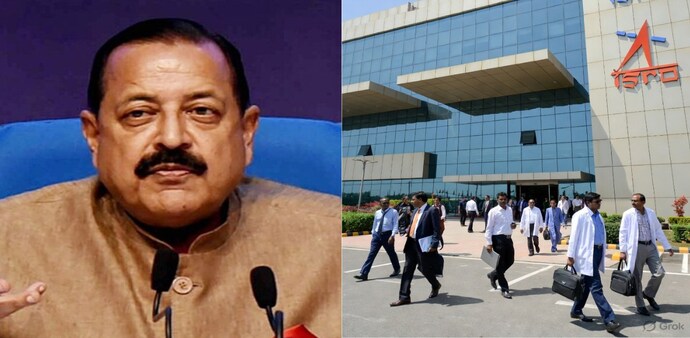
- Jul 17, 2026,
- Updated Jul 17, 2026 10:37 AM IST
Amid reports of the exit of around 100 top scientists from the Indian Space Research Organisation in the last few months, Union Minister of State (Independent Charge) for Science and Technology Dr Jitendra Singh on Thursday sought to calm fears, saying the departures were part of an administrative process and did not point to any larger problem within the country’s premier space agency.
Responding to questions from reporters, Singh said there was “no controversy” surrounding the resignations. He said, “No, that is because that is for administrative reasons, so that the decision can be taken at a much more mature level,” while explaining the circumstances behind the exits.
The minister said ISRO has a large workforce and that movement of personnel is a routine feature in any major scientific organisation. “Many have gone, many have come,” Singh said, adding that the agency continues to bring in new talent even as some employees leave. “ISRO has a very large workforce. As people leave, many also join.”
His remarks come amid discussion in the space sector over the recent resignations and questions over whether they could affect ISRO’s ambitious roadmap. Singh, however, rejected suggestions of any institutional crisis and maintained that such movement is normal in an organisation of ISRO’s size.
The comments also come after the Department of Space issued an internal memo ordering that any resignation or voluntary retirement scheme requests will now be approved by the DoS.
ISRO is preparing for a busy phase, with several major missions and programmes planned over the next decade. These include the Gaganyaan human spaceflight mission, the development of the Bharatiya Antariksh Station, next-generation launch vehicles, advanced Earth observation satellites, planetary exploration missions and expanding collaboration with India’s private space industry.
The government has repeatedly said that strengthening India’s space ecosystem remains a priority, with reforms aimed at increasing private sector participation while allowing ISRO to focus on advanced research and strategic missions. Singh’s remarks underlined the government’s position that routine staff turnover will not affect ISRO’s long-term plans as it moves ahead with a series of complex space missions.
Amid reports of the exit of around 100 top scientists from the Indian Space Research Organisation in the last few months, Union Minister of State (Independent Charge) for Science and Technology Dr Jitendra Singh on Thursday sought to calm fears, saying the departures were part of an administrative process and did not point to any larger problem within the country’s premier space agency.
Responding to questions from reporters, Singh said there was “no controversy” surrounding the resignations. He said, “No, that is because that is for administrative reasons, so that the decision can be taken at a much more mature level,” while explaining the circumstances behind the exits.
The minister said ISRO has a large workforce and that movement of personnel is a routine feature in any major scientific organisation. “Many have gone, many have come,” Singh said, adding that the agency continues to bring in new talent even as some employees leave. “ISRO has a very large workforce. As people leave, many also join.”
His remarks come amid discussion in the space sector over the recent resignations and questions over whether they could affect ISRO’s ambitious roadmap. Singh, however, rejected suggestions of any institutional crisis and maintained that such movement is normal in an organisation of ISRO’s size.
The comments also come after the Department of Space issued an internal memo ordering that any resignation or voluntary retirement scheme requests will now be approved by the DoS.
ISRO is preparing for a busy phase, with several major missions and programmes planned over the next decade. These include the Gaganyaan human spaceflight mission, the development of the Bharatiya Antariksh Station, next-generation launch vehicles, advanced Earth observation satellites, planetary exploration missions and expanding collaboration with India’s private space industry.
The government has repeatedly said that strengthening India’s space ecosystem remains a priority, with reforms aimed at increasing private sector participation while allowing ISRO to focus on advanced research and strategic missions. Singh’s remarks underlined the government’s position that routine staff turnover will not affect ISRO’s long-term plans as it moves ahead with a series of complex space missions.