
Nithin Kamath reveals why Zerodha deliberately stayed a 1,000-person company
At the start of his post, he detailed what a conversation with a new employee revealed about the problem with new hires at the company.
- Jul 7, 2026,
- Updated Jul 7, 2026 11:01 AM IST
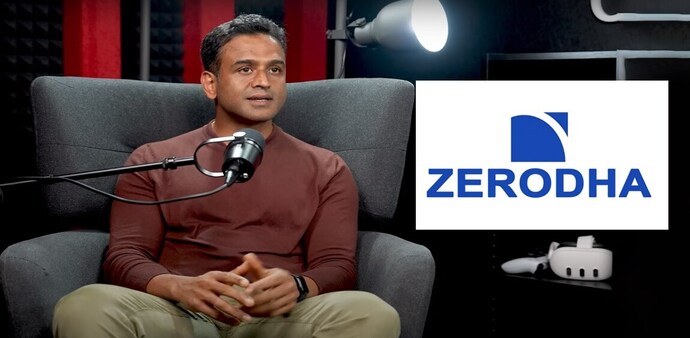
Zerodha founder and CEO Nithin Kamath recently revealed why the brokerage and financial services company never raised its headcount to more than 1,000 people. In an article, Kamath said that the employee-friendly culture isn't a perk but is central to Zerodha's success.
At the start of his post, he detailed what a conversation with a new employee revealed about the problem with new hires at the company. Kamath wrote in a long article shared publicly, "What struck me was that his understanding of what makes Zerodha different was superficial. He knew we don’t incite customers to trade, but not much beyond that. And this got me thinking: this probably isn’t just them and is likely true of more of our recent hires; and that’s an onboarding gap we need to fix."
He added that staying small helped employees compound their impact, while keeping the company efficient. "The reason we are still just a 1,000-odd people team is because of this. People who have stayed longer have compounded their contribution to the business over time. Staying small has been a critical factor in our success," he said.
The Zerodha boss added that instead of expanding its workforce, Zerodha invested in startups like Smallcase, Sensibull, Ditto and others to stay a lean mean machine. "The main objective was to stay small as a company and take shots at the adjacencies through good partners rather than try to build it all ourselves and lose focus on the core operations."
Besides this, Nithin Kamath credited Zerodha's CTO Kailash Nadh, who convinced him that more employees do not necessarily solve more problems.
"By the way, credit for this has to go to K, our CTO. When I started the business, I too believed in the idea that more people can solve more problems. I never realised that more people also mean more inefficiencies. The way he built the tech team since 2014, the way they contributed while improving their skill sets, and the fact that we could actually see this because the team was small, I was sold on K’s idea of building Zerodha while staying as small as possible."
Quoting legendary investor Charlie Munger, Kamath mentioned that employees at Zerodha are not pressured to chase revenue and sales targets since that creates toxic workplaces.
"The reason so many people look up to us as a business is because we don’t do wrong by our customers. And let me tell you, it is extremely toxic working in a company that doesn’t care for its customers."
He also mentioned that constantly comparing growth and valuations can influence founders to build their companies in ways that do not align with their values. "I have consciously stayed away from the startup and business crowd, because it is extremely tough not to get influenced by peers who are constantly speaking of growth, revenue, profitability, and so on."
Towards the end, Kamath said that work culture is Zerodha's biggest moat, adding that competitors can copy products, but it is much harder to replicate "hundreds of deliberate choices and many sleepless nights over 16 years". He wrote, “A nice place to work is not a perk we offer. It is kind of a business model in itself.”
Zerodha founder and CEO Nithin Kamath recently revealed why the brokerage and financial services company never raised its headcount to more than 1,000 people. In an article, Kamath said that the employee-friendly culture isn't a perk but is central to Zerodha's success.
At the start of his post, he detailed what a conversation with a new employee revealed about the problem with new hires at the company. Kamath wrote in a long article shared publicly, "What struck me was that his understanding of what makes Zerodha different was superficial. He knew we don’t incite customers to trade, but not much beyond that. And this got me thinking: this probably isn’t just them and is likely true of more of our recent hires; and that’s an onboarding gap we need to fix."
He added that staying small helped employees compound their impact, while keeping the company efficient. "The reason we are still just a 1,000-odd people team is because of this. People who have stayed longer have compounded their contribution to the business over time. Staying small has been a critical factor in our success," he said.
The Zerodha boss added that instead of expanding its workforce, Zerodha invested in startups like Smallcase, Sensibull, Ditto and others to stay a lean mean machine. "The main objective was to stay small as a company and take shots at the adjacencies through good partners rather than try to build it all ourselves and lose focus on the core operations."
Besides this, Nithin Kamath credited Zerodha's CTO Kailash Nadh, who convinced him that more employees do not necessarily solve more problems.
"By the way, credit for this has to go to K, our CTO. When I started the business, I too believed in the idea that more people can solve more problems. I never realised that more people also mean more inefficiencies. The way he built the tech team since 2014, the way they contributed while improving their skill sets, and the fact that we could actually see this because the team was small, I was sold on K’s idea of building Zerodha while staying as small as possible."
Quoting legendary investor Charlie Munger, Kamath mentioned that employees at Zerodha are not pressured to chase revenue and sales targets since that creates toxic workplaces.
"The reason so many people look up to us as a business is because we don’t do wrong by our customers. And let me tell you, it is extremely toxic working in a company that doesn’t care for its customers."
He also mentioned that constantly comparing growth and valuations can influence founders to build their companies in ways that do not align with their values. "I have consciously stayed away from the startup and business crowd, because it is extremely tough not to get influenced by peers who are constantly speaking of growth, revenue, profitability, and so on."
Towards the end, Kamath said that work culture is Zerodha's biggest moat, adding that competitors can copy products, but it is much harder to replicate "hundreds of deliberate choices and many sleepless nights over 16 years". He wrote, “A nice place to work is not a perk we offer. It is kind of a business model in itself.”