
BT BIG STORY: For the Tatas, the need is to rebuild trust. But how soon?
BT BIG STORY: For the Tatas, the need is to rebuild trust. But how soon?
With Noel Tata’s dissent, differences among board members, and the RBI’s insistence on a listing, Tata Sons faces mounting governance challenges. Can the November 26 board meeting help bridge the divide and restore confidence in the group’s unique ownership structure?
Krishna Gopalan
- Nov 19, 2026,
- Updated Nov 19, 2026 6:00 AM IST
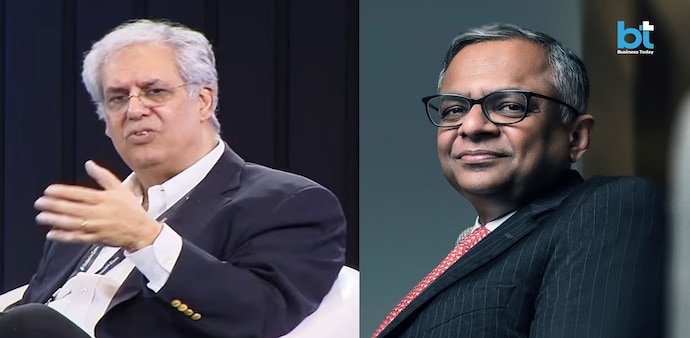
The upcoming board meeting of Tata Sons, the private holding company of the salt-to-software conglomerate, comes right after the controversial reappointment of N. Chandrasekaran as its Chairman for five years. That was on September 17, with four members voting in favour of it, while Noel Tata voted against it. The development gains importance since two-thirds of Tata Sons is held by Tata Trusts, an entity of which Noel Tata is the Chairman.
Advertisement
In every possible way, the holding structure of the Tata Group is remarkably different from any other conglomerate. The dividend that accrues to Tata Trusts goes into philanthropy, making the largest shareholder an extremely powerful force. Tata Trusts also nominates one-third of Tata Sons’ board—two today since the board has six members—and they are meant to represent its best interests. That’s exactly where the issue is. The two Tata Trust nominees are Noel Tata and Venu Srinivasan, Chairman Emeritus, TVS Motor Company. The two individuals have not agreed on key issues, creating a very tense board room. Then, there is the point on the listing of Tata Sons, one that has got tricky after an RBI directive to list.
What could happen?
Advertisement
Nitin Potdar, senior corporate and M&A lawyer, expects two things to come up at the board meeting—whether Tata Sons can be restructured to stay unlisted and what the response to Shapoorji Pallonji’s funding request will be. The entity owns 18.4% in Tata Sons and is heavily in debt, with a potential listing expected to remove much of that load. According to him, a good part of the current board was part of the decision taken during Ratan Tata’s time, to seek the deregistration of Tata Sons as a core investment company. “To make that possible, Tata Sons repaid Rs 21,813 crore of debt in FY24 and applied to the RBI in March 2024. That was not a casual decision but a clear, deliberate choice to keep Tata Sons private,” he says.
Advertisement
Keeping all that in mind, the question is what options exist and how they will be exercised. Potdar is clear that the primary duty of the board is to stand by what it agreed. “The RBI’s rejection does not end that commitment and only means the route has to change. It is therefore incumbent to discuss the restructuring plan seriously and place it before the RBI for approval. Changing course even before testing that option will be hard to explain,” thinks Potdar.
Here are a few points. RBI sent a communication on November 16 reiterating that Tata Sons must comply with public listing rules applicable to upper-layer non-banking financial companies (NBFC). Noel Tata is pushing for a restructuring plan that involves merging Tata Electronics Systems Solutions and Tata Consulting Engineers into Tata Sons. This could allow the holding company outside the purview of NBFC/core investment company definitions to remain unlisted. “Also, to douse a potential fire, the board is expected to consider a capital reduction exercise to purchase and cancel a portion of the Shapoorji Pallonji Group's shares, providing the group with ₹25,000 crore,” says Swapnil Kothari, Managing Partner, S. Kothari & Co.
That said, these issues are sensitive. “Given the ugly surround sound with Darius Khambatta’s departure (a Tata Trustee) and the continuing internecine warfare that surprisingly does not seem to go beyond the level of the Charity Commissioner. To what end are the shareholder interests being held to ransom with issues still remaining unresolved is an important question,” he asks bluntly.
Advertisement
In the midst of all this, when the Tata Sons’ Annual General Meeting will take place is unknown. For a while and not surprisingly, there have been multiple corporate governance issues at play. Kothari is of the view that the fundamental canon of it comes down to the board managing the company, while the shareholders own the company.
“From the not-so-interesting developments over the last few months, there seems to be more of a battle than governance,” he adds.
Back to September
Chandrasekaran’s reappointment had a clear dissent from Noel Tata. He later argued that the move violated specific governance provisions. This got complicated when Tata Sons formally rejected Noel Tata's demand for audio-video recordings and minutes of the September 17 meeting—the stand was that neither company law nor its Articles of Association require retaining or sharing recordings of in-person board meetings.
“The continuing turn of events can be as treacherous as a Corsican highway and is nothing short of worrisome because behemoths inasmuch as intrinsically strong as they may be, the smallest fissures tend to widen a major crack,” says Kothari, who makes it clear these are not small issues.
Advertisement
It’s challenging when a board and its largest shareholder move in different directions. “Governance stops being a framework and becomes a contest. Since 17 September, we have seen competing legal opinions, letters to the board and questions about the Articles. Each step is understandable, but together they risk normalising conflict at Bombay House,” maintains Potdar.
To him, the Tata Group has always resolved its differences within the family, quietly and with dignity. “The concern is that matters of structure and ownership are now being settled through formal positions rather than conversation. Good governance is not only about having the right rules, but about having the trust that makes those rules work. That trust needs to be rebuilt, and quickly,” he points out.
The role of the two independent directors—Anita George and Harish Manwani—on Tata Sons’ board does become critical. While Potdar does not comment on them, he expresses concern about the role.
“Independent directors are not meant only to vote. They are meant to build bridges. Where the controlling shareholder and management disagree, the independent director is best placed to slow the process down, ask for more time, propose a middle path and make sure every concern is heard and recorded before a vote is taken,” says Potdar.
Advertisement
To drive home the point, he thinks the question is not how they voted but whether everything was done to avoid a vote that divided the board. “Schedule IV asks independent directors to safeguard the interests of all stakeholders. In a company owned 66% by charitable trusts, that duty carries special weight,” he adds.
Potdar opines that had the independent directors acted as mediators before the September 17 board meeting, much of what followed might have been avoided. “That is the lesson for every board, not only Tata Sons: independence is not about which side you take, it is about keeping the board together,” he sums up.
There is a good chance that the board meeting on November 26 will raise some of these issues. How many get to anywhere close to resolution is really another story, though.
The upcoming board meeting of Tata Sons, the private holding company of the salt-to-software conglomerate, comes right after the controversial reappointment of N. Chandrasekaran as its Chairman for five years. That was on September 17, with four members voting in favour of it, while Noel Tata voted against it. The development gains importance since two-thirds of Tata Sons is held by Tata Trusts, an entity of which Noel Tata is the Chairman.
Advertisement
In every possible way, the holding structure of the Tata Group is remarkably different from any other conglomerate. The dividend that accrues to Tata Trusts goes into philanthropy, making the largest shareholder an extremely powerful force. Tata Trusts also nominates one-third of Tata Sons’ board—two today since the board has six members—and they are meant to represent its best interests. That’s exactly where the issue is. The two Tata Trust nominees are Noel Tata and Venu Srinivasan, Chairman Emeritus, TVS Motor Company. The two individuals have not agreed on key issues, creating a very tense board room. Then, there is the point on the listing of Tata Sons, one that has got tricky after an RBI directive to list.
What could happen?
Advertisement
Nitin Potdar, senior corporate and M&A lawyer, expects two things to come up at the board meeting—whether Tata Sons can be restructured to stay unlisted and what the response to Shapoorji Pallonji’s funding request will be. The entity owns 18.4% in Tata Sons and is heavily in debt, with a potential listing expected to remove much of that load. According to him, a good part of the current board was part of the decision taken during Ratan Tata’s time, to seek the deregistration of Tata Sons as a core investment company. “To make that possible, Tata Sons repaid Rs 21,813 crore of debt in FY24 and applied to the RBI in March 2024. That was not a casual decision but a clear, deliberate choice to keep Tata Sons private,” he says.
Advertisement
Keeping all that in mind, the question is what options exist and how they will be exercised. Potdar is clear that the primary duty of the board is to stand by what it agreed. “The RBI’s rejection does not end that commitment and only means the route has to change. It is therefore incumbent to discuss the restructuring plan seriously and place it before the RBI for approval. Changing course even before testing that option will be hard to explain,” thinks Potdar.
Here are a few points. RBI sent a communication on November 16 reiterating that Tata Sons must comply with public listing rules applicable to upper-layer non-banking financial companies (NBFC). Noel Tata is pushing for a restructuring plan that involves merging Tata Electronics Systems Solutions and Tata Consulting Engineers into Tata Sons. This could allow the holding company outside the purview of NBFC/core investment company definitions to remain unlisted. “Also, to douse a potential fire, the board is expected to consider a capital reduction exercise to purchase and cancel a portion of the Shapoorji Pallonji Group's shares, providing the group with ₹25,000 crore,” says Swapnil Kothari, Managing Partner, S. Kothari & Co.
That said, these issues are sensitive. “Given the ugly surround sound with Darius Khambatta’s departure (a Tata Trustee) and the continuing internecine warfare that surprisingly does not seem to go beyond the level of the Charity Commissioner. To what end are the shareholder interests being held to ransom with issues still remaining unresolved is an important question,” he asks bluntly.
Advertisement
In the midst of all this, when the Tata Sons’ Annual General Meeting will take place is unknown. For a while and not surprisingly, there have been multiple corporate governance issues at play. Kothari is of the view that the fundamental canon of it comes down to the board managing the company, while the shareholders own the company.
“From the not-so-interesting developments over the last few months, there seems to be more of a battle than governance,” he adds.
Back to September
Chandrasekaran’s reappointment had a clear dissent from Noel Tata. He later argued that the move violated specific governance provisions. This got complicated when Tata Sons formally rejected Noel Tata's demand for audio-video recordings and minutes of the September 17 meeting—the stand was that neither company law nor its Articles of Association require retaining or sharing recordings of in-person board meetings.
“The continuing turn of events can be as treacherous as a Corsican highway and is nothing short of worrisome because behemoths inasmuch as intrinsically strong as they may be, the smallest fissures tend to widen a major crack,” says Kothari, who makes it clear these are not small issues.
Advertisement
It’s challenging when a board and its largest shareholder move in different directions. “Governance stops being a framework and becomes a contest. Since 17 September, we have seen competing legal opinions, letters to the board and questions about the Articles. Each step is understandable, but together they risk normalising conflict at Bombay House,” maintains Potdar.
To him, the Tata Group has always resolved its differences within the family, quietly and with dignity. “The concern is that matters of structure and ownership are now being settled through formal positions rather than conversation. Good governance is not only about having the right rules, but about having the trust that makes those rules work. That trust needs to be rebuilt, and quickly,” he points out.
The role of the two independent directors—Anita George and Harish Manwani—on Tata Sons’ board does become critical. While Potdar does not comment on them, he expresses concern about the role.
“Independent directors are not meant only to vote. They are meant to build bridges. Where the controlling shareholder and management disagree, the independent director is best placed to slow the process down, ask for more time, propose a middle path and make sure every concern is heard and recorded before a vote is taken,” says Potdar.
Advertisement
To drive home the point, he thinks the question is not how they voted but whether everything was done to avoid a vote that divided the board. “Schedule IV asks independent directors to safeguard the interests of all stakeholders. In a company owned 66% by charitable trusts, that duty carries special weight,” he adds.
Potdar opines that had the independent directors acted as mediators before the September 17 board meeting, much of what followed might have been avoided. “That is the lesson for every board, not only Tata Sons: independence is not about which side you take, it is about keeping the board together,” he sums up.
There is a good chance that the board meeting on November 26 will raise some of these issues. How many get to anywhere close to resolution is really another story, though.
Read more!