
'Chips are the future': Tata Sons' N. Chandrasekaran flags demand, management risks in India’s semiconductor push
While India has the potential to contribute significantly to the global semiconductor industry, Chandrasekaran cautioned that businesses must align investments with market requirements and operational capabilities.
- Oct 13, 2026,
- Updated Oct 13, 2026 11:53 AM IST
India is well positioned to strengthen its role in the global semiconductor industry, backed by its talent pool and large domestic market, but companies must carefully assess demand and manage investments as manufacturing capacity expands, Tata Sons Chairman Natarajan Chandrasekaran said on Tuesday.
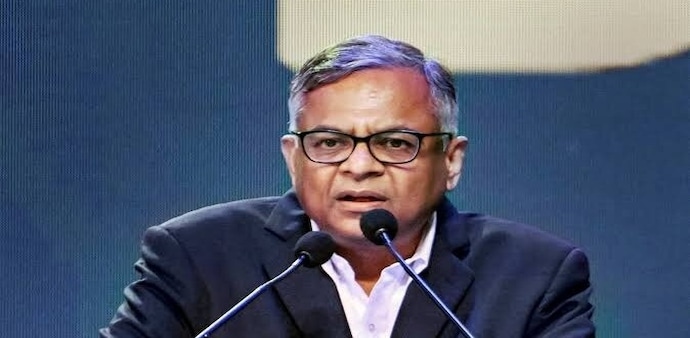
Speaking at a panel discussion titled 'The End of Predictability' at Bloomberg New Economy 2026, Chandrasekaran highlighted the growing importance of semiconductors for India's industrial and technological development.
"Chips are the future. Chips are going to be fundamentally required for domestic institutions," he said, underlining the strategic importance of chip manufacturing as India seeks to strengthen its position in global technology supply chains.
While India has the potential to contribute significantly to the global semiconductor industry, Chandrasekaran cautioned that businesses must align investments with market requirements and operational capabilities.
"We have to also be careful because you need to keep an eye on management. We need to also see where the demand is," he said, emphasising the need to balance expansion plans with commercial viability.
His remarks come as the Tata Group advances its semiconductor manufacturing ambitions, with investments spanning chip fabrication, assembly and testing.
Semiconductor investments
Tata Electronics is establishing a semiconductor fabrication facility in Dholera, Gujarat, with support from Dutch technology company ASML under an agreement signed in May. The partnership is aimed at supporting the establishment and expansion of the facility, marking a significant step in India's efforts to develop domestic chip manufacturing capabilities.
Separately, Tata's semiconductor assembly and testing facility in Jagiroad, Assam, is expected to produce up to 48 million chips per day. The facility is expected to cater to industries including automobiles, telecommunications, consumer electronics and artificial intelligence-driven devices.
Together, the projects reflect the group's push to develop capabilities across different stages of semiconductor manufacturing as demand for chips grows across industries.
Demand and execution remain key challenges
However, Chandrasekaran's comments point to the challenges accompanying the sector's expansion. Building manufacturing capacity requires substantial capital commitments, making demand assessment and effective management important considerations for companies planning long-term investments.
Technology brings wider economic implications
During the panel discussion, Chandrasekaran also addressed the wider implications of technological change, including the potential misuse of advanced technologies and the need to restructure labour markets in the near term. He said technology could deliver significant benefits over the medium to long term, while ongoing conflicts remained a concern.
India's semiconductor ambitions are gaining importance as governments and companies seek to diversify global supply chains and build resilient manufacturing ecosystems. For India, its domestic market and skilled workforce offer opportunities, but translating these advantages into sustainable industrial growth will depend on investment discipline, market demand and execution.
Chandrasekaran's remarks underscore the need to ensure that semiconductor expansion is supported by commercially viable demand and effective management, rather than capacity creation alone.
India is well positioned to strengthen its role in the global semiconductor industry, backed by its talent pool and large domestic market, but companies must carefully assess demand and manage investments as manufacturing capacity expands, Tata Sons Chairman Natarajan Chandrasekaran said on Tuesday.
Speaking at a panel discussion titled 'The End of Predictability' at Bloomberg New Economy 2026, Chandrasekaran highlighted the growing importance of semiconductors for India's industrial and technological development.
"Chips are the future. Chips are going to be fundamentally required for domestic institutions," he said, underlining the strategic importance of chip manufacturing as India seeks to strengthen its position in global technology supply chains.
While India has the potential to contribute significantly to the global semiconductor industry, Chandrasekaran cautioned that businesses must align investments with market requirements and operational capabilities.
"We have to also be careful because you need to keep an eye on management. We need to also see where the demand is," he said, emphasising the need to balance expansion plans with commercial viability.
His remarks come as the Tata Group advances its semiconductor manufacturing ambitions, with investments spanning chip fabrication, assembly and testing.
Semiconductor investments
Tata Electronics is establishing a semiconductor fabrication facility in Dholera, Gujarat, with support from Dutch technology company ASML under an agreement signed in May. The partnership is aimed at supporting the establishment and expansion of the facility, marking a significant step in India's efforts to develop domestic chip manufacturing capabilities.
Separately, Tata's semiconductor assembly and testing facility in Jagiroad, Assam, is expected to produce up to 48 million chips per day. The facility is expected to cater to industries including automobiles, telecommunications, consumer electronics and artificial intelligence-driven devices.
Together, the projects reflect the group's push to develop capabilities across different stages of semiconductor manufacturing as demand for chips grows across industries.
Demand and execution remain key challenges
However, Chandrasekaran's comments point to the challenges accompanying the sector's expansion. Building manufacturing capacity requires substantial capital commitments, making demand assessment and effective management important considerations for companies planning long-term investments.
Technology brings wider economic implications
During the panel discussion, Chandrasekaran also addressed the wider implications of technological change, including the potential misuse of advanced technologies and the need to restructure labour markets in the near term. He said technology could deliver significant benefits over the medium to long term, while ongoing conflicts remained a concern.
India's semiconductor ambitions are gaining importance as governments and companies seek to diversify global supply chains and build resilient manufacturing ecosystems. For India, its domestic market and skilled workforce offer opportunities, but translating these advantages into sustainable industrial growth will depend on investment discipline, market demand and execution.
Chandrasekaran's remarks underscore the need to ensure that semiconductor expansion is supported by commercially viable demand and effective management, rather than capacity creation alone.